Gujarat Leads the Nation in Atrocity Complaint Resolutions with Rs 23.62 Crore Aid in 2025
Synopsis
Gujarat has emerged as a leader in addressing complaints through the National Helpline Against Atrocities, achieving a remarkable 100% resolution rate and disbursing over Rs 23 crore in victim assistance during 2025. This highlights the state's commitment to safeguarding the rights of marginalized communities.
Key Takeaways
Gujarat ranks first in the disposal of complaints via the National Helpline Against Atrocities.
Over Rs 23 crore was disbursed for victim assistance in 2025.
100% complaint resolution rate achieved since March 2022.
Institutional measures include regular monitoring and a helpline system.
Samaras Hostel scheme benefits over 1.03 lakh students.
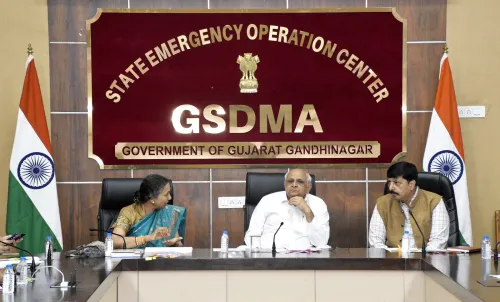
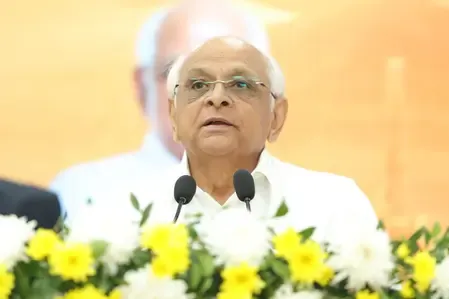
Gandhinagar, March 25 (NationPress) Gujarat has achieved the highest rank in the nation for resolving complaints submitted through the National Helpline Against Atrocities, with more than Rs 23 crore allocated in assistance during 2025.
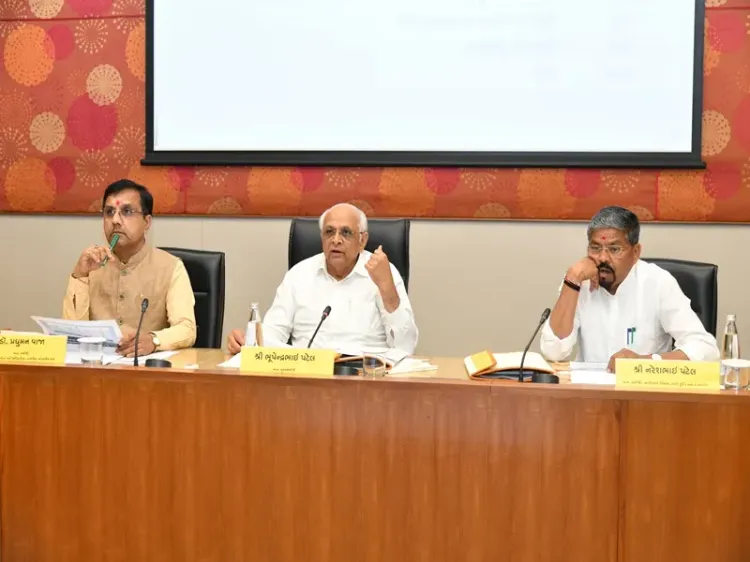
This aid is specifically directed towards cases involving Scheduled Castes (SCs) and Scheduled Tribes (STs), as reported by officials following a review meeting led by Chief Minister Bhupendra Patel on Wednesday.
The state-level Vigilance and Monitoring Committee, established under the Scheduled Castes and Scheduled Tribes (Prevention of Atrocities) Amendment Rules, 2018, has assessed the enforcement of protective measures.
According to a presentation at the meeting, Gujarat has successfully attained a 100% disposal rate for complaints submitted via the helpline, which has been operational since March 2022 through a state-of-the-art call center.
The committee conducted an in-depth review of cases filed in 2025 under the Scheduled Castes and Scheduled Tribes (Prevention of Atrocities) Act, 1989, and the Protection of Civil Rights Act, 1955. This included an examination of aid provided to victims and initiatives aimed at fostering social unity.
The Chief Minister emphasized that efforts to enhance social cohesion should persist through “sensitive and empathetic cooperation” among public representatives and officials.
He also instructed that District Vigilance Committees convene every three months across all districts, chaired by district collectors.
During the meeting, officials disclosed that Rs 23.62 crore was allocated to victims of atrocity cases from January to December of 2025.
The review highlighted the institutional frameworks for prevention and response, including the helpline system and ongoing district-level monitoring.
Additionally, the meeting covered the ‘Samaras Hostel’ initiative, initiated in 2016, aimed at housing students from diverse communities under one roof.
A total of 1.03 lakh students have benefited from 23 hostels across 12 districts, with approvals for 11 boys’ and 14 girls’ hostels.
It was also noted that special courts established under the 1989 Act are operating effectively in the state, alongside 16 exclusive special courts dedicated to the rapid resolution of atrocity cases.
Attendees included Tribal Development Minister Naresh Patel, Social Justice and Empowerment Minister Pradyuman Vaja, and Ministers of State Manisha Vakil, Ramesh Katara, Darshana Vaghela, Jayram Gamit, and P.C. Baranda. Elected representatives from reserved constituencies for SCs and STs also participated and offered their suggestions.
Point of View
Gujarat's proactive measures in complaint resolution through the National Helpline Against Atrocities and the substantial financial aid provided in 2025 reflect an important commitment to social justice and support for marginalized communities. The state's approach emphasizes the importance of institutional mechanisms in promoting harmony and safeguarding rights.
NationPress
23 Sept 2026
Frequently Asked Questions
What is the National Helpline Against Atrocities?
It is a dedicated helpline established to assist victims of atrocities against Scheduled Castes and Scheduled Tribes, providing support and facilitating complaint resolutions.
How much aid was disbursed in 2025?
In 2025, Gujarat disbursed over Rs 23 crore in assistance to victims of atrocities.
What measures are in place for monitoring and prevention?
The state has implemented institutional mechanisms, including a helpline system and periodic monitoring at the district level, to prevent atrocities and ensure timely responses.
What is the Samaras Hostel scheme?
Launched in 2016, the Samaras Hostel scheme aims to accommodate students from different communities together to promote social cohesion.
How many students have benefited from the hostel scheme?
So far, 1.03 lakh students have benefited from the Samaras Hostel scheme across 12 districts.