How Does the Assembly Ensure Accountability for the Government?
Synopsis
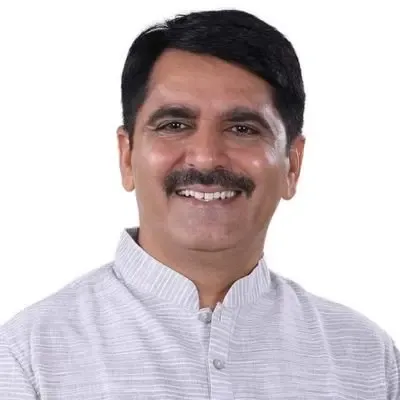
On February 5, Gujarat's Assembly Speaker Shankar Chaudhary highlighted the essential role of the legislature in ensuring government accountability. During a Youth Immersion Programme with students from Assam, he emphasized the Assembly's functions beyond law-making, stressing the importance of public welfare despite ideological differences.
Key Takeaways
The Assembly's role extends beyond law-making.
Accountability is essential for good governance.
Ideological differences are part of democracy.
Youth engagement in politics is crucial.
Understanding rights entails recognizing responsibilities.
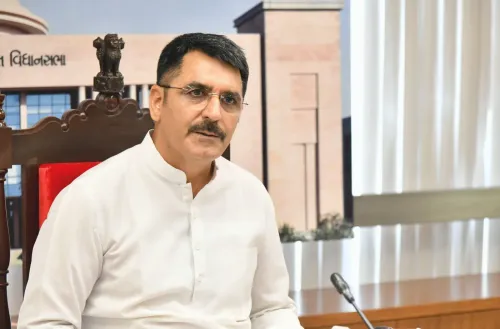
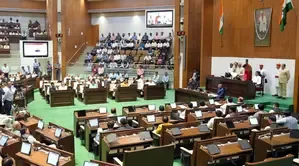
Gandhinagar, Feb 5 (NationPress) Highlighting the extensive constitutional duties of the legislature, Gujarat Legislative Assembly Speaker Shankar Chaudhary asserted on Thursday that the Assembly's role extends beyond merely enacting laws or approving budgets; it also plays a vital role in ensuring the government's accountability.
While addressing students from Gujarat and Assam during a Youth Immersion Programme at the Assembly Secretariat, Chaudhary stated, “The Assembly is not solely for crafting laws or sanctioning the budget; it is also responsible for holding the government accountable for its actions.”
He remarked that ideological differences between the ruling party and the opposition are part of a healthy democracy, but emphasized, “Despite these differences, both sides have the shared goal of public welfare.”
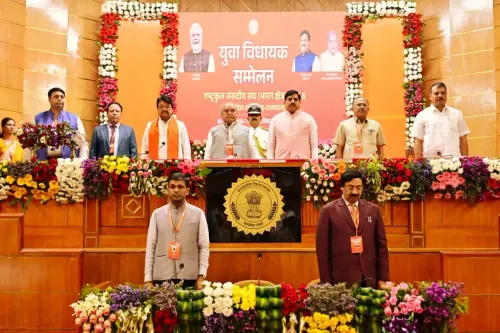
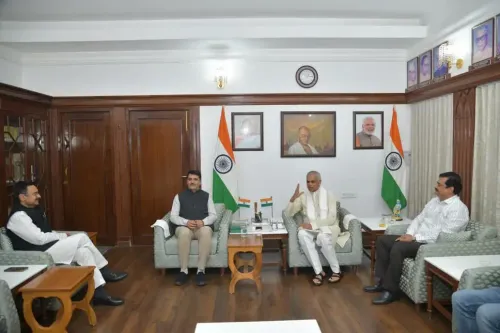
Chaudhary chaired the event, which was attended by Assam Legislative Assembly Speaker Biswajit Daimary and Gujarat Education Minister Dr Pradyuman Vaja.
The event saw participation from 24 students from Gauhati University, Bodoland University, and Cotton University in Assam, alongside approximately 100 undergraduate students from colleges affiliated with Gujarat University, including those studying political science, engineering, and other fields.
Organised by the G.V. Mavlankar Parliamentary Studies and Training Bureau, the Youth Immersion Programme aimed to educate students on democratic institutions, parliamentary practices, and constitutional principles.
Students from both states engaged in discussions centered on the theme “Developed States, Developed India,” and a documentary highlighting India’s development journey under Prime Minister Narendra Modi was showcased.
While discussing the relationship between rights and responsibilities, Chaudhary told the students, “Rights and duties are two aspects of the same coin. With rights come fundamental duties such as maintaining cleanliness, safeguarding the environment, and adhering to the law.”
Reflecting on Gujarat’s progress, he remarked that the state has advanced due to the “solid determination and long-term vision” of Narendra Modi during his time as Chief Minister and subsequently as Prime Minister.
He highlighted areas like Banaskantha, where strategic planning for electricity and water has instigated socio-economic transformations, including women's empowerment through the White Revolution.
Additionally, he mentioned projects such as the Statue of Unity, Science City, and the Sabarmati Riverfront as significant achievements in the state’s development narrative.
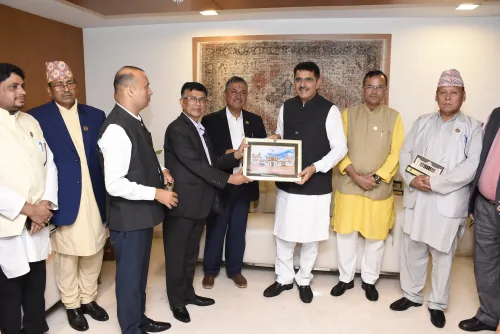
Speaker Daimary noted that Gujarat and Assam share “centuries-old historical and mythological connections.” He referenced the legend of Lord Krishna and Rukminiji and cultural events like the Madhavpur fair as symbols of the enduring ties between western India and the northeastern region.
He stated that under Prime Minister Modi’s leadership, “these connections have further strengthened.”
Encouraging students to broaden their aspirations beyond traditional careers, Daimary said, “In addition to becoming doctors, engineers, or officials, young individuals should also consider a path in politics and governance to emerge as effective leaders.”
He added, “Education’s purpose goes beyond achieving high marks; it is also about comprehending the nation’s challenges and contributing to their resolution.”
Education Minister Vaja remarked that the Youth Immersion Programme was initiated to foster the exchange of democratic values between students from Gujarat and Assam.
“To fortify India’s democracy, it is crucial for today’s youth to grasp parliamentary processes and constitutional values,” he mentioned, noting that the idea for the programme originated during the 8th India Regional Conference in Guwahati.
Point of View
It's crucial to recognize the Assembly's role in maintaining governmental accountability. The insights shared by Speaker Chaudhary underline a foundational aspect of democracy, where both ruling and opposition parties prioritize public welfare despite their differences. This balanced perspective is essential for fostering a healthy, functioning democracy in India.
NationPress
5 Oct 2026
Frequently Asked Questions
What is the purpose of the Youth Immersion Programme?
The Youth Immersion Programme aims to educate students about democratic institutions, parliamentary processes, and constitutional values, fostering an understanding of their roles in governance.
Who attended the Youth Immersion Programme?
The programme included 24 students from Assam's universities and around 100 undergraduate students from colleges affiliated with Gujarat University.
What theme did the discussions revolve around?
The discussions focused on the theme 'Developed States, Developed India,' exploring the connection between development and democratic values.
What did Speaker Chaudhary emphasize about rights and responsibilities?
He emphasized that rights and responsibilities are interconnected, and with rights come fundamental duties like maintaining cleanliness and following the law.
What notable projects were mentioned by Speaker Chaudhary?
Speaker Chaudhary highlighted significant projects such as the Statue of Unity, Science City, and the Sabarmati Riverfront as milestones in Gujarat's development.