Gujarat tops MISHTI scheme rankings with 19,000 hectares of new mangroves
Synopsis
Gujarat is quietly rewriting India's coastal conservation record — contributing nearly 85 per cent of the country's annual mangrove plantation work under the MISHTI scheme, adding over 19,000 hectares in two years, and setting a firm target to push its mangrove cover to 1,500 square kilometres by 2035. The numbers make it the most productive state for new mangrove creation, even as West Bengal holds the lead in total area.
Key Takeaways
Gujarat has added more than 19,000 hectares of mangrove cover in two years under the Centre's MISHTI scheme.
The state accounts for 23.32 per cent of India's total mangrove cover and contributes nearly 85 per cent of annual national plantation work, according to the PCCF Jaypal Singh .
Total mangrove plantation and restoration over the past three years spans approximately 40,000 hectares .
Gujarat holds second place nationally in mangrove area by extent, behind West Bengal .
The state government targets expanding mangrove cover from 1,164 sq km to 1,500 sq km by 2035 .
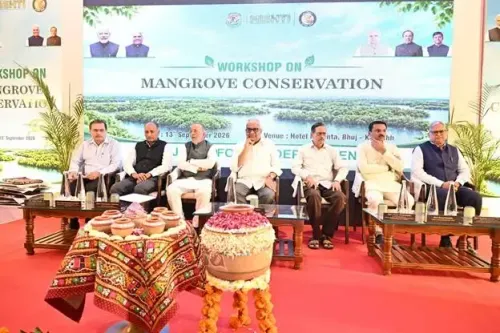
Gujarat has emerged as the top-performing state in India under the Centre's MISHTI (Mangrove Initiative for Shoreline Habitats and Tangible Incomes) scheme, adding more than 19,000 hectares of mangrove cover in just two years, according to state forest officials. The state now accounts for 23.32 per cent of India's total mangrove cover and is being held up as a national model for coastal ecosystem restoration.
Scale of Plantation Work
Over the past three years, mangrove plantation and restoration activities have been carried out across approximately 40,000 hectares of Gujarat's coastline. Jaypal Singh, Gujarat's Principal Chief Conservator of Forests (PCCF), said the state's Forest Department has delivered results at a scale unmatched elsewhere in the country.
'Gujarat accounts for nearly 85 per cent of the total work done across India in a year, and the Forest Department has completed mangrove plantations over an area exceeding 40,000 hectares in the last three years,' Singh said.
Why Mangroves Matter for Gujarat's Coast
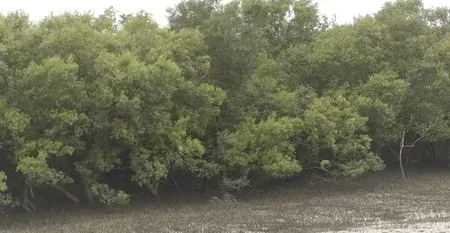
Mangroves serve as a natural buffer for coastal communities — preventing shoreline erosion, absorbing storm surges, and enriching marine biodiversity. They also underpin the regional 'blue economy' by sustaining fish populations and the livelihoods of fishing communities.
DM Dafda, a farmer from Jamnagar, explained the ecological chain at work: when mangrove leaves yellow and fall, the insects they harbour become food for small fish, forming the base of a food chain that extends to larger species. This natural cycle, he noted, directly supports local fish production.
Targets and National Standing
Gujarat currently holds the second-largest mangrove cover in India by area, behind West Bengal. The state government has set a target to expand mangrove cover from approximately 1,164 square kilometres to 1,500 square kilometres by 2035 — an addition of roughly 336 square kilometres over the next decade.
Notably, while West Bengal leads in total area — largely due to the Sundarbans — Gujarat's pace of active plantation under the MISHTI framework has positioned it as the country's most productive state for new mangrove creation.
About the MISHTI Scheme
The MISHTI scheme was launched by the Centre to systematically expand and restore mangrove habitats along India's coastline, linking ecological conservation with income generation for coastal communities. Gujarat's performance under the scheme has drawn attention for combining clear afforestation targets with on-ground Forest Department execution at scale. With sectoral momentum building and a firm 2035 area target in place, the state's coastal conservation push shows no signs of slowing.
Point of View
But the 85 per cent contribution figure deserves scrutiny — it reflects both genuine scale and the relative inaction of other coastal states, many of which have comparable shorelines but far weaker plantation programmes. The real policy question is whether the Centre's scheme is structurally incentivising laggard states or simply allowing Gujarat to carry the national average. Mangrove gains are also reversible: without robust anti-encroachment enforcement and community stewardship, plantation hectares can erode within a decade. The 2035 target of 1,500 square kilometres is achievable on paper — the harder test is whether those forests survive long enough to deliver the blue-economy dividends being promised to coastal communities.
NationPress
14 Sept 2026
Frequently Asked Questions
What is the MISHTI scheme and what does it aim to do?
MISHTI stands for Mangrove Initiative for Shoreline Habitats and Tangible Incomes, a Central government scheme designed to expand and restore mangrove habitats along India's coastline while generating income for coastal communities. It sets afforestation targets for participating states and links conservation work to livelihood support.
How much mangrove area has Gujarat added under MISHTI?
Gujarat has added more than 19,000 hectares of mangrove cover in just two years under the MISHTI scheme. Over the past three years, total plantation and restoration work has been carried out across approximately 40,000 hectares.
Which state has the largest mangrove cover in India?
West Bengal holds the largest mangrove cover in India by total area, primarily due to the Sundarbans. Gujarat ranks second, accounting for 23.32 per cent of India's total mangrove cover, but leads the country in active plantation work under the MISHTI scheme.
What is Gujarat's mangrove expansion target by 2035?
The Gujarat government has set a target to expand its mangrove area from approximately 1,164 square kilometres to 1,500 square kilometres by 2035, an increase of around 336 square kilometres over the next decade.
Why are mangroves important for Gujarat's coastal communities?
Mangroves protect coastlines from erosion and storm surges, support marine biodiversity, and sustain fish populations that local communities depend on for their livelihoods. They also form the base of a food chain — from insects on fallen leaves to small and large fish — that directly supports local fish production and the broader blue economy.