Gujarat mandates quarterly helipad inspections for emergency readiness
Synopsis
Gujarat has replaced ad hoc helipad upkeep with a mandatory quarterly inspection regime, placing accountability on Superintending and Executive Engineers alike. The circular even targets government departments that park seized vehicles near helipads — a telling detail about how these facilities have been managed until now.
Key Takeaways
Gujarat 's Roads and Buildings Department has made quarterly helipad inspections mandatory across the state via an official circular.
Superintending Engineers must inspect every helipad in their jurisdiction at least once every three months .
Executive Engineers are responsible for day-to-day upkeep and must address defects immediately after identification.
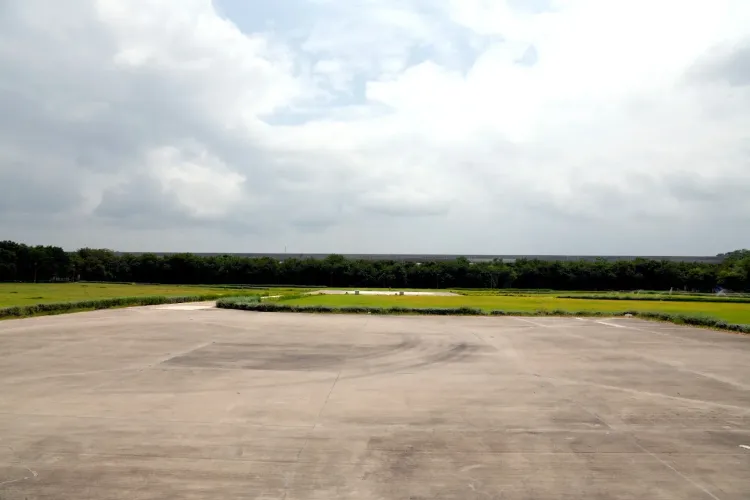
Maintenance scope covers helipad surfaces, painted markings, drainage systems, and approach areas.
Officials must monitor and clear obstructions including encroachments, parked vehicles, garbage, and government-seized unserviceable vehicles stored near helipads.
The directive aims to ensure helipads are ready for disaster response, medical emergencies , and visits by the Prime Minister and Chief Minister .
Gujarat's Roads and Buildings Department has made quarterly inspections mandatory for all helipads across the state, directing engineers at multiple levels to ensure the facilities remain operational at all times. The directive, issued through an official circular, establishes a fixed review cycle aimed at keeping landing infrastructure ready for emergencies, disaster relief, and official visits.
Key Provisions of the Directive
Superintending Engineers are now required to inspect every helipad under their jurisdiction at least once every three months. Executive Engineers have been assigned responsibility for day-to-day operational upkeep, with a mandate to address any defects or repair requirements identified during inspections without delay.
The maintenance scope covers the helipad surface and pavement, painted markings, drainage systems, and approach areas — the core components that determine whether a helipad can be safely used on short notice.
Why the State Is Acting Now
The government has cited a broad range of use cases that make helipad readiness critical: natural disasters, medical emergencies, relief and rescue operations, and visits by the Prime Minister, Chief Minister, and other senior officials. By replacing ad hoc maintenance checks with a structured quarterly cycle, the state aims to eliminate the risk of a helipad being found unusable precisely when it is needed most.
Notably, this formalisation signals that earlier maintenance arrangements were considered insufficient — a concern that emergency response frameworks across Indian states have increasingly flagged in recent years.
Obstruction Monitoring and Encroachment Rules
The circular goes beyond physical infrastructure. Officials have been directed to continuously monitor helipad sites for obstructions that could compromise helicopter operations. The list includes unauthorised encroachments, active construction, stored materials, parked vehicles, garbage accumulation, and overgrown bushes and shrubs.
In a specific provision, the guidelines require the removal of unserviceable vehicles seized by government departments if they are stored on or near helipad premises — an acknowledgement that state agencies themselves have contributed to obstruction problems in the past.
Departmental Responsibilities
The Civil Aviation Department of Gujarat oversees aviation-related activities in the state, while the Roads and Buildings Department holds responsibility for helipad infrastructure. The new circular distributes accountability clearly: Executive Engineers handle operational readiness, while Superintending Engineers conduct periodic reviews within their jurisdictions.
This layered oversight structure is intended to prevent gaps in maintenance from falling through administrative cracks between the two departments.
What Happens Next
With the quarterly inspection cycle now formalised, officials are expected to begin structured reviews immediately. Deficiencies identified during inspections must be rectified promptly, with the overarching goal of keeping every helipad in the state continuously available for use. How consistently the directive is enforced — and whether a reporting mechanism backs it up — will determine its real-world impact.
Point of View
Not just resource constraints. A quarterly inspection cycle is a sound baseline, but without a centralised reporting mechanism or public disclosure of helipad status, the directive risks becoming a paper compliance exercise. India's emergency response infrastructure has repeatedly been found wanting in the hours immediately after a disaster — and helipad unavailability is a documented bottleneck. Gujarat's move is administratively sensible; whether it is enforced is the harder question.
NationPress
3 Sept 2026
Frequently Asked Questions
What has Gujarat made mandatory for helipads?
Gujarat has made quarterly inspections mandatory for all helipads across the state. The Roads and Buildings Department circular requires Superintending Engineers to inspect every helipad under their jurisdiction at least once every three months, with Executive Engineers responsible for continuous operational upkeep.
Why has Gujarat introduced mandatory helipad inspections?
The directive is aimed at ensuring helipads are available for immediate use during disasters, medical emergencies, relief and rescue operations, and visits by senior officials including the Prime Minister and Chief Minister. The move replaces ad hoc maintenance with a structured review cycle.
Who is responsible for helipad maintenance under the new Gujarat rules?
Executive Engineers are responsible for day-to-day operational condition and must address defects immediately after identification. Superintending Engineers are required to conduct periodic reviews of helipads within their jurisdictions.
What kinds of obstructions must Gujarat officials monitor and remove?
Officials must monitor helipads for unauthorised encroachments, construction activity, stored materials, parked vehicles, garbage, and overgrown bushes. The circular specifically requires removal of unserviceable vehicles seized by government departments if stored on or near helipad premises.
Which departments oversee helipads in Gujarat?
The Civil Aviation Department of Gujarat oversees aviation-related activities, while the Roads and Buildings Department is responsible for helipad infrastructure. The new circular places maintenance accountability primarily on the Roads and Buildings Department's engineering officers.