Gujarat mandates ACs at 24°C in govt offices, orders energy action plans in 45 days
Synopsis
Gujarat has made 24°C the mandatory AC default across all government offices and given departments 45 days to submit energy efficiency action plans — a sweeping institutional drive that pairs behavioural mandates with infrastructure upgrades like occupancy sensors, LED replacements, solar installations, and CCMS-synced street lighting. It is one of the most detailed state-level energy conservation frameworks issued in recent years.
Key Takeaways
The Gujarat government has launched a statewide energy conservation campaign covering all government, semi-government, and public sector offices.
Air conditioners in all government offices must be set to a default of 24 degrees Celsius , in line with BEE guidelines.
All departments must submit an 'Office Energy Efficiency Action Plan' to GEDA within 45 days .
Occupancy sensors and timer-based automation systems will be installed in corridors, meeting rooms, parking areas, and toilets.
Street lighting will be synchronised with sunrise and sunset timings, expected to save around 60 minutes of electricity daily; alternate lights will be switched off between midnight and 4 a.m. on a pilot basis.
Offices with outstanding conservation performance will be recognised; mandatory annual energy audits by third-party auditors will be conducted.
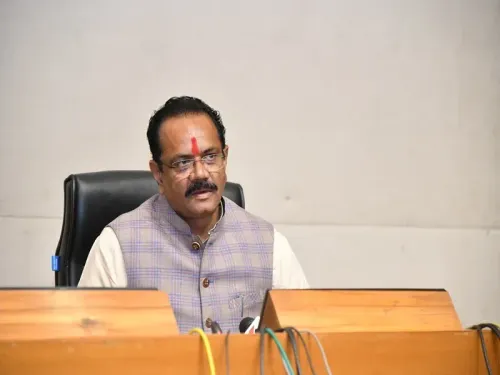
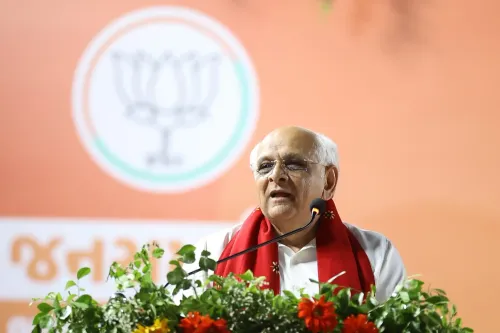
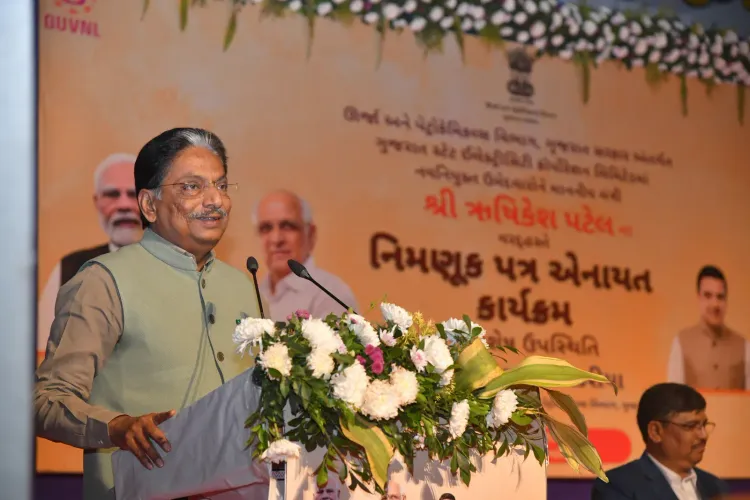
The Gujarat government has launched a comprehensive statewide energy conservation campaign covering all government and semi-government offices, public sector boards, corporations, and public buildings, making it mandatory to set air conditioners at a default temperature of 24 degrees Celsius and requiring every department to submit an energy efficiency action plan within 45 days. The initiative, announced from Gandhinagar, is being implemented under the guidance of Chief Minister Bhupendra Patel and Energy and Petrochemicals Minister Rushikesh Patel.
Key Directives Issued
The campaign has been jointly rolled out by the state's Energy and Petrochemicals Department and the Roads and Buildings Department. In line with the Bureau of Energy Efficiency (BEE) notification, all government offices must fix AC default temperatures at 24°C. All lights, fans, air conditioners, and computer systems must be switched off after office hours, on weekends, and on public holidays.
Heads of offices have been directed to ensure that electrical equipment in cabins of officers on leave or on field duty is also switched off through daily monitoring. Every major department will appoint a dedicated nodal officer to oversee implementation.
Automation and Infrastructure Upgrades
To curb electricity wastage from manual operation, occupancy sensors and timer-based automation control systems will be installed in office corridors, meeting rooms, parking areas, and toilets. Water coolers will be switched off after 6 p.m. and restarted only after 9 a.m.
All conventional lighting in government buildings will be progressively replaced with energy-efficient LED lights, and future procurement will prioritise only 5-star rated electrical equipment. Departments have also been advised to maximise natural daylight during office hours to reduce dependence on artificial lighting.
Street Lighting and Solar Push
Municipal corporations and municipalities will synchronise street lighting operated through the Centralised Control Monitoring System (CCMS) with astronomical timings of sunrise and sunset — a move expected to save approximately 60 minutes of electricity consumption every day. On a pilot basis, alternate street lights will also be switched off between midnight and 4 a.m. during periods of low traffic.
Government offices with suitable open spaces have been directed to plan solar power installations. The Gujarat Energy Development Agency (GEDA) will inspect existing solar systems on government buildings and ensure non-functional units are restored to full operational capacity.
Compliance and Recognition
All departments must submit an 'Office Energy Efficiency Action Plan' to GEDA within 45 days. Departments will also be required to submit quarterly energy consumption reports and undergo mandatory annual energy audits by third-party auditors. Offices that demonstrate outstanding performance in electricity conservation will be formally recognised under the initiative.
The campaign aims to promote energy efficiency, sustainable development, cost-effectiveness, and greater use of renewable energy across the public sector, without compromising operational efficiency. With Gujarat already among India's leading states in renewable energy capacity, this drive signals a sharper institutional push toward embedding conservation into everyday government functioning.
Point of View
Third-party audits, quarterly reports, and GEDA inspections. The real test is whether that compliance machinery holds beyond the first quarter. India's public sector has a long history of issuing energy circulars that quietly lapse; what distinguishes this drive, if anything, is the recognition incentive and the 45-day deadline for action plans, which creates an early accountability checkpoint. Whether that translates into measurable consumption reduction will depend on audit rigour and political follow-through.
NationPress
24 Sept 2026
Frequently Asked Questions
What is the Gujarat government's new energy conservation campaign?
The Gujarat government has launched a statewide campaign mandating energy-saving measures across all government and semi-government offices, public sector boards, and public buildings. Key directives include fixing AC temperatures at 24°C, switching off equipment after office hours, installing automation sensors, replacing conventional lights with LEDs, and submitting energy efficiency action plans within 45 days.
Why has the AC temperature been fixed at 24 degrees Celsius?
The 24°C default is in line with the Bureau of Energy Efficiency (BEE) notification, which recommends this setting as an optimal balance between comfort and energy savings. The Gujarat government has now made compliance with this standard mandatory for all government offices statewide.
What is the role of GEDA in this initiative?
The Gujarat Energy Development Agency (GEDA) will receive and review the 'Office Energy Efficiency Action Plans' that all departments must submit within 45 days. GEDA will also inspect existing solar installations on government buildings and ensure non-functional systems are restored to full capacity.
How will street lighting be made more energy-efficient under this campaign?
Municipal corporations and municipalities will synchronise street lighting through the Centralised Control Monitoring System (CCMS) with astronomical sunrise and sunset timings, saving an estimated 60 minutes of electricity daily. On a pilot basis, alternate street lights will also be switched off between midnight and 4 a.m. during low-traffic periods.
Who is overseeing the implementation of this energy campaign in Gujarat?
The campaign is being implemented under the guidance of Chief Minister Bhupendra Patel and Energy and Petrochemicals Minister Rushikesh Patel. Each major department will appoint a nodal officer to oversee compliance, and mandatory annual energy audits by third-party auditors have been prescribed.