Gujarat metro expansion cuts commute times across Ahmedabad and Gandhinagar
Synopsis
Gujarat's metro network is no longer just an infrastructure project — it is quietly rewiring daily life. With Ahmedabad and Gandhinagar now linked, GIFT City professionals and Secretariat staff are swapping traffic jams for productive commutes. Throw in Platinum-rated green stations, a 34-train-set order being built in Kolkata, and India's metro footprint tripling since 2014, and this is a mobility transformation with real economic weight.
Key Takeaways
Gujarat's Metro Phase-2 now links Ahmedabad and Gandhinagar , benefiting government employees and GIFT City professionals.
India's metro network has expanded from 248 km in 2014 to 1,095 km , covering 26 cities — the world's third-largest network.
Four Ahmedabad Metro underground stations — Kankaria East , Kalupur , Gheekanta , and Shahpur — hold Platinum Certification from the Indian Green Building Council .
The Gujarat government has ordered 34 metro train sets : 10 for Ahmedabad Phase-2 and 24 for the Surat Metro , manufactured by Titagarh in Kolkata.
Procurement rules require at least 75% of metro coaches to be sourced domestically under the 'Make in India' framework.
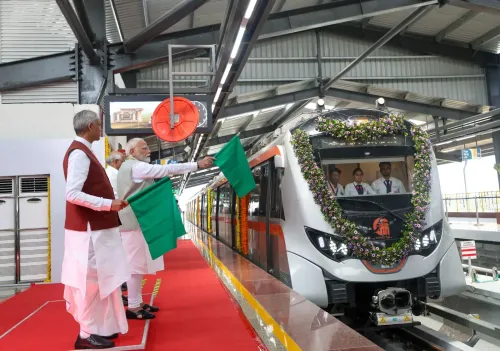
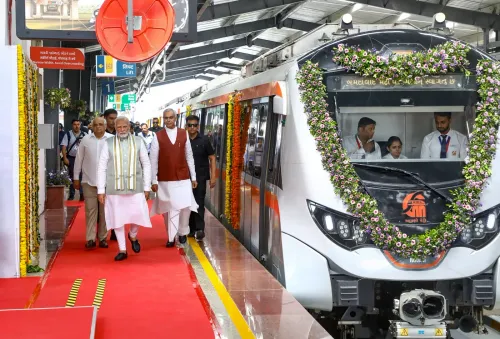
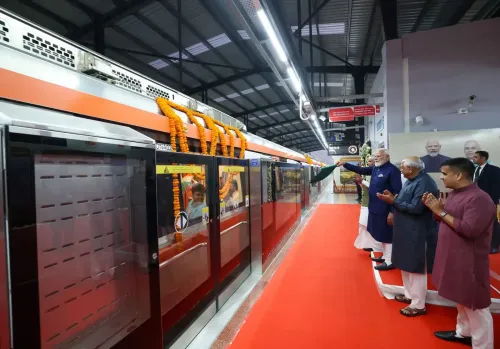
Gujarat's expanding metro rail network is reshaping daily commutes in Ahmedabad and Gandhinagar, with passengers reporting safer, faster, and more productive journeys as urban transit infrastructure across the state continues to grow. The network now connects Gujarat's commercial capital with its administrative seat, easing movement for hundreds of thousands of daily travellers.
Commuters See a Tangible Shift
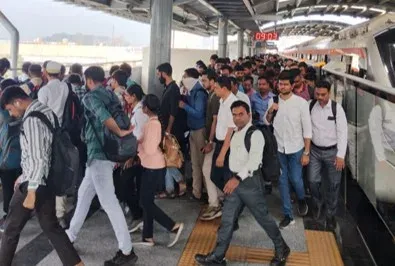
By 8 am, as traffic builds on Ahmedabad's arterial roads, metro coaches tell a different story — passengers reading news, preparing for competitive examinations, or organising their workdays. The shift reflects a measurable change in how city residents relate to public transport.
Among those benefiting is Richa, a media researcher who commutes regularly between Ahmedabad and Gandhinagar. Before metro services launched on this corridor, her daily journey involved multiple mode changes and unpredictable traffic delays. 'Metro has made my travel easy and safe. Because of metro travel, I can make better use of my time,' she said. She now uses her commute to read reports, conduct professional research, and plan her schedule.
The metro's reach extends well beyond individual users. Students, traders, and office-goers have found public transport more comfortable and affordable — a demographic breadth that underscores the network's growing role in urban mobility.
Key Corridors and Congestion Relief
The Ahmedabad Metro Phase-1 network has connected several of the city's busiest transit hubs, improving accessibility across high-demand corridors. Roads such as Ashram Road, C.G. Road, and stretches across eastern Ahmedabad — historically prone to congestion — have seen measurable traffic relief since the network became operational.
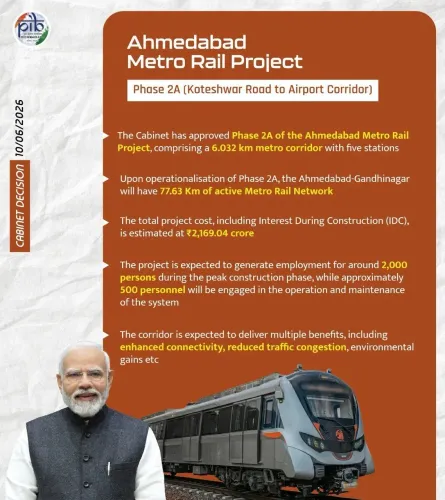
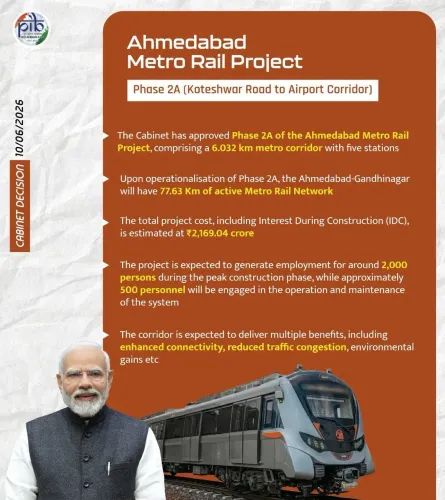
The Metro Phase-2 expansion has deepened connectivity between Ahmedabad and Gandhinagar, directly benefiting government employees at the Secretariat and information technology professionals at GIFT City, one of India's foremost financial and technology hubs.
India's Metro Network: A National Context
Gujarat's expansion mirrors a broader national surge in metro infrastructure. India now operates the world's third-largest metro network. The country's total metro route length has grown from 248 kilometres in 2014 to 1,095 kilometres at present, while the number of metro-served cities has risen from 5 to 26 over the same period.
This is not merely a quantitative leap — it represents a structural shift in how Indian cities manage mobility, with metro systems absorbing demand that road networks alone cannot handle.
Green Infrastructure and Sustainability
Environmental considerations are increasingly embedded in metro planning. Across India, metro systems are deploying regenerative braking technology, which converts kinetic energy produced during braking into usable electricity, reducing overall power consumption and cutting carbon emissions.
In Gujarat, four underground stations of the Ahmedabad Metro — Kankaria East, Kalupur, Gheekanta, and Shahpur — have received Platinum Certification from the Indian Green Building Council under the Green Mass Rapid Transit System rating framework, recognising their energy-efficient and environmentally sustainable design.
Make in India and the Manufacturing Link
Metro expansion has also become a vehicle for domestic manufacturing. Government procurement guidelines mandate that at least 75 per cent of metro coaches and 25 per cent of major equipment and subsystems be sourced domestically, reducing import dependence and supporting local industry under the 'Make in India' initiative.
The Gujarat government has placed an order for 34 modern metro train sets — 10 for Ahmedabad Metro Phase-2 and 24 for the Surat Metro project. The trains are being manufactured at Titagarh's advanced facility in Kolkata, reflecting the growing capability of Indian industry in high-technology urban mobility solutions.
With Surat's metro project now in the pipeline and Phase-2 procurement under way, Gujarat's urban rail story is far from complete — the next phase of expansion is expected to draw in new commuter corridors and further reshape mobility patterns across the state.
Point of View
But the more telling detail is who is riding it — GIFT City tech workers, Secretariat staff, and competitive exam aspirants who previously lost hours to road congestion. The network is quietly functioning as productivity infrastructure, not just transport. India's jump from 248 km to 1,095 km of metro rail since 2014 is genuinely significant, but the real test is last-mile connectivity: a metro that drops commuters far from their destination shifts the problem rather than solving it. The Surat expansion and the Titagarh manufacturing order signal that this build-out has political and industrial momentum — the question is whether urban planning around stations keeps pace with the tracks.
NationPress
24 Sept 2026
Frequently Asked Questions
How has the Ahmedabad-Gandhinagar metro improved daily commutes?
The metro link between Ahmedabad and Gandhinagar has eliminated the need for multiple mode changes that commuters previously endured, cutting travel time and reducing exposure to road congestion. Passengers now use the journey productively — for reading, research, and work preparation — as reported by regular users on the corridor.
How large is India's metro network today compared to 2014?
India's metro network has grown from 248 kilometres in 2014 to 1,095 kilometres, with the number of cities served rising from 5 to 26. This makes India's metro system the third-largest in the world by route length.
Which Ahmedabad Metro stations have received green building certification?
Four underground stations — Kankaria East, Kalupur, Gheekanta, and Shahpur — have received Platinum Certification from the Indian Green Building Council under the Green Mass Rapid Transit System rating framework, recognising their energy-efficient and environmentally sustainable design.
What is the Gujarat government's latest metro train order?
The Gujarat government has ordered 34 modern metro train sets: 10 for Ahmedabad Metro Phase-2 and 24 for the Surat Metro project. The trains are being manufactured at Titagarh's facility in Kolkata under the 'Make in India' initiative.
How does India's metro expansion support domestic manufacturing?
Government procurement guidelines require at least 75 per cent of metro coaches and 25 per cent of major equipment and subsystems to be sourced domestically. This policy directly supports Indian manufacturers like Titagarh, which is producing Gujarat's latest train sets in Kolkata.