Gujarat Police signs MoU with Bharat Taxi for SOS integration, driver KYC
Synopsis
Gujarat Police has taken an unusually direct step into the ride-hailing space — not just setting rules, but embedding itself operationally into the Bharat Taxi app via a live SOS-to-control-room link and mandatory police KYC for every driver. If it scales, it could become a blueprint for state-led accountability in India's fragmented cab sector.
Key Takeaways
Gujarat Police and Sahkar Taxi Co-operative Limited (Bharat Taxi) signed an MoU on 27 June in Gandhinagar .
An SOS button in the Bharat Taxi app will connect directly to the Gujarat Police control room for emergency assistance.
All Bharat Taxi drivers must undergo mandatory police KYC verification before being allowed to operate on the platform.
The initiative specifically prioritises the safety of women and senior citizens .
Gujarat Police will appoint a dedicated nodal officer to oversee driver verification, training, and traffic branding.
The agreement was signed under the supervision of DGP G.S.
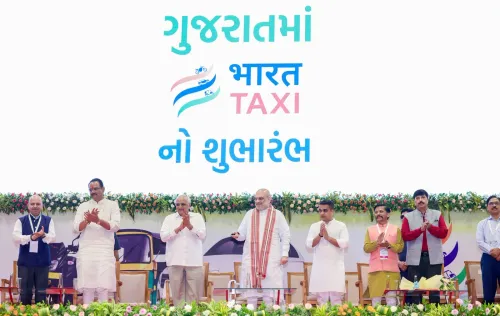
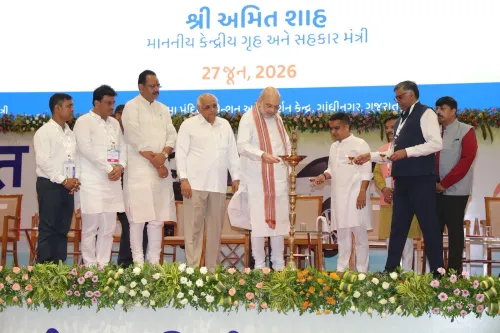
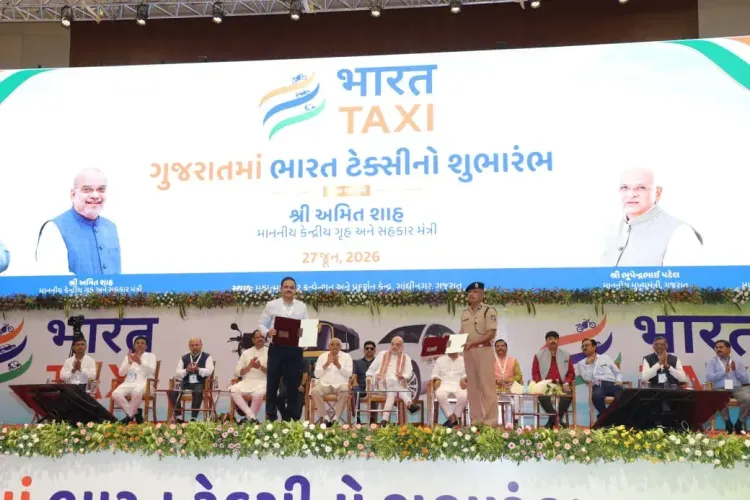
Gujarat Police on Saturday, 27 June signed a memorandum of understanding (MoU) with Sahkar Taxi Co-operative Limited, the multi-state cooperative society that operates the Bharat Taxi platform, to embed digital safety features into the ride-hailing service and strengthen passenger security across the state. The agreement was formalised in Gandhinagar under the supervision of Director General of Police (DGP) G.S. Malik.
Key Features of the MoU
The central element of the partnership is the integration of an SOS emergency button within the Bharat Taxi mobile application, linked directly to the Gujarat Police control room. Passengers will be able to trigger an alert and receive immediate police assistance during any in-transit emergency. The initiative places particular emphasis on the safety of women and senior citizens.
Additionally, all drivers onboarding the Bharat Taxi platform will be required to undergo mandatory police verification (KYC) conducted by Gujarat Police — a step designed to weed out individuals with criminal antecedents before they are permitted to ferry passengers.
Responsibilities Under the Agreement
The MoU draws a clear operational boundary between the two parties. Gujarat Police will be responsible for maintaining law and order, driver background verification, control room assistance, and traffic-related branding and training. Bharat Taxi will manage and operate the underlying digital platform.
To ensure smooth implementation, Gujarat Police will appoint a dedicated nodal officer to coordinate driver verification, traffic branding initiatives, and training programmes. Special awareness sessions for drivers covering traffic regulations and road safety are also planned, alongside joint public campaigns promoting safe travel.
Broader Safety and Mobility Goals
Officials said the MoU is part of Gujarat Police's wider push to enhance public safety, improve traffic management, and make daily commuting more secure and convenient. According to the force, the digital integration also aims to contribute to greener and more reliable urban mobility across Gujarat.
This comes amid a broader national conversation around the safety of app-based cab services, particularly for vulnerable passengers. Mandatory driver verification tied directly to a state police mechanism — rather than a platform's internal checks — represents a more structured accountability model than what most ride-hailing services currently operate under.
What Comes Next
With the nodal officer appointment and KYC rollout expected to follow in the coming weeks, the effectiveness of the arrangement will hinge on the speed and rigour of police verification at scale. If the model proves workable, it could serve as a template for other state police forces looking to formally integrate with private mobility platforms.
Point of View
Particularly women. Gujarat Police embedding itself directly into the Bharat Taxi app's SOS mechanism and owning the driver KYC process is a structural departure worth watching. The real test is execution at volume: police verification queues that delay driver onboarding could push operators toward non-compliant platforms. Whether this MoU becomes a genuine safety upgrade or a ceremonial agreement will depend entirely on how quickly the nodal officer mechanism is staffed and how rigorously KYC is enforced — not on the signing ceremony.
NationPress
26 Sept 2026
Frequently Asked Questions
What is the MoU between Gujarat Police and Bharat Taxi about?
Gujarat Police and Sahkar Taxi Co-operative Limited (Bharat Taxi) signed an MoU on 27 June to integrate an SOS emergency feature in the Bharat Taxi app with the Gujarat Police control room, and to make police KYC verification mandatory for all drivers on the platform. The agreement aims to improve passenger safety, especially for women and senior citizens.
How will the SOS feature in Bharat Taxi work?
Passengers using the Bharat Taxi app will have access to an in-app SOS button that sends an emergency alert directly to the Gujarat Police control room, enabling immediate police response during a travel emergency. The integration links the platform's digital infrastructure to the state's law-enforcement network.
What is the driver KYC verification process under this MoU?
All drivers seeking to join the Bharat Taxi platform must undergo official background verification conducted by Gujarat Police before they are permitted to operate. This police-led KYC process is intended to screen out individuals with criminal records and enhance passenger trust.
Who is responsible for implementing the MoU?
Gujarat Police will handle driver verification, control room support, law and order, and training programmes, and will appoint a dedicated nodal officer for coordination. Bharat Taxi will manage and operate the digital platform. The arrangement was set up under the supervision of DGP G.S. Malik.
Why does this MoU matter for urban transport in Gujarat?
The agreement represents one of the more direct instances of a state police force formally integrating with a ride-hailing platform's safety infrastructure. If implemented effectively, it could set a precedent for other states to adopt similar police-backed accountability frameworks for app-based cab services across India.