Gujarat Police escorts undertrial mother, newborn to MP after bail left her stranded
Synopsis
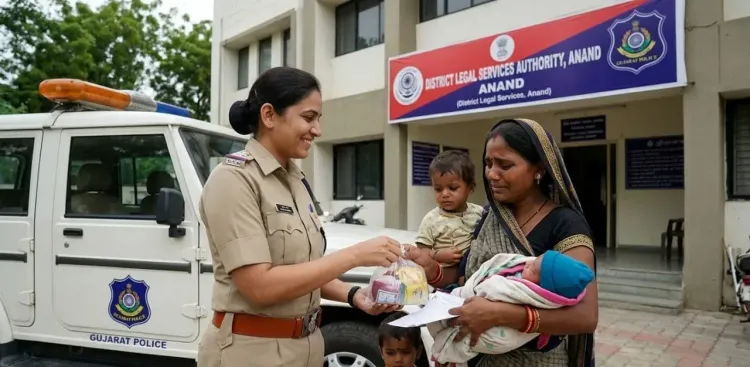
Granted bail but stranded in a Gujarat jail with a newborn and a toddler, a migrant woman from Madhya Pradesh had nowhere to go — until the DLSA and Gujarat Police stepped in, arranged a special vehicle, and escorted her home across state lines. The case is a rare example of the justice system closing the gap it helped create.
Key Takeaways
A migrant woman from Alirajpur, Madhya Pradesh gave birth to a baby boy on 21 May while in custody at Nadiad District Jail, Gujarat .
She was a co-accused in a POCSO Act kidnapping case registered in Khambhat, Anand district .
Despite being granted bail, no family member came forward, leaving her stranded with a newborn and a two-year-old child .
DLSA, Anand intervened, arranging transport and requesting jail authorities to facilitate her safe return.
Rao guided the operation; two police constables escorted her to her native village in Madhya Pradesh .
Local police in Alirajpur participated in the safe handover to her family.
A migrant woman who delivered a baby while in judicial custody at Nadiad District Jail in Gujarat was escorted safely to her native village in Alirajpur district, Madhya Pradesh, after officials from the District Legal Services Authority (DLSA) and jail administration intervened when no family member arrived to receive her following her bail. The woman had been held as a co-accused in a POCSO Act, 2012 case registered in Khambhat town, Anand district.
Background: How She Ended Up in Custody
The woman, originally from Alirajpur district in Madhya Pradesh, had migrated to Gujarat with her family in search of daily-wage employment. She was named a co-accused alongside her husband and brother-in-law in an alleged kidnapping case involving a minor girl — her brother-in-law is accused of abducting the minor. When she was transferred to Nadiad District Jail, she was pregnant and had her two-year-old child with her.
Birth in Custody and the Bail Impasse
On 21 May, after experiencing labour pains, she was taken to Nadiad Civil Hospital and subsequently referred to Ahmedabad Civil Hospital for specialised care, where she gave birth to a baby boy. She returned to jail with her newborn and continued living in custody with both her infant and toddler. Although a local court later granted her bail, neither her husband nor her brother-in-law — both still in custody — could secure her release, and the family's financial circumstances left her with no means to travel home.
DLSA Steps In, Police Arrange Special Transport
Recognising her precarious situation, the DLSA, Anand, provided legal assistance and formally requested that jail authorities facilitate her safe return, citing her health condition and the needs of her newborn. Under the guidance of Director General of Police (DGP) K.L.N. Rao, Nadiad District Jail police arranged a special vehicle with support from a local charitable organisation. Two police constables accompanied the mother and her two children throughout the journey to Alirajpur.
Safe Handover and Family Reunion
Upon arrival in her village, local police were informed and participated in ensuring her safe handover to family members. According to officials, the woman's family expressed gratitude to the DLSA, Nadiad District Jail authorities, Gujarat Police, and others involved in facilitating her return. The intervention ensured that a young mother travelling with a newborn and a toddler was not left without support after her release.
The case highlights the intersection of undertrial welfare, migrant vulnerability, and institutional responsibility — and the role legal aid authorities can play when the system's safety nets are otherwise absent.
Point of View
Childbirth in custody, and post-bail abandonment. That it took a DLSA intervention and a DGP-level directive to arrange what should be a standard welfare protocol reveals a structural gap. India's undertrial population is disproportionately poor and migrant; without institutionalised post-bail support, bail itself becomes meaningless for those with no resources to act on it.
NationPress
27 Sept 2026
Frequently Asked Questions
Why was the migrant woman held in Nadiad District Jail?
She was lodged in Nadiad District Jail as a co-accused in a POCSO Act, 2012 case registered in Khambhat, Anand district, involving an alleged kidnapping of a minor girl. Her brother-in-law is the principal accused; her husband was also named in the case.
Where did the woman give birth and when?
She gave birth to a baby boy on 21 May at Ahmedabad Civil Hospital, where she was referred after experiencing labour pains at Nadiad Civil Hospital. She returned to custody with her newborn after treatment.
Why could she not go home after getting bail?
Her husband and brother-in-law remained in custody and were unable to assist her. The family's financial circumstances also left her without the means to travel from Gujarat to Alirajpur district in Madhya Pradesh.
Who arranged her return home and how?
The DLSA, Anand, provided legal assistance and requested jail authorities to facilitate her return. Under DGP K.L.N. Rao's guidance, Nadiad District Jail police arranged a special vehicle with support from a local charitable organisation, and two constables escorted her to Alirajpur.
What does this case reveal about undertrial welfare in India?
The case highlights the vulnerability of migrant undertrial women, particularly co-accused persons with young children and no local support network. It underscores the critical role legal aid bodies like the DLSA can play when standard welfare mechanisms fail to activate automatically after bail is granted.