Gujarat Police to unify 80,000 CCTV cameras via AI hackathon
Synopsis
Gujarat Police is not buying a new surveillance system — it is running a national hackathon to build one. The Gujarat Police Innovation Challenge 2026 will ask students, startups, and tech firms to unify over 80,000 fragmented CCTV cameras into a single AI-powered network, testing solutions on live feeds with ₹37 lakh on the line. If it works, it could set the template for AI-driven policing across India.
Key Takeaways
Gujarat Police plans to integrate more than 80,000 CCTV cameras into a single AI-enabled surveillance network.
The Gujarat Police Innovation Challenge 2026 is described as India's largest hackathon focused on CCTV integration and AI video analytics.
The competition carries total cash prizes of ₹37 lakh and is expected to begin in September 2026 .
The hackathon runs in two stages; the top six teams from stage one advance to a live-environment finale.
Technology partners include i-Hub Gujarat ; knowledge partners are DA-IICT and the National Forensic Sciences University (NFSU) .
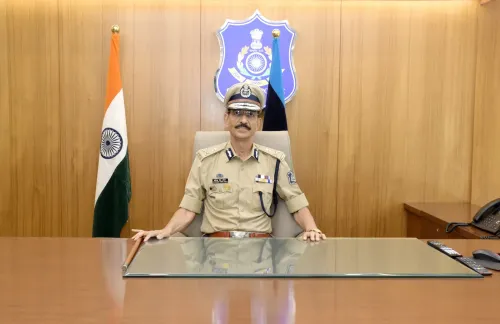
The initiative is led by DGP G.S.
Malik and solutions will be tested using live CCTV feeds in real-world policing scenarios.
Gujarat Police has announced plans to integrate more than 80,000 CCTV cameras across the state into a single unified surveillance network, using the Gujarat Police Innovation Challenge 2026 — described as the country's largest hackathon focused on CCTV integration and AI-based video analytics — to source the technology solutions needed to make it happen.
What the Challenge Aims to Solve
The core problem Gujarat Police is trying to crack is fragmentation. The state's existing CCTV infrastructure spans multiple vendors, technologies, video management system platforms, and network architectures that currently cannot talk to each other. The challenge, announced on Monday, 17 August 2026, will task participants with building systems that bridge this divide — allowing disparate cameras to function as one cohesive network and giving police faster, more reliable access to surveillance data.
Participants will be required to develop AI-driven tools capable of identifying suspicious individuals, vehicles, and unusual activity patterns, while generating real-time alerts. Additional capabilities under evaluation include automatic number plate recognition, vehicle tracking, watchlist matching, and multi-camera search functions.
Structure of the Competition
The hackathon will run in two stages under the leadership of Director General of Police (DGP) G.S. Malik. The first stage — the Open Innovation Challenge — will have two categories: one open to students and small and medium-sized startups, and a second for larger startups and established technology companies. The six best-performing teams from this stage will advance to the finale, where they will demonstrate their solutions in a live production environment using real-world policing scenarios.
The competition carries total cash prizes of ₹37 lakh. The hackathon is expected to begin in September 2026, with participation details, eligibility criteria, and guidelines available through the official Sentinel Gujarat portal.
Institutional and Technology Partners
The initiative has technology partnership support from i-Hub Gujarat and knowledge partnership support from DA-IICT and the National Forensic Sciences University (NFSU). The involvement of academic and forensic science institutions signals an intent to ground the competition in practical, deployable policing applications rather than theoretical prototypes.
A distinctive feature of the challenge is that participants will test their AI applications using live CCTV feeds and real-world scenarios — raising the bar beyond lab-based demonstrations and placing a premium on systems that can perform under operational conditions.
Broader Context
The Gujarat initiative reflects a wider shift among Indian police forces toward AI-augmented surveillance as the volume of CCTV footage outpaces the capacity of human operators to review it. Rather than overhauling existing infrastructure — a costly and time-consuming undertaking — Gujarat Police's approach emphasises interoperability: building software layers that can work across the current patchwork of hardware already in the field.
This vendor-agnostic strategy, if successful, could offer a replicable model for other states grappling with similarly fragmented surveillance ecosystems. The results of the finale are expected to directly inform procurement and deployment decisions by the force.
Point of View
000 cameras at state scale, with all the data privacy, misuse, and false-positive risks that entails. India has no comprehensive surveillance regulation, which means a unified AI-camera network of this size operates in a legal grey zone. The initiative deserves credit for its vendor-agnostic, interoperability-first design philosophy — but without a published accountability and oversight framework, the technology could outpace the governance needed to keep it in check.
NationPress
17 Aug 2026
Frequently Asked Questions
What is the Gujarat Police Innovation Challenge 2026?
It is a two-stage national hackathon launched by Gujarat Police to develop AI-based tools for integrating over 80,000 CCTV cameras across the state into a single surveillance network. The competition is open to students, startups, and established technology companies, and carries total cash prizes of ₹37 lakh.
When will the Gujarat Police hackathon begin?
The hackathon is expected to begin in September 2026. Participation details, eligibility criteria, and guidelines are available through the official Sentinel Gujarat portal.
What AI capabilities will participants need to build?
Participants must develop systems capable of real-time identification of suspicious individuals, vehicles, and unusual activities. Required features include automatic number plate recognition, vehicle tracking, watchlist matching, and multi-camera search — all tested on live CCTV feeds.
Who is leading the Gujarat Police Innovation Challenge?
The initiative is being organised under the leadership of Director General of Police (DGP) G.S. Malik. Technology partnership support comes from i-Hub Gujarat, while DA-IICT and the National Forensic Sciences University (NFSU) serve as knowledge partners.
Why is Gujarat Police running a hackathon instead of buying an existing system?
The state's 80,000-plus CCTV cameras span multiple vendors, platforms, and network architectures that are currently incompatible. Rather than replacing existing hardware, Gujarat Police is seeking software solutions that can unify the fragmented infrastructure — a vendor-agnostic approach that is both cost-effective and potentially replicable by other states.