Gujarat extends gutkha, pan masala ban for 2026-27, cites oral cancer risk
Synopsis
Gujarat has quietly renewed one of India's longest-running state-level tobacco bans — now in its 14th consecutive year. The extension through September 2027 also targets the 'split ingredient' workaround, signalling that enforcement is tightening even as national smokeless tobacco use remains stubbornly high at 21% of adults.
Key Takeaways
Gujarat has extended its ban on gutkha and pan masala containing tobacco or nicotine from 13 September 2026 to 12 September 2027 .
The Commissioner of Food Safety issued the renewal notification on 31 August 2026 , citing NGO representations and public health concerns.
Research by Tata Memorial Hospital , TIFR , and HAMER cited in the order links gutkha and pan masala consumption to a substantially higher risk of oral cancer.
The Global Adult Tobacco Survey (GATS) found 35% of Indian adults consume tobacco; 21% use smokeless tobacco.
The ban, first imposed in 2012 , now covers separately sold ingredients intended to be combined into banned products — closing a key loophole.
Strict legal action has been directed against violators across the full supply chain — manufacture, storage, distribution, and sale.
Gujarat has renewed its prohibition on the manufacture, storage, distribution, and sale of gutkha and pan masala containing tobacco or nicotine for another year, with the extended ban taking effect from 13 September 2026 and remaining in force through 12 September 2027. The Commissioner of Food Safety issued the fresh notification on 31 August 2026, citing public health imperatives and representations from civil society organisations.
What the Renewed Order Covers
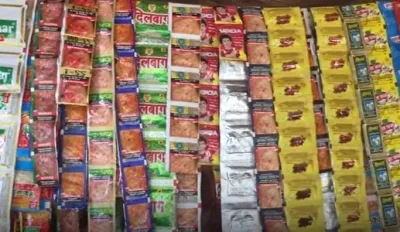
The prohibition applies to gutkha and pan masala containing tobacco or nicotine, regardless of the brand name or trade label under which such products are marketed. Crucially, the order also targets ingredients sold separately but intended to be combined to produce these banned products — a measure designed to close a common loophole used by manufacturers to circumvent earlier restrictions.
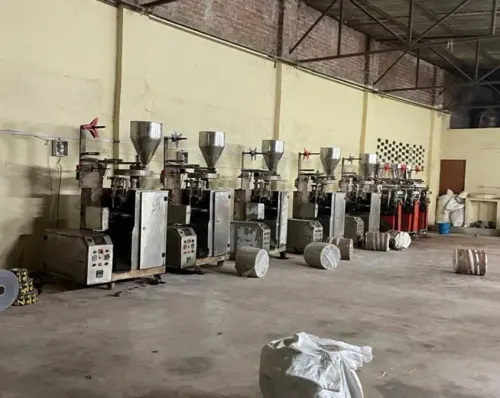
Enforcement agencies across the state have been directed to act against manufacture, storage, distribution, and sale of all products covered under the notification.
The Science Behind the Ban
The notification draws on research by Tata Memorial Hospital, the Tata Institute of Fundamental Research, and HAMER, which has reportedly indicated that consumption of gutkha and pan masala is carcinogenic and substantially raises the risk of oral cancer. The order also references findings from the Global Adult Tobacco Survey (GATS), according to which 35 per cent of adults in India consume tobacco, while 21 per cent use smokeless tobacco specifically.
Notably, oral cancer accounts for a disproportionately high share of cancer cases in India compared to global averages, and smokeless tobacco products such as gutkha are widely identified as a primary driver — making Gujarat's sustained prohibition one of the more consequential state-level public health interventions in the country.
More Than a Decade of Enforcement
Gujarat first imposed this ban in 2012, making it one of the earliest states in India to do so. The current extension means the prohibition has now been maintained without interruption for over 14 years. The state government said the decision to renew the order was taken in view of the continuing need to protect citizens' health and following representations from multiple Non-Governmental Organisations (NGOs).
This is the latest in a series of annual renewals, reflecting both the persistence of the public health concern and the ongoing challenge of enforcement — particularly against the separately-sold ingredient workaround that the order explicitly addresses.
Penalties and Enforcement
Authorities have warned that strict legal action will be initiated against individuals and entities found violating the prohibition. The directive covers the full supply chain — from manufacture and storage to distribution and retail sale — leaving no stage of the trade outside its ambit.
With the renewed order now in place, Gujarat's decade-long effort to restrict access to tobacco-laced chewing products enters its next chapter, even as national-level enforcement of similar restrictions remains uneven across states.
Point of View
Rather than being codified as permanent law, also creates a predictable enforcement gap: manufacturers know the exact window. The deeper question is why a state-level instrument is doing the heavy lifting on a public health crisis that GATS data shows is national in scale, with 21% of Indian adults using smokeless tobacco. Without a central prohibition backed by criminal penalties, Gujarat's resolve amounts to a containment effort, not a solution.
NationPress
15 Oct 2026
Frequently Asked Questions
What has Gujarat extended its ban on?
Gujarat has extended its prohibition on the manufacture, storage, distribution, and sale of gutkha and pan masala containing tobacco or nicotine for another year, effective 13 September 2026 to 12 September 2027. The ban also covers separately sold ingredients intended to be combined into these products.
How long has Gujarat maintained this gutkha ban?
Gujarat first imposed the ban in 2012, making the current extension part of a prohibition that has been in continuous effect for over 14 years. It is one of the longest-running state-level tobacco product bans in India.
Why did Gujarat renew the ban on gutkha and pan masala?
The renewal was prompted by public health concerns, representations from NGOs, and research by Tata Memorial Hospital, TIFR, and HAMER indicating that gutkha and pan masala consumption is carcinogenic and significantly raises oral cancer risk. GATS data showing 21% of Indian adults use smokeless tobacco also informed the decision.
Does the ban cover products sold under different brand names?
Yes. The order applies to all gutkha and pan masala products containing tobacco or nicotine, irrespective of the name under which they are marketed. It also covers ingredients sold separately but intended to be mixed to produce the banned final product.
What penalties apply to those who violate the Gujarat gutkha ban?
Authorities have warned that strict legal action will be taken against anyone found manufacturing, storing, distributing, or selling products covered under the notification. Enforcement agencies have been specifically directed to act across the entire supply chain.