Rajasthan farmers seek revocation of Gujarat's Unjha Cumin, Fennel GI tags
Synopsis
Rajasthan farmers and scientists are challenging GI tags awarded to Gujarat's Unjha APMC for cumin and fennel, arguing that Unjha is India's largest spice trading market — not a cultivation region. If the registrations stand, lakhs of Rajasthan farmers risk seeing their produce marketed under a Gujarat identity, potentially slashing their price premium and blocking a future GI tag of their own.
Key Takeaways
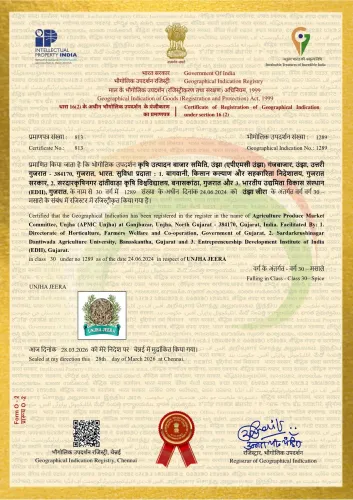
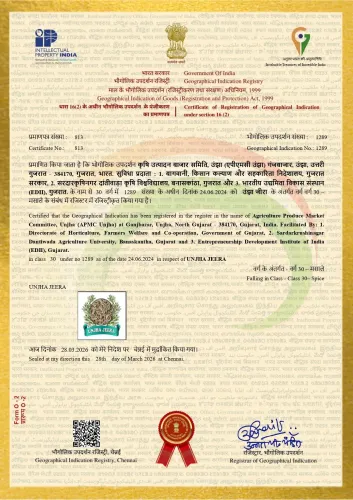
The GI Registry in Chennai granted 'Unjha Cumin' and 'Unjha Fennel' GI tags to the Unjha APMC in Gujarat's Mehsana district .
Rajasthan farmers, scientists, and experts argue Unjha is India's largest spice trading hub , not a cultivation region, and does not qualify for GI status.
The South Asia Biotechnology Centre , Jodhpur, has filed a formal objection seeking revocation of both registrations.
Farmers from Barmer and Sirohi districts warn the tags could erode Rajasthan's agricultural identity and reduce farm-gate prices for lakhs of farmers .
Objectors are also seeking a separate GI tag recognising Western Rajasthan as the true origin of cumin and fennel cultivation.
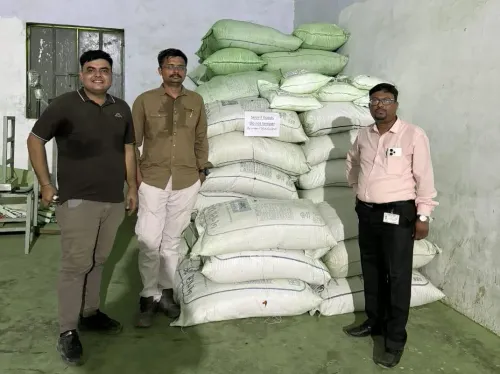
Farmers, agricultural scientists, and experts in Western Rajasthan have raised strong objections to the Geographical Indication (GI) tags recently granted for 'Unjha Cumin' and 'Unjha Fennel' to the Unjha Agricultural Produce Market Committee (APMC) in Gujarat's Mehsana district, arguing the registrations were secured on misleading grounds. The objectors contend that Unjha is a trading hub — not a cultivation region — and that the tags could erode the agricultural identity and price premium of Rajasthan-grown spices.
The Core Dispute
The GI Registry in Chennai awarded the tags to the Unjha APMC, a move that has triggered alarm among farming communities across Rajasthan. Critics argue that GI tags are designed to recognise products whose distinctive qualities are intrinsically linked to their geographical place of origin — including soil, climate, and traditional cultivation practices — not to the commercial scale of a trading market.
Unjha, they point out, is widely recognised as India's largest spice trading hub for cumin and fennel. Rajasthan farmers have sold their produce in Unjha for decades, swelling its trading volumes. However, the actual cultivation of these crops, objectors argue, is rooted in the arid landscape and farming traditions of Western Rajasthan.
Formal Objection Filed
The Jodhpur-based South Asia Biotechnology Centre has submitted a detailed objection to the GI Registry, seeking a review and full revocation of the registrations. Dr. Bhagirath Choudhary, Founder Director of the Centre, said the issue goes to the heart of intellectual property and geographical rights of farming communities.
'GI protection should be granted to products based on their place of cultivation and the unique natural and traditional characteristics associated with that region,' Dr. Choudhary said. He argued that granting GI recognition primarily on the basis of a market's commercial reputation would 'undermine the core purpose of the GI system and could adversely affect producers in cultivation regions across the country.'
Impact on Rajasthan Farmers
Farmers from Undu village in Barmer district and the Pindwara region of Sirohi district have voiced concern that the Unjha Fennel GI tag could overshadow the distinct identity of Rajasthan-grown fennel. According to the objectors, if the registrations remain in force, cumin and fennel cultivated by lakhs of farmers in Rajasthan could increasingly be marketed under the Unjha identity — since much of the produce is already traded there.
This, they warn, could dilute Rajasthan's agricultural brand, depress farm-gate prices, and complicate any future effort to secure separate GI recognition for Rajasthan-grown cumin and fennel. The South Asia Biotechnology Centre's objection formally requests that Western Rajasthan's cumin and fennel be recognised under an appropriate geographical indication.
What Happens Next
The matter now rests with the GI Registry in Chennai, which must consider the objection before the registrations are finalised. Agricultural bodies and farmer groups in Rajasthan are expected to continue pressing their case, with the outcome likely to set a significant precedent for how India's GI framework distinguishes between cultivation origins and commercial trading centres in future applications.
Point of View
Which exists to protect producers, not traders. If the Unjha registrations survive challenge, they could set a precedent that allows any large commodity market to claim GI status on the back of trading volume alone — effectively weaponising the system against the very farmers it was designed to protect. The GI Registry owes a transparent, reasoned order on this one.
NationPress
28 Jul 2026
Frequently Asked Questions
What are the Unjha Cumin and Unjha Fennel GI tags?
These are Geographical Indication tags awarded by the GI Registry in Chennai to the Unjha Agricultural Produce Market Committee (APMC) in Gujarat's Mehsana district, recognising 'Unjha Cumin' and 'Unjha Fennel' as geographically distinct products. Rajasthan farmers and scientists contest the registrations, arguing Unjha is a trading centre rather than a cultivation region.
Why are Rajasthan farmers objecting to the GI tags?
Farmers argue that Unjha is India's largest spice trading hub — not where cumin and fennel are actually grown. GI tags are meant to recognise products whose unique qualities arise from a specific region's geography, climate, and farming traditions, not from the scale of its commercial trade.
Who has filed the formal objection?
The South Asia Biotechnology Centre, based in Jodhpur, has submitted a detailed objection to the GI Registry seeking revocation of both the Unjha Cumin and Unjha Fennel registrations. Its Founder Director, Dr. Bhagirath Choudhary, has argued the tags violate the intellectual property and geographical rights of Rajasthan's farming communities.
How could the GI tags affect Rajasthan farmers?
If the registrations stand, cumin and fennel grown by lakhs of Rajasthan farmers could be marketed under the Unjha identity, since much of the produce is traded there. This risks diluting Rajasthan's agricultural brand, reducing farm-gate prices, and blocking future efforts to obtain a separate GI tag for Western Rajasthan-grown spices.
What happens next in the dispute?
The GI Registry in Chennai must now consider the formal objection before the registrations are finalised. Agricultural bodies and farmer groups in Rajasthan are expected to continue pressing for revocation and for separate GI recognition of Western Rajasthan as the principal cultivation region for cumin and fennel.