CM Bhupendra Patel: Gujarat Signs MoU With Meta for WhatsApp Governance
Synopsis
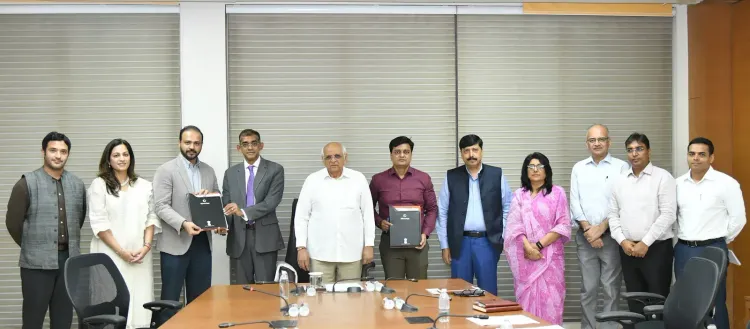
Gujarat Chief Minister Bhupendra Patel announced a government MoU with Meta on 25 May 2026, enabling citizens to access nearly 20 state services — from certificates to grievance redressal — through a single WhatsApp platform in Gujarati and English, advancing PM Modi's Digital India vision.
Key Takeaways
The Government of Gujarat signed an MoU with Meta on 25 May 2026 for WhatsApp-based citizen services.
Nearly 20 government services will be accessible through a single WhatsApp platform.
Services include grievance redressal , income, caste and EWS certificates , ration card updates , revenue records , and official affidavits .
The platform will operate in both Gujarati and English , prioritising vernacular access.
The initiative is framed as an extension of PM Narendra Modi's Digital India programme launched in 2015 .
The state government has committed to expanding the service list progressively in the coming days.
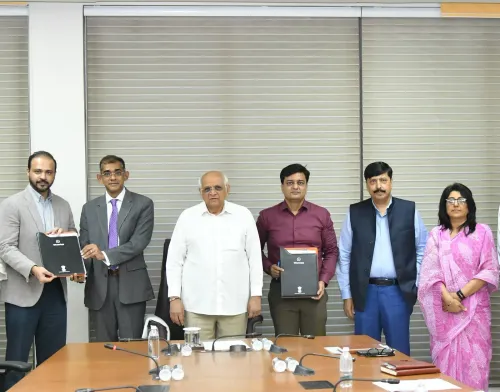
Gujarat Chief Minister Bhupendra Patel announced on Monday, 25 May 2026, that the Government of Gujarat has signed a Memorandum of Understanding with Meta to deliver nearly 20 government services through a single WhatsApp platform in Gujarati and English, marking a significant push toward mobile-first citizen governance in the state.
Context
Invoking the principle Nagrik Devo Bhava ('The citizen is God'), CM Patel framed the partnership as a direct expression of citizen-centric governance. The MoU with Meta enables residents across Gujarat to access a range of essential services — including grievance redressal, income, caste and EWS certificates, ration card updates, revenue records, and official affidavits — without visiting government offices or navigating multiple online portals. The initiative is designed to work on standard mobile phones, lowering the barrier for citizens in both urban and rural areas.
Policy Backdrop
The Gujarat-Meta MoU sits within the broader arc of the Digital India programme, launched in July 2015 by Prime Minister Narendra Modi, which set a national agenda of digital empowerment, reduced bureaucratic friction, and expanded online public services. CM Patel explicitly credited PM Modi's vision for inspiring the collaboration, describing it as a step toward 'WhatsApp Governance' — a formulation that signals the state's intent to meet citizens on platforms they already use daily rather than requiring them to learn new government portals. Gujarat has maintained a consistent focus on e-governance reforms and vernacular digital service delivery as part of its administrative priorities.
India's broader digital public infrastructure push has seen multiple states pilot WhatsApp-based interfaces for certificates, grievances and records, with an emphasis on vernacular-language access. The Gujarat initiative follows this national pattern while adding the explicit commitment to expand the service list progressively.
Stakeholders and Impact
The primary beneficiaries are Gujarat's residents — particularly those who have historically had to queue at government offices or juggle multiple digital portals for routine documentation. By consolidating services on WhatsApp, the state aims to reduce time, travel and transaction costs for certificate and record requests. Offering the interface in Gujarati alongside English is significant for first-generation smartphone users and those more comfortable in their mother tongue.
Meta, as the parent company of WhatsApp, deepens its footprint in India's digital public services ecosystem through the partnership. For the state government, the collaboration also signals confidence in using widely adopted private platforms as delivery infrastructure for official services — a model that carries both efficiency benefits and questions about data governance that policymakers will need to address as the platform scales.
What's Next
The Government of Gujarat has committed to 'progressively integrating more public services' into the WhatsApp platform in the coming days, with the stated goal that citizens will no longer need to navigate multiple portals or stand in long queues for essential services. Observers will watch whether the initial set of nearly 20 services is expanded quickly and whether other state governments move to replicate similar MoUs with technology platforms. The success of this rollout in Gujarat could serve as a template for scaling WhatsApp-based governance nationally under the Digital India umbrella.
Point of View
Moving beyond standalone government portals to embed public services inside a platform that already has mass adoption. By anchoring the announcement in PM Modi's Digital India vision, CM Patel is simultaneously signalling alignment with central government priorities and positioning Gujarat as a model for other BJP-governed states. The bilingual Gujarati-English interface is a politically astute choice that broadens the initiative's reach beyond urban, English-literate users. The longer-term test will be whether data-privacy frameworks keep pace with the platform's expansion, a question that will define the credibility of WhatsApp governance as a replicable national model.
NationPress
16 Sept 2026
Frequently Asked Questions
What services can Gujarat citizens access on WhatsApp after the Meta MoU?
Gujarat citizens will be able to access nearly 20 government services through WhatsApp, including grievance redressal, income certificates, caste certificates, EWS certificates, ration card updates, revenue records, and official affidavits, in both Gujarati and English.
What is the Gujarat-Meta MoU about?
The MoU is an agreement between the Government of Gujarat and Meta to deliver government services through a WhatsApp-based platform, reducing the need for citizens to visit offices or use multiple online portals.
How does the Gujarat WhatsApp governance initiative relate to Digital India?
CM Bhupendra Patel has described the initiative as inspired by PM Narendra Modi's Digital India programme, which was launched in 2015 to expand digital infrastructure and online public services across the country.
Who announced the Gujarat Meta WhatsApp services MoU?
Gujarat Chief Minister Bhupendra Patel announced the MoU on 25 May 2026 via a post on X, framing it as a step toward citizen-centric 'WhatsApp Governance'.
Will more services be added to Gujarat's WhatsApp government platform?
Yes, the Government of Gujarat has committed to progressively integrating more public services into the WhatsApp platform in the coming days, with the goal of eliminating the need for citizens to navigate multiple portals or stand in queues.