Western Railway builds 3 flood-protection bridges in Morbi in single block operation
Synopsis
Western Railway completed a rare single-block installation of three bridges in flood-ravaged Morbi using three 500-tonne cranes simultaneously — part of a seven-kilometre infrastructure overhaul triggered by the August 2024 floods that left rails hanging without foundation support. The corridor links Kandla and Mundra ports to the national freight network, making its resilience a supply-chain issue as much as a safety one.
Key Takeaways
The Ahmedabad Division of Western Railway erected three bridges (numbers 147/D, 147/E, 147/F) simultaneously in a single block on the Maliya Miyana-Vadharva section in Morbi, Gujarat .
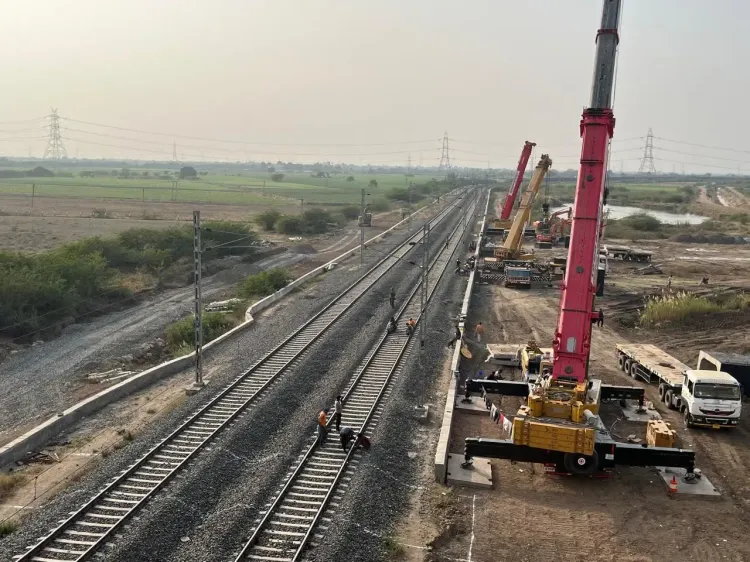
Three cranes, each rated at 500 tonnes , were deployed together — a combined lift capacity of 1,500 tonnes .
Approximately 3.7 km of protection walls and 12 additional drainage structures have been built across flood-prone sections.
The August 2024 floods submerged multiple Morbi district routes and left rails and sleepers without adequate foundation in places.
The corridor connects the ports of Kandla and Mundra to Ahmedabad and serves freight movement across Kutch and Saurashtra .
DRM Ved Prakash said the goal is proactive resilience — not just post-flood repair — with emergency material reserves now pre-positioned at Maliya Miyana .
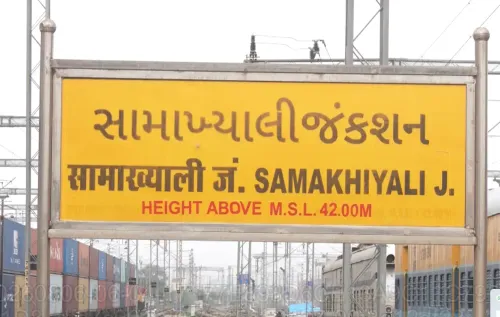
The Ahmedabad Division of Western Railway has constructed three railway bridges in a single block operation on the Maliya Miyana-Vadharva section of the Viramgam-Samakhiali railway line in Morbi district, Gujarat, as part of a comprehensive flood-protection drive. Three cranes — each with a lifting capacity of 500 tonnes, combining to a total of 1,500 tonnes — were deployed simultaneously to erect bridges numbered 147/D, 147/E and 147/F between kilometre 699/16 and 699/24.
Scale of Infrastructure Work
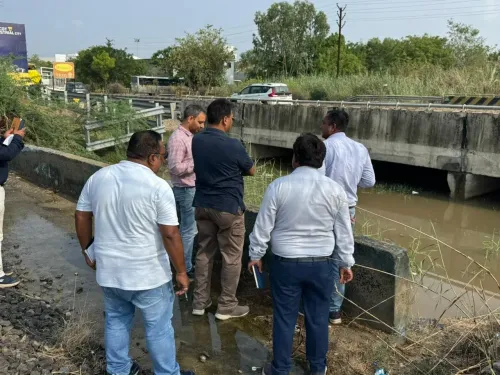
Beyond the three new bridges, the division has built approximately 3.7 km of protection walls at flood-vulnerable locations to prevent soil erosion and reinforce railway embankments. An additional 12 drainage structures have been developed across affected sections to improve water discharge and reduce the risk of track and embankment damage during monsoon flooding.
Of the 12 new drainage openings, five are on the Vadharva-Maliya Miyana section — including two near level crossings 95 and 97 — another five on the Maliya Miyana-Dahinsara section, and one on the Maliya Miyana-Surbari section. A structural upgrade was also carried out at bridge number 155 at kilometre 703/1-7, where three inadequate 600 mm diameter pipes were replaced with a box bridge beneath the up line, goods line and track machine siding to allow greater water flow and ease pressure on the tracks.
Why Morbi Needed This Fix
The Maliya Miyana region is acutely vulnerable to flooding driven by heavy Saurashtra rainfall and periodic water releases from the Machhu-2 and Machhu-3 dams. Devastating floods in 1979, 2017 and most recently in August 2024 have repeatedly damaged transport infrastructure in the area, including National Highway 27.
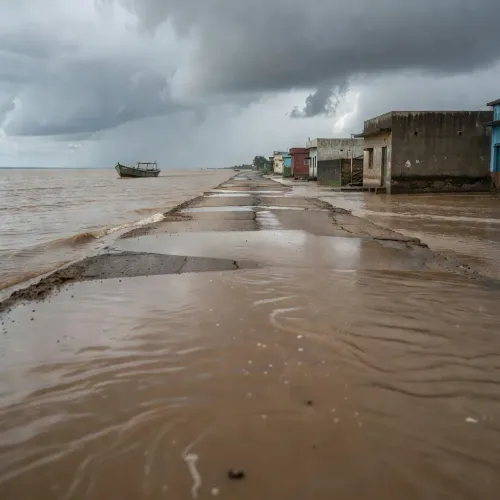
During the August 2024 floods, tracks on the Samakhiali-Maliya Miyana, Maliya Miyana-Dhrangadhra and Maliya Miyana-Wankaner sections were submerged. At certain points, strong water currents eroded the soil beneath the tracks on the Vadharva-Maliya Miyana section to the extent that rails and sleepers were left without adequate foundation support — a direct safety hazard. Engineering improvements were subsequently undertaken across approximately seven kilometres of flood-prone sections.
Strategic Importance of the Rail Corridor
The railway network passing through Maliya Miyana is a critical artery for freight movement from the ports of Kandla and Mundra — two of India's busiest cargo gateways — to industrial and commercial centres across the country. The routes linking Gandhidham, Samakhiali, Viramgam, Ahmedabad and Dahinsara serve the Kutch and Saurashtra regions, encompassing several goods sidings and freight-handling facilities. Flood-related disruptions on these corridors can cascade into passenger delays, freight backlogs and broader supply-chain disruptions.
What the Railway Administration Said
Divisional Railway Manager (DRM) Ved Prakash, under whose supervision the works were carried out, described the simultaneous deployment of three cranes as 'an example of the technical expertise, planned execution and teamwork of our engineering department.' He added that the protection walls and drainage structures would materially improve water discharge during floods and strengthen track safety.
'Our objective is not merely to repair damage caused by floods but to develop strong railway infrastructure keeping future challenges in mind, so that passenger and freight transportation remains safer and more reliable even during adverse weather conditions,' Ved Prakash said.
The division has also pre-positioned emergency reserves of quarry dust, large stones or boulders, and railway ballast at Maliya Miyana to ensure repair materials are immediately available should fresh flood damage occur during future monsoon seasons.
Point of View
But the deeper story is how long it took for systematic flood-proofing to follow serial infrastructure damage in 1979, 2017, and 2024. The Kandla-Mundra freight corridor is too economically significant to treat flood resilience as a post-disaster response — it demands pre-monsoon engineering as a standing budget line. The creation of emergency material reserves at Maliya Miyana suggests the division finally recognises that reality. Whether this model is replicated across other flood-prone Gujarat sections before the 2026 monsoon will be the real measure of institutional learning.
NationPress
19 Nov 2026
Frequently Asked Questions
What flood-protection work has Western Railway completed in Morbi, Gujarat?
The Ahmedabad Division of Western Railway has built three new railway bridges in a single block operation, approximately 3.7 km of protection walls, and 12 additional drainage structures on flood-prone sections in Morbi district. The works span around seven kilometres of track on the Viramgam-Samakhiali railway line.
Why is the Maliya Miyana area in Morbi so vulnerable to flooding?
The Maliya Miyana region faces repeated flood risk due to heavy Saurashtra rainfall and water releases from the Machhu-2 and Machhu-3 dams. Major flood events in 1979, 2017, and August 2024 have repeatedly damaged tracks, embankments, and roads in the area.
What was the scale of damage during the August 2024 floods in Morbi?
The August 2024 floods submerged tracks on the Samakhiali-Maliya Miyana, Maliya Miyana-Dhrangadhra, and Maliya Miyana-Wankaner sections and affected National Highway 27. In the worst-hit parts of the Vadharva-Maliya Miyana section, strong currents washed away soil beneath the tracks, leaving rails and sleepers without adequate foundation support.
Why is the railway corridor through Maliya Miyana strategically important?
The corridor links the major cargo ports of Kandla and Mundra to industrial and commercial centres across India via Gandhidham, Samakhiali, Viramgam, and Ahmedabad. Disruptions caused by flooding directly affect freight movement and can ripple into broader supply-chain delays.
How did Western Railway carry out the three-bridge construction in a single block?
Three cranes, each with a lifting capacity of 500 tonnes — combining to 1,500 tonnes — were deployed simultaneously on the Maliya Miyana-Vadharva section. This allowed bridges 147/D, 147/E, and 147/F to be installed in one continuous operational block, minimising line closure time.