Is Gujarat Ensuring Daily Water Supply in Over 100 Cities?
Synopsis
Gujarat's commitment to enhancing urban living conditions is evident as over 100 cities now enjoy daily water supply, with ambitious projects underway in more than 30 additional towns. The state aims to ensure clean drinking water for all, marking 2025 as a pivotal year for urban development.
Key Takeaways
Daily water supply established in over 100 cities.
SCADA system implemented for efficient water management.
Ongoing projects in 30+ towns to enhance water supply.
2025 marked as 'Urban Development Year'.
Commitment to improve civic amenities and living standards.
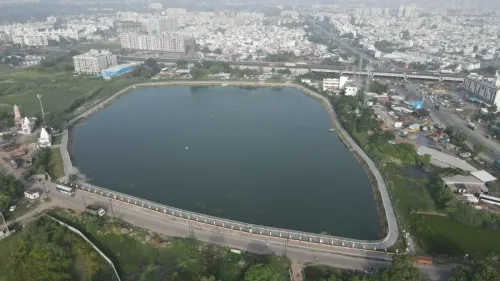
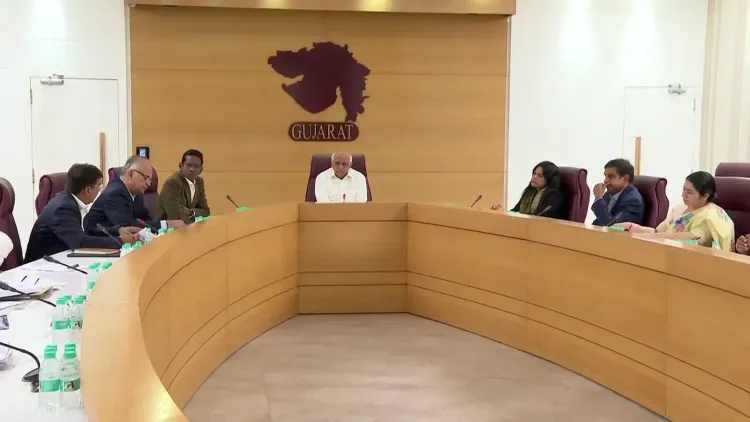
Gandhinagar, Jan 6 (NationPress) In a significant move towards creating world-class urban environments and delivering essential services such as clean drinking water, the Gujarat government has accelerated numerous initiatives aimed at developing robust water supply systems throughout the state.
According to a government announcement, urban water resources have been enhanced by 92.97 MLD, with transmission networks expanding by 528.35 KM as of 2025.
The government also highlighted that daily water supply has been established in 103 cities, while extensive projects are in progress in over 30 towns to ensure a stable supply.
Under the 'Mission Daily Water Supply', the state is committed to providing potable water across all urban sectors. This initiative supports urban local bodies in executing various water supply and sanitation projects.
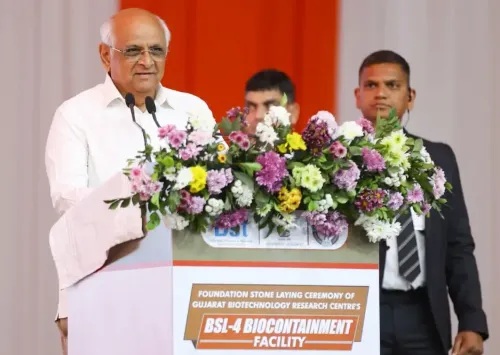
Remarkably, the Bhupendra Patel administration has proclaimed 2025 as 'Urban Development Year' to expedite the establishment of world-class cities, particularly focusing on infrastructure advancements in urban locales.
Apart from the established daily water supply systems in over 100 cities, significant projects are actively being pursued in 32 urban local bodies as part of the 'Mission Daily Water Supply'.
The implementation of the SCADA system in major cities has enabled digital oversight of water distribution and related services in urban settings.
This system assists in leak identification, recognizing low-pressure areas, reducing non-revenue water (NRW), enhancing per capita water availability with appropriate pressure, monitoring pumping stations for efficiency, valve oversight, and various operational tasks. Consequently, losses from non-revenue water have diminished, allowing for real-time tracking of water distribution and related services.
Importantly, the consistent availability of drinking water has lessened the necessity for citizens to rely on long-term water storage, thereby reducing dependence on alternative sources.
Through systematic and strategic urban development, the administration has reaffirmed its commitment to enhancing the living standards for urban residents.
Point of View
It's essential to recognize Gujarat's proactive approach in addressing urban water supply challenges. With a focus on infrastructure and sustainability, the state's initiatives are commendable and set a benchmark for others. The emphasis on providing clean drinking water reflects a commitment to improving the quality of life for its residents, ensuring that urban development aligns with essential civic needs.
NationPress
20 Sept 2026
Frequently Asked Questions
What is the 'Mission Daily Water Supply'?
The 'Mission Daily Water Supply' is an initiative by the Gujarat government aimed at ensuring consistent and clean drinking water supply across all urban areas.
How many cities in Gujarat have a daily water supply?
Currently, daily water supply is available in 103 cities across Gujarat.
What is the significance of the SCADA system?
The SCADA system allows for digital monitoring of water distribution, enabling real-time management and efficiency improvements in urban water supply.
What are the future plans for water supply in Gujarat?
The government has multiple projects underway in over 30 towns to further enhance water supply systems and ensure uninterrupted access.
What does 2025 represent for urban development in Gujarat?
The year 2025 has been declared 'Urban Development Year' by the Bhupendra Patel government, focusing on strengthening infrastructure and enhancing urban living conditions.