Gujarat's Innovative Push for Deep-Sea Fishing with Unique Mother Vessel Initiative
Synopsis
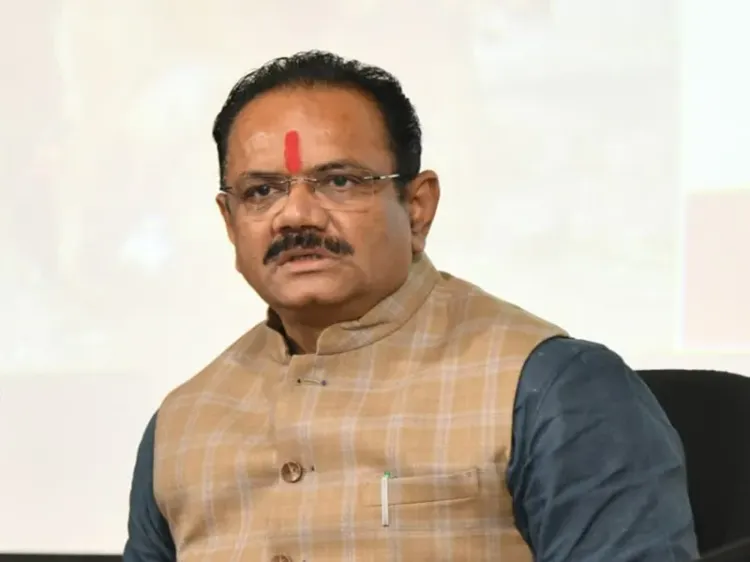
Gujarat is set to revolutionize its fishing industry with the introduction of deep-sea vessels and a groundbreaking mother vessel support system, aiming to enhance fish production and support fishermen in offshore waters. This initiative, announced by Agriculture Minister Jitu Vaghani, is a significant step forward for the state's agricultural budget.
Key Takeaways
Gujarat government introduces deep-sea fishing initiatives.
Launch of “mother vessel” support system for fishermen.
Financial aid of up to 50% for deep-sea vessels.
Target of 30 vessels for the fiscal year 2026-27.
Innovative approach to enhance fish production in underutilized waters.
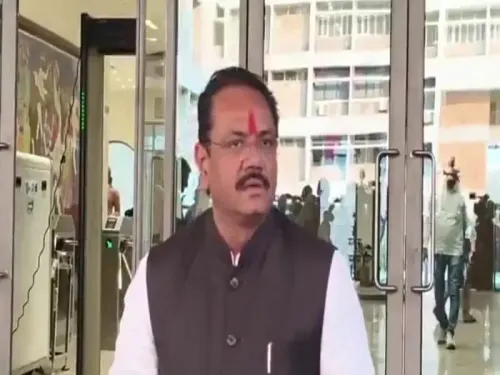
Gandhinagar, March 14 (NationPress) The government of Gujarat is set to unveil deep-sea fishing vessels along with an innovative “mother vessel” support initiative aimed at enhancing offshore fishing, as highlighted in the state's agriculture budget by Agriculture Minister Jitu Vaghani on Saturday.
During a press briefing that elaborated on the department's plans, the minister indicated that the state intends to motivate fishermen to explore deeper waters exceeding 12 nautical miles through the launch of the 'Deep Sea Fishing Vessel Scheme'. This initiative is designed to capitalize on the fish production capabilities in regions beyond Gujarat's coastal territorial waters and within the Exclusive Economic Zone.
This scheme will offer support to fishermen, facilitating the adoption of modern and safer fishing techniques in deep-sea locations.
Specific fishing approaches, including hook-and-line and tuna fishing, are anticipated to boost fish production significantly.
The government has established a unit cost of Rs 1.2 crore for a deep-sea fishing vessel, providing financial aid of up to 50 percent of the cost, limited to Rs 60 lakh, or 50 percent of the actual expenditure, whichever is lesser.
For the fiscal year 2026-27, the government aims to deploy 30 vessels and has earmarked Rs 15 crore for this program.
Vaghani mentioned that the government will assess the demand for the scheme, stating, “If necessary, the government will take a proactive stance in increasing the target.”
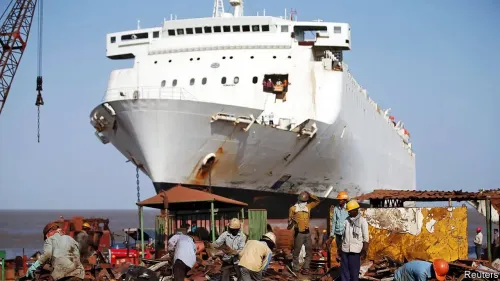
Additionally, the state is planning to launch what it calls a pioneering “Mother Vessels” scheme within India's fisheries sector.
These large vessels, commonly known as carrier, receiver, or factory vessels, will function in deep-sea environments, offering logistical and processing support to fishing boats operating offshore.
As per the minister, these vessels will be equipped with facilities for hygienic fish landing, sorting, pre-processing, processing, and onboard storage.
Fishermen will have the capability to transfer their catch directly to the mother vessel while still at sea, ensuring that the catch is handled and exported while maintaining quality.
Moreover, these vessels will furnish fuel, water, food, and technical assistance to smaller fishing boats engaged in prolonged operations in deep waters.
This initiative aims to amplify fishing activities in regions beyond 60 nautical miles from the coast that are currently underutilized. The unit cost for a mother fishing vessel is set at Rs 50 crore, with government aid of 25 percent, or up to Rs 12.5 crore.
Participation in the scheme will be open to fisheries cooperative societies, Fish Farmers Producer Organisations (FFPOs), and private enterprises.
In terms of agricultural infrastructure, the government has broadened the support under the 'Crop Storage Structure Scheme' to assist farmers in establishing small warehouses at the farm level.
The size restriction for these structures has been increased from 300 square feet to 600 square feet, while financial support has risen from Rs one lakh to Rs two lakh per unit. Additionally, the budget allocation for this scheme has doubled to Rs 154 crore.
The minister also revealed plans to enhance the production of sexed semen doses at the Patan laboratory under the National Gokul Mission.
The facility has thus far produced eight lakh doses, resulting in the birth of more than 31,263 female calves, with a reported success rate exceeding 90 percent.
While the actual cost of a single dose is approximately Rs 700, the government is providing it to livestock rearers at just Rs 50.
Another eight lakh doses are projected for production in the forthcoming period, supported by a Rs 13 crore allocation in the 2026–27 budget.
Vaghani noted that this technology will aid in boosting milk production and alleviating the issue of stray cattle within the state.
The state is also poised to enhance grain storage capacity across rural, taluka, and district levels, aligning with the central government’s cooperative sector grain storage initiative.
Currently, a significant portion of Gujarat’s storage infrastructure is concentrated in urban areas, often compelling farmers to sell their produce at lower prices post-harvest.
Under the new strategy, a network of over 10,000 agricultural credit societies, more than 28,000 purchase and sale unions, and 23 milk unions will be engaged in developing scientific storage infrastructure.
The government has allocated Rs 30 crore for this initiative. Newly constructed warehouses may also be utilized by the Food Corporation of India for storage, permitting cooperative entities to generate rental income.
The minister also revealed a nominal budget allocation of Rs 10 crore for a proposed “Gujarat Agri Business and Export Promotion Policy 2026.”
This policy aims to foster value addition, food processing, reduction of post-harvest losses, and the development of farm-gate processing facilities.
Furthermore, it will strive to support agri-based sectors, agri-tech startups, and investment in food processing, while promoting quality enhancement, branding, and marketing of agricultural products to broaden exports.
Beneficiaries under the proposed framework are anticipated to include agri-business and food processing units, organizations providing agricultural services like custom hiring centers and testing laboratories, agri-startups offering technology-based solutions, along with farmer producer organizations, self-help groups, and cooperative institutions.
The policy will also back agricultural infrastructure projects under the public-private partnership model, encompassing agri and food parks, irradiation centers, airport cargo facilities, laboratories, agri malls, and local grading markets.
In instances where land is provided by the state at subsidized rates or free for PPP projects, support of up to Rs 50 crore may be extended.
“The policy aims to foster value addition, bolster agri-business, and elevate Gujarat's share in agricultural exports while creating new employment prospects in rural regions,” Vaghani added.
Point of View
Aimed at enhancing productivity and providing better support to local fishermen. By investing in deep-sea fishing and innovative support systems, the state is taking proactive steps to maximize its marine resources sustainably.
NationPress
20 Sept 2026
Frequently Asked Questions
What is the Deep Sea Fishing Vessel Scheme?
The Deep Sea Fishing Vessel Scheme aims to encourage fishermen to explore waters beyond 12 nautical miles by providing financial support for modern fishing vessels.
What are the benefits of the Mother Vessel scheme?
The Mother Vessel scheme will provide logistical support, hygienic fish handling, and essential supplies to smaller fishing boats operating in deep waters.
How much financial assistance is available for deep-sea vessels?
Fishermen can receive up to 50% of the cost of a deep-sea fishing vessel, capped at Rs 60 lakh.
What is the goal for deep-sea vessels in the 2026-27 budget?
The government has set a target of deploying 30 deep-sea fishing vessels with a budget allocation of Rs 15 crore for this initiative.
Who can participate in the Mother Vessel scheme?
Fisheries cooperative societies, Fish Farmers Producer Organisations (FFPOs), and private companies are eligible to participate in the scheme.