Gujarat's ₹190 crore SAMARTH hub at IIT Gandhinagar to train 10,000 semiconductor professionals
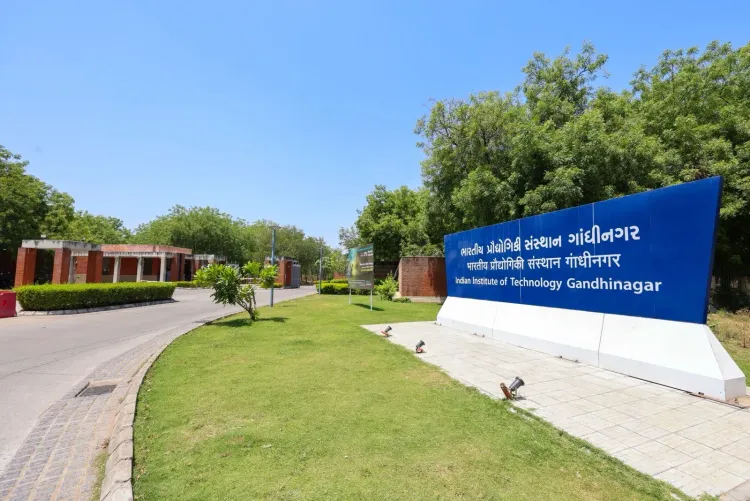
Synopsis
Gujarat is building a ₹190 crore semiconductor research and training centre at IIT Gandhinagar — the SAMARTH hub — with a five-year target of training over 10,000 engineers, technicians, and faculty. It is one of the most concrete workforce bets yet on India's ambition to own the full semiconductor value chain, not just assemble chips.
Key Takeaways
SAMARTH (Silicon and Advanced Semiconductor Manufacturing Research and Training Hub) will be established at IIT Gandhinagar with a ₹190 crore investment.
Funding comes jointly from MeitY , the Gujarat Department of Science and Technology , and IIT Gandhinagar .
The hub targets training more than 10,000 people over five years , including 5,600 students and 1,500 vocational technicians.
Labs will cover nano-fabrication, CMOS process training, IC design, device modelling, and chip quality characterisation.
IIT Gandhinagar will sign MoUs with Gujarat engineering colleges to offer programmes at nominal fees.
The centre supports India Semiconductor Mission 2.0 and Gujarat's positioning as a national semiconductor hub.
IIT Gandhinagar is set to host the Silicon and Advanced Semiconductor Manufacturing Research and Training Hub (SAMARTH), a dedicated semiconductor research and skilling centre backed by a combined ₹190 crore investment from the Union Ministry of Electronics and Information Technology (MeitY), the Gujarat government's Department of Science and Technology, and IIT Gandhinagar. The facility, announced on 3 July, is expected to begin operations soon and aims to produce industry-ready semiconductor talent at scale.
What SAMARTH Will Do
The centre is designed to bridge the gap between academic training and industrial requirements in semiconductor manufacturing. Engineering students will receive hands-on, practical training to become 'fab-ready' — meaning they can step directly into semiconductor fabrication facilities upon graduation. Faculty members and working professionals will also be able to upskill through structured programmes.
Beyond degree-level education, SAMARTH will offer specialised short-term certificate courses, summer schools, and one-day exposure programmes aimed at introducing school and college students to semiconductor technologies at an early stage.
Scale and Training Targets
Over the next five years, SAMARTH plans to train more than 10,000 people. The breakdown includes 5,600 undergraduate, postgraduate, and doctoral students; 1,500 technicians in vocational and technical education; 1,000 certificate programme participants; 230 faculty members; and 230 industry professionals through upskilling initiatives. An additional 2,700-plus students are expected to participate in summer schools and one-day outreach programmes.
Infrastructure and Laboratories
IIT Gandhinagar has already initiated procurement of equipment and is appointing consultants for construction and associated infrastructure. The facility will house laboratories for nano-fabrication, CMOS process training, semiconductor process and device design, device modelling, IC design and prototyping, and a dedicated device process characterisation facility for testing, inspection, and quality assessment of electronic devices and chip manufacturing processes.
To widen access, IIT Gandhinagar is preparing to sign memorandums of understanding (MoUs) with engineering colleges across Gujarat, enabling students from the state to enrol in programmes at nominal fees. The centre will also pursue collaborations with local and international partners for research, training, and workforce development.
Broader Policy Context
The hub aligns with India's Semiconductor Mission 2.0, under which the Centre has prioritised building a full semiconductor value chain — spanning design engineers, equipment manufacturers, and logistics. Prime Minister Narendra Modi has stated: 'Our goal is not limited to setting up just one factory, but to build an entire ecosystem. India is now focusing on the entire semiconductor value chain, from design engineers to machine manufacturers and logistics. The announcement of the India Semiconductor Mission 2.0 is a major step in this direction. As production increases, the demand for materials and components within India will also rise, creating the biggest opportunity for domestic industries.'
This comes amid a broader national push to reduce dependence on imported chips following global supply chain disruptions that exposed India's vulnerability in electronics manufacturing. Gujarat has emerged as a frontrunner in this effort, with Gandhinagar already hosting semiconductor fabrication investments from Tata Electronics and Micron Technology. SAMARTH is intended to ensure that the talent pipeline keeps pace with the manufacturing capacity being built in the state.
Point of View
But the real test is timing. India's semiconductor fabs — Tata in Dholera, Micron in Sanand — are moving fast, and the talent shortage could become a bottleneck before the hub trains its first cohort at scale. A five-year pipeline for 10,000 people sounds substantial until you measure it against the tens of thousands of fab-ready workers that a single large fabrication plant requires. The ₹190 crore outlay is also modest relative to what competing Asian economies spend on chip workforce programmes. The MoU strategy with Gujarat engineering colleges is smart in theory, but execution will depend on whether those colleges can deliver students who are genuinely lab-ready, not just enrolled.
NationPress
2 Oct 2026
Frequently Asked Questions
What is the SAMARTH semiconductor hub at IIT Gandhinagar?
SAMARTH — the Silicon and Advanced Semiconductor Manufacturing Research and Training Hub — is a dedicated semiconductor research and skilling centre being established at IIT Gandhinagar in Gujarat. It is backed by a ₹190 crore joint investment from MeitY, the Gujarat Department of Science and Technology, and IIT Gandhinagar, and is expected to begin operations soon.
How many people will SAMARTH train and in what timeframe?
SAMARTH aims to train more than 10,000 people over five years. This includes 5,600 undergraduate, postgraduate, and doctoral students; 1,500 vocational technicians; 1,000 certificate programme participants; 230 faculty members; and 230 industry professionals, along with over 2,700 students in summer schools and outreach events.
What facilities will the SAMARTH hub include?
The centre will house laboratories for nano-fabrication, CMOS process training, semiconductor process and device design, device modelling, IC design and prototyping, and a device process characterisation facility for testing and quality assessment of electronic devices and chip manufacturing processes.
How does SAMARTH connect to India's broader semiconductor policy?
SAMARTH is aligned with India Semiconductor Mission 2.0, under which the Centre is building a full semiconductor value chain from chip design to manufacturing and logistics. Prime Minister Narendra Modi has described the mission as creating 'an entire ecosystem' rather than isolated factories, and SAMARTH is intended to supply the skilled workforce that ecosystem requires.
Who can access programmes at SAMARTH and at what cost?
Engineering students, faculty members, and working professionals in the semiconductor sector can access SAMARTH's programmes. IIT Gandhinagar is signing MoUs with engineering colleges across Gujarat so that students from the state can enrol at nominal fees. Short-term certificate courses, summer schools, and one-day exposure programmes will also be available.