Gujarat's NGKRM: 250+ partners join drive to skill 1.03 lakh youth in 2026-27
Synopsis
Gujarat has drawn over 250 industry and academic partners — including L&T and Tata Indian Institute of Skills — into its NGKRM within weeks of launch, targeting 1.03 lakh trainees in 2026-27 and eventually five lakh annually. The mission's performance-linked payments and biometric monitoring set a new accountability bar for state-run skilling programmes.
Key Takeaways
More than 250 industries and academic institutions have joined Gujarat's Namo Gujarat Kaushalya and Rozgar Mission (NGKRM) as training partners.
The state targets skill training for 1.03 lakh candidates in 2026-27 , with plans to scale to five lakh annually .
Key partners include L&T , Tata Indian Institute of Skills , iACE , and Ganpat University .
Training covers 20 priority sectors and 12 emerging technology domains , including AI, robotics, EVs, and cybersecurity.
All training is free of cost ; certified trainees receive ₹500 per 120 hours via DBT to Aadhaar-linked accounts.
Training providers are paid on a performance-linked basis tied to enrolment, certification, and placement outcomes.
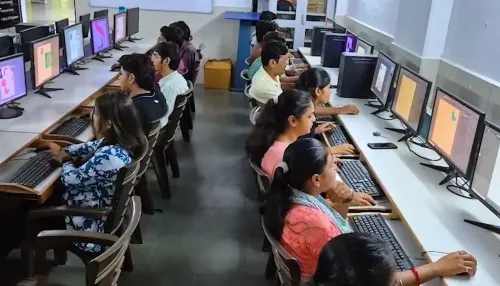
More than 250 industries and academic institutions have signed on as training partners under Gujarat's newly launched Namo Gujarat Kaushalya and Rozgar Mission (NGKRM), as the state government targets skill training for 1.03 lakh candidates in 2026-27. The response, received by the Directorate of Skill Development, marks a significant early uptake for what officials describe as the state's most ambitious workforce development push to date.
Key Partners and Institutions
The organisations that have submitted proposals under the mission's flagship training component — the Gujarat Institutes for Advanced Skills (GIAS) — include major industry names such as L&T, the International Automobile Centre of Excellence (iACE), Tata Indian Institute of Skills, and Ganpat University, among others. Proposals have come from industries, academic institutions, and standalone training providers alike.
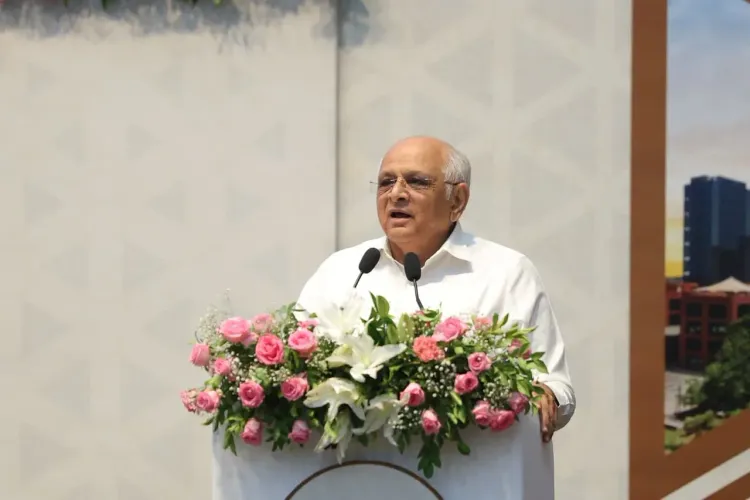
The initiative is being implemented under the leadership of Chief Minister Bhupendra Patel. Labour, Skill Development and Employment Minister Kunvarji Bavaliya said the mission would build 'a demand-driven, industry-led ecosystem for advanced skill development and employment generation across the state.' Minister of State Kantilal Amrutiya added that the programme would focus on future-ready skills across 20 priority sectors and 12 emerging technology domains.
Sectors and Technology Domains Covered
The 20 priority sectors include construction, healthcare, IT-ITeS, electronics, tourism, logistics, aerospace, food processing, and media. The 12 emerging technology domains span artificial intelligence, robotics, electric vehicles, blockchain, cybersecurity, semiconductor manufacturing, data science, and drone technology — areas identified as critical to India's near-term employment landscape.
GIAS will serve as the primary training delivery mechanism, offering short-term vocational courses aligned with the National Skills Qualification Framework (NSQF) Levels 1 to 8. Training will be available in residential and non-residential formats, as well as through Recognition of Prior Learning (RPL) pathways.
Who Is Eligible and What They Receive
Target beneficiaries include individuals aged 14 to 59, women, workers registered on the e-Shram and e-Nirman portals, existing industry workers seeking upskilling or reskilling, economically weaker sections, SC/ST communities, persons with disabilities, informal workers, artisans, migrants, and the unemployed. Training under NGKRM will be provided free of cost.
Eligible trainees will receive financial assistance of ₹500 for every 120 hours of training through Direct Benefit Transfer (DBT) to their Aadhaar-linked bank accounts, disbursed after successful certification.
Monitoring, Technology, and Payment Structure
The government has mandated technology-based monitoring for all empanelled training partners. Centres must be equipped with geo-fenced, face-recognition-based biometric attendance systems, CCTV surveillance with 90-day video storage, broadband connectivity, certified trainers, and industry-standard infrastructure. All training activities — attendance, assessments, certifications, and placement records — will be tracked through the NGKRM digital platform.
A performance-linked payment system will govern disbursements to training providers, with payments tied to enrolment, certification, and placement outcomes. Empanelment will remain open on a rolling basis throughout 2026-27, and selected partners will be empanelled for three years, with a possible two-year extension based on performance.
Broader Vision and Scale
NGKRM consolidates several existing skill development schemes under a single framework, aiming to improve coordination, training quality, and employment outcomes. The government plans to gradually scale the programme to train up to five lakh people annually. The mission is anchored within Gujarat's broader 'Viksit Gujarat @2047' vision and aligns with the Centre's repeated emphasis on skilling and reskilling the workforce for future employment. As Gujarat positions itself as a model state for industry-linked skill development, the quality of placement outcomes — not just enrolment numbers — will determine whether this mission delivers on its promise.
Point of View
Or whether Gujarat adds to the national tally of certified-but-unemployed youth. The consolidation of existing schemes under one framework is a sound administrative move, but coordination gains only materialise if the digital platform is genuinely real-time and not a compliance formality. The five-lakh-annually target is ambitious; the credibility of the mission will hinge on the first year's verified outcomes.
NationPress
27 Sept 2026
Frequently Asked Questions
What is the Namo Gujarat Kaushalya and Rozgar Mission (NGKRM)?
NGKRM is a Gujarat government skill development mission launched in 2026 that consolidates existing skilling schemes under a single framework. It targets training for 1.03 lakh candidates in 2026-27, with a long-term goal of skilling five lakh people annually, through industry-led training under the Gujarat Institutes for Advanced Skills (GIAS).
Who can apply for training under NGKRM?
Eligible beneficiaries include individuals aged 14 to 59, women, SC/ST communities, persons with disabilities, informal workers, artisans, migrants, workers registered on the e-Shram and e-Nirman portals, and unemployed individuals seeking skill-linked employment. Training is provided free of cost.
What financial support do trainees receive under NGKRM?
Trainees who successfully obtain certification receive ₹500 for every 120 hours of training, disbursed directly to their Aadhaar-linked bank accounts via Direct Benefit Transfer (DBT).
Which sectors and technology domains does NGKRM cover?
The mission covers 20 priority sectors including construction, healthcare, IT-ITeS, electronics, aerospace, logistics, and food processing. It also addresses 12 emerging technology domains such as artificial intelligence, robotics, electric vehicles, blockchain, cybersecurity, semiconductor manufacturing, data science, and drone technology.
How are training partners monitored and paid under NGKRM?
Empanelled training centres must install geo-fenced biometric attendance systems, CCTV with 90-day storage, and broadband connectivity. All activities are tracked on the NGKRM digital platform. Payments to training providers are performance-linked, based on enrolment, certification, and placement outcomes — not just capacity creation.