Guwahati Airport capacity to soar from 3.4M to 13M+ passengers

Synopsis
Guwahati's Lokpriya Gopinath Bordoloi International Airport is set for a near-fourfold capacity jump — from 3.4 million to 13 million-plus annual passengers — as Assam positions Northeast India as the pivot of India's Act East Policy and a direct gateway to Southeast Asia.
Key Takeaways
Lokpriya Gopinath Bordoloi International Airport in Guwahati will expand annual passenger capacity from 3.4 million to over 13 million .
The expansion is framed by the Assam Chief Minister's Office as a direct bridge between Northeast India and Southeast Asia .
The airport is named after Assam's first Chief Minister and serves as the primary air hub for all eight Northeastern states.
The project aligns with India's Act East Policy , which has prioritised Northeast connectivity to ASEAN nations since its rebranding in 2014 .
New direct international routes to ASEAN cities — a key watch-point — would be the commercial proof of the expansion's regional impact.
The upgrade is part of a wider government push to build airport infrastructure across the Northeast, including at Imphal and Agartala .
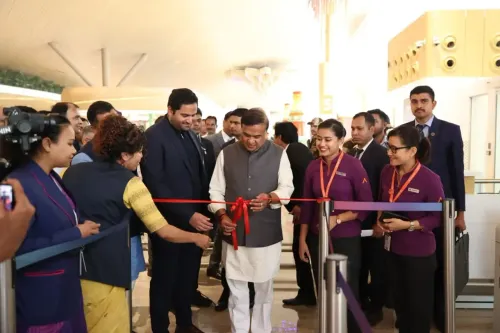
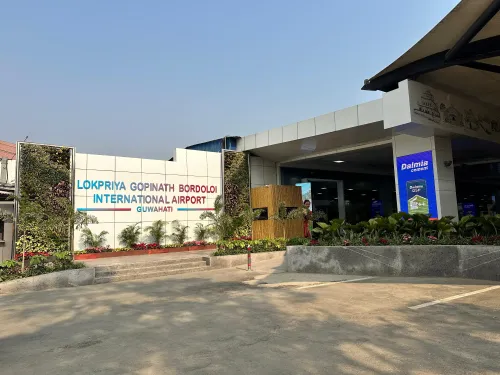
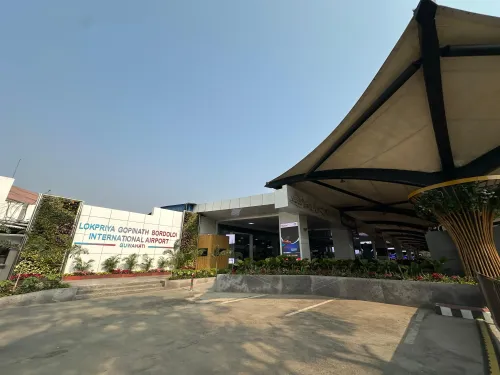
Northeast India's front door is about to get a lot bigger. The Chief Minister's Office of Assam announced on Monday, October 19, 2026, that Lokpriya Gopinath Bordoloi International Airport in Guwahati is set to expand its annual passenger capacity from 3.4 million to over 13 million — a near-fourfold leap that repositions the region's primary gateway as a credible hub for Southeast Asia connectivity.
From gateway to hub: what the 13 million figure means
Numbers tell the story plainly. A capacity of 13 million passengers annually doesn't just serve more travellers — it changes the airport's category entirely, moving it from a busy regional node into the league of mid-size international hubs. Lokpriya Gopinath Bordoloi International Airport, named after Assam's first Chief Minister, has long been the principal air link for a region spanning eight states and a combined population of roughly 50 million people. The current ceiling of 3.4 million has visibly strained under rising demand, and this expansion is framed as the structural answer.
The CMO's announcement specifically highlights the airport 'bridging horizons by connecting Northeast India to Southeast Asia' — language that maps directly onto India's Act East Policy, the strategic framework first articulated as 'Look East' in 1991 and rebranded in 2014 with a sharper focus on the Northeast as the physical bridge to ASEAN nations.
Act East Policy finds its runway in Guwahati
For over three decades, India's Act East Policy has promised deeper economic, cultural, and people-to-people links with Southeast Asia — but the Northeast's chronic infrastructure gaps left that promise only partly fulfilled. Thin air connectivity meant that a traveller from Guwahati to Bangkok, Kuala Lumpur, or Yangon often routed through Kolkata or Delhi, adding hours and cost. A dramatically expanded airport directly addresses that structural detour.
India has been systematically upgrading airports across the Northeast — from Imphal to Agartala — as part of a broader infrastructure push in border states to support trade, tourism, and logistics corridors toward Myanmar, Thailand, and beyond. The Guwahati expansion, given the city's size and its role as the region's commercial capital, is the centrepiece of that push.
What travellers and the tourism sector stand to gain
The immediate beneficiaries are the millions of travellers — students, business commuters, tourists — who have long faced constrained flight options out of the Northeast. A higher-capacity terminal creates the conditions for airlines to launch or scale up direct international routes to ASEAN cities, routes that have so far been commercially unviable given limited infrastructure. Tourism operators eyeing the Northeast's extraordinary biodiversity and cultural wealth — from Kaziranga to Majuli — have an equally direct stake in what happens next on the tarmac.
The expansion also carries strategic weight for cross-border trade. As India deepens its engagement with the Bay of Bengal Initiative for Multi-Sectoral Technical and Economic Cooperation (BIMSTEC) and bilateral corridors with Myanmar and Bangladesh, a Guwahati hub capable of handling 13 million passengers becomes both a commercial asset and a diplomatic one.
The CMO's post, framing the development as 'a monumental chapter in regional connectivity,' signals that Assam's leadership is keen to own this moment — and to position the state not as a periphery, but as the pivot of India's eastern neighbourhood strategy. Whether new international routes are announced in the months ahead will be the real test of whether the runway leads somewhere.
Point of View
Assam directly addresses the connectivity gap that has historically diluted India's ASEAN engagement — businesses and tourists in Southeast Asia have simply had no efficient route in. The CMO's framing of the airport as a 'gateway to the East' is politically deliberate: it stakes Assam's claim as the engine of India's eastern neighbourhood strategy, not merely a recipient of central investment. If new direct international routes follow, this expansion could meaningfully reshape trade and tourism flows across the entire sub-region.
NationPress
19 Oct 2026
Frequently Asked Questions
What is the new passenger capacity of Guwahati airport?
The annual passenger capacity of Lokpriya Gopinath Bordoloi International Airport in Guwahati is being expanded from 3.4 million to over 13 million passengers , representing a near-fourfold increase.
Which countries will Guwahati airport connect to after expansion?
The expansion is aimed at strengthening direct air connectivity between Northeast India and Southeast Asia , with new direct routes to ASEAN cities being the key watch-point following the infrastructure upgrade.
What is Lokpriya Gopinath Bordoloi International Airport?
Lokpriya Gopinath Bordoloi International Airport is the primary international airport in Guwahati, Assam , serving as the main air gateway for all eight Northeastern states. It is named after Assam's first Chief Minister .
How does the Guwahati airport expansion relate to India's Act East Policy?
India's Act East Policy , launched in 2014 as a rebranding of the 1991 Look East Policy, specifically prioritises Northeast India as the physical corridor to ASEAN nations. The Guwahati airport expansion is a centrepiece of the infrastructure push required to operationalise that strategy.
Who announced the Guwahati airport capacity expansion?
The Chief Minister's Office of Assam announced the expansion on October 19, 2026 , describing it as 'a monumental chapter in regional connectivity' and positioning the airport as a new gateway linking Northeast India to Southeast Asia .