CM Himanta Inaugurates New Guwahati Airport Terminal

Synopsis
Assam Chief Minister Himanta Biswa Sarma on 25 May 2026 welcomed the new terminal at Guwahati Airport, positioning it as a key driver of economic growth and connectivity for all eight states of Northeast India.
Key Takeaways
Assam CM Himanta Biswa Sarma unveiled the new terminal at Lokpriya Gopinath Bordoloi International Airport, Guwahati on 25 May 2026 .
Sarma described the terminal as 'an engine of growth for the North East in the coming years.' The Airports Authority of India (AAI) has been driving airport modernisation across the Northeast under the Act East Policy since 2014 .
The UDAN scheme , launched in 2016 , has expanded subsidised air connectivity to underserved Northeast cities alongside these infrastructure upgrades.
Similar terminal and runway works have been completed or announced at airports in Imphal , Agartala , Dibrugarh and Itanagar .
New international routes connecting the Northeast to Southeast Asia are among the next milestones being watched under the Act East framework.
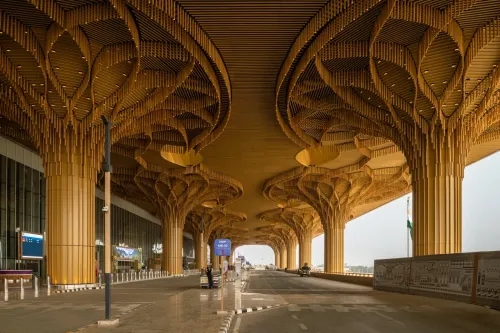
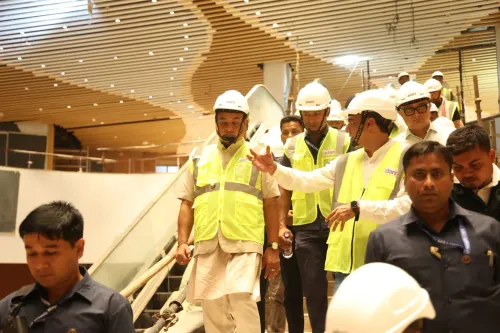
Assam Chief Minister Himanta Biswa Sarma on Monday, 25 May 2026, welcomed the launch of the new terminal at Lokpriya Gopinath Bordoloi International Airport in Guwahati, describing the facility as a future engine of growth for the entire Northeast. Sarma shared images of the terminal on social media, calling it 'beautiful' and underscoring its regional economic significance.
Context
The Guwahati Airport is the busiest aviation hub in Northeast India, serving as the primary gateway for all eight states of the region. The new terminal marks a significant upgrade to the airport's capacity and passenger experience, arriving at a time when air travel demand across the Northeast has grown steadily. Sarma stated that the terminal 'is going to serve as an engine of growth for the North East in the coming years.'
The Airports Authority of India (AAI), the central public-sector undertaking responsible for airport development nationwide, has been overseeing modernisation projects at multiple Northeast airports as part of a broader infrastructure push tied to the government's Act East Policy.
Policy Backdrop
Aviation infrastructure in the Northeast has been a stated priority for successive central governments since 2014, when the Act East Policy reoriented India's engagement with Southeast Asia and emphasised connectivity as a prerequisite for trade and tourism. The UDAN (Ude Desh ka Aam Naagrik) scheme, launched in 2016, further subsidised regional air routes to make flying more affordable for residents of underserved Northeast cities.
Similar terminal upgrades and runway expansions have been completed or announced at airports in Imphal, Agartala, Dibrugarh and Itanagar, reflecting a region-wide pattern of aviation investment. The Guwahati terminal adds to this momentum as the region's largest and most strategically positioned airport.
Stakeholders and Impact
The upgraded terminal is expected to benefit a wide range of stakeholders — from daily air travellers and the business community to the tourism and hospitality sectors that depend on Guwahati as a transit hub. Improved terminal infrastructure typically reduces congestion, shortens turnaround times and enables airlines to operate larger aircraft, which can lower ticket prices over time.
For Northeast India as a whole, a modernised Guwahati hub could accelerate the rollout of international routes connecting the region to Southeast Asia, a long-standing ambition under the Act East framework. Local entrepreneurs and exporters of agricultural and handicraft products stand to gain from reduced logistics friction.
What's Next
Attention will now turn to the AAI's capacity utilisation data in coming quarters and the announcement of new domestic and international routes from Guwahati. Parallel airport projects in other Northeast states will also be watched closely to assess whether the region's aviation network is expanding in a coordinated manner.
The Guwahati terminal's performance will serve as a benchmark for the broader Northeast modernisation programme, and its success or shortfalls are likely to shape investment decisions at smaller regional airports in the years ahead.
Point of View
The optics are doubly useful: he reinforces his identity as the region's most prominent development-focused leader while signalling to investors and airlines that Guwahati is ready to anchor international connectivity. The framing of the terminal as a regional 'engine of growth' is deliberate — it positions a single infrastructure project as a symbol of collective Northeast progress rather than an Assam-specific gain, consistent with Sarma's role as NEDA convenor. The real test will come in route announcements and passenger throughput data, which will determine whether the terminal fulfils its stated ambition or joins a long list of underutilised Northeast facilities.
NationPress
9 Oct 2026
Frequently Asked Questions
What is the new terminal at Guwahati Airport?
The new terminal is a modernised passenger facility at Lokpriya Gopinath Bordoloi International Airport in Guwahati, the busiest airport in Northeast India, developed under the Airports Authority of India 's regional modernisation programme.
Why is the Guwahati Airport terminal important for Northeast India?
Guwahati Airport is the primary aviation gateway for all eight northeastern states. A new terminal increases capacity, improves passenger experience and enables more domestic and international routes, which can lower logistics costs and boost tourism and trade.
What is the UDAN scheme and how does it relate to Northeast airports?
UDAN (Ude Desh ka Aam Naagrik) is a central government scheme launched in 2016 to subsidise regional air routes, making flying more affordable in underserved areas including the Northeast. It has run alongside physical airport upgrades to improve overall connectivity.
What is India's Act East Policy and its role in Northeast infrastructure?
The Act East Policy , adopted after 2014 , reorients India's engagement toward Southeast Asia and treats Northeast connectivity — through roads, railways and airports — as essential for trade, tourism and strategic integration with the region.
Which other Northeast airports have seen similar upgrades?
Terminal or runway upgrades have been completed or announced at airports in Imphal , Agartala , Dibrugarh and Itanagar , reflecting a coordinated modernisation effort across the eight-state region.