CM Saini's Cabinet Greenlights Land Pooling Policy, ₹86.95 Cr for Gaushalas
Synopsis
Haryana CM Nayab Singh Saini's cabinet greenlit the Land Pooling Policy-2026 — offering landowners 50% developed area and ₹1 lakh per acre annually — disbursed ₹86.95 crore to 629 gaushalas, and scheduled a special Assembly session on Constitution Day, 26 November.
Key Takeaways
Land Pooling Policy-2026 approved: landowners receive 50% developed area plus ₹1 lakh per acre per year interim financial support.
TDR (Transferable Development Rights) policy amended to recalibrate urban development entitlements across Haryana. ₹86.95 crore released to 629 gaushalas statewide for fodder procurement and shed construction.
Special session of the Haryana Legislative Assembly called for 26 November 2026 — Constitution Day.
Mandatory registration of travel agents approved as a consumer-protection measure.
Service rules for Junior Lecturer Assistants amended in the same sitting.
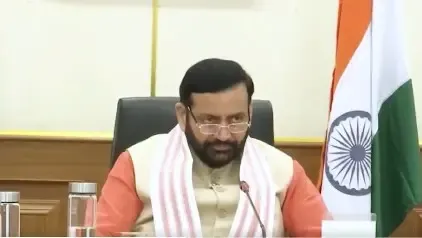
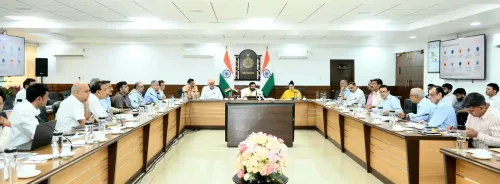
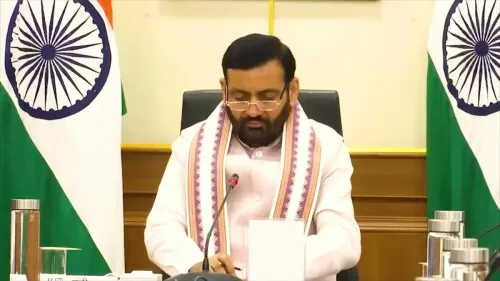
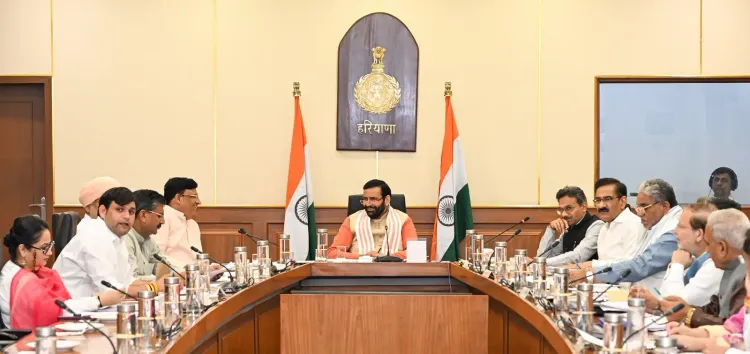
Five consequential decisions in a single sitting — Haryana Chief Minister Nayab Singh Saini chaired a cabinet meeting in Chandigarh on Tuesday, 3 November 2026 that moved the state simultaneously on land reform, animal welfare, regulatory tightening, and constitutional commemoration. The decisions signal a government pressing forward on multiple fronts at once.
Land Pooling Policy-2026: ₹1 lakh per acre, per year for landowners
The headline decision is the approval of the Land Pooling Policy-2026, a significant shift in how Haryana manages urban expansion. Under the new framework, landowners who contribute land to state-led development projects will receive 50 per cent of the developed area back — plus an interim financial support of ₹1 lakh per acre per year while development is underway. That annual cash cushion addresses a long-standing grievance: landowners waiting years for plots to be returned while bearing the cost of having parted with productive land. The policy directly targets urbanisation pressures that have intensified across Haryana's peri-urban belts, particularly around the National Capital Region.
The cabinet also approved amendments to the TDR (Transferable Development Rights) policy, a planning tool that allows landowners displaced by public projects to transfer their development entitlement to other plots. Tweaks to TDR norms typically recalibrate where and how densely recipients can build — a lever with sizeable implications for Haryana's rapidly growing towns.
₹86.95 crore flows to 629 gaushalas for fodder and shed construction
In what CM Saini described as part of his government's commitment to gauvamsh sanrakshan (cow protection), the cabinet released ₹86.95 crore to 629 gaushalas across the state. The funds are earmarked for two specific uses: fodder procurement and the construction or repair of sheds. Haryana has consistently backed state-run and community cow shelters through budget allocations, but the scale of this single release — covering nearly all registered gaushalas in the state — marks a substantial single-day commitment to the sector.
Special Assembly session on Constitution Day, 26 November
The cabinet also resolved to convene a special session of the Haryana Legislative Assembly on 26 November, coinciding with Constitution Day — the anniversary of the adoption of the Indian Constitution in 1949. Marking Constitution Day with a legislative sitting is a gesture with both symbolic and procedural weight; it signals the government's intent to use the occasion for deliberate lawmaking or commemoration rather than routine business.
Travel agents to be registered, junior lecturer rules revised
Two regulatory changes round out the package. The cabinet approved mandatory registration for travel agents operating in Haryana — a consumer-protection measure aimed at curbing fraud and fly-by-night operators in the tourism sector. Separately, service rules for Junior Lecturer Assistants were amended, though the precise scope of changes was not detailed in the post. CM Saini framed the full set of decisions around three priorities: 'yuvaon ki suraksha, gauvamsh sanrakshan aur pradesh ka samagra vikas' — the safety of youth, the protection of cattle, and the holistic development of the state.
With the Land Pooling Policy-2026's rollout now underway and a special legislative session just three weeks away, Haryana's governance calendar enters a notably active stretch.
Point of View
TDR) with high-visibility welfare signals (gaushala funding) and a constitutional-prestige moment (the special Assembly session) in a single news cycle. The Land Pooling Policy-2026's per-acre annual payment mechanism is a notably direct attempt to neutralise landowner resistance — historically the biggest friction point in state-led development projects. Saini's framing of youth safety, cow protection, and holistic development as a trifecta also speaks to the electoral coalition the BJP maintains in Haryana, where agrarian and cultural-conservative constituencies overlap. The special Assembly session on Constitution Day, a practice gaining traction across BJP-ruled states, adds a layer of civic branding to routine legislative work.
NationPress
3 Nov 2026
Frequently Asked Questions
What is Haryana's Land Pooling Policy-2026?
The Land Pooling Policy-2026 , approved by the Haryana cabinet on 3 November 2026 , allows the state to pool private land for development while returning 50 per cent of the developed plots to landowners and paying them ₹1 lakh per acre per year as interim financial support during the development period.
How much money did Haryana give to gaushalas in 2026?
The Haryana cabinet released ₹86.95 crore to 629 gaushalas (cow shelters) across the state on 3 November 2026 , earmarked for fodder procurement and the construction or repair of animal sheds.
Why is Haryana holding a special Assembly session on 26 November 2026?
26 November is Constitution Day , marking the anniversary of India's Constitution being adopted in 1949. The Haryana cabinet decided to convene a special session of the state legislature on that date to mark the occasion with deliberate legislative activity.
What is TDR policy and why did Haryana amend it?
TDR (Transferable Development Rights) is an urban planning tool that compensates landowners displaced by public projects by allowing them to transfer their development entitlement to other plots. Haryana amended its TDR policy during the 3 November 2026 cabinet meeting to recalibrate how and where those rights can be exercised, addressing urbanisation pressures across the state.
Why must travel agents in Haryana now register with the state?
The Haryana cabinet approved mandatory registration of travel agents as a consumer-protection measure to reduce fraud and bring accountability to the tourism sector. The decision was taken at the 3 November 2026 cabinet meeting chaired by CM Nayab Singh Saini .