Haryana CM Nayab Saini-led HPPC clears ₹380 cr projects, saves ₹16.5 cr
Synopsis
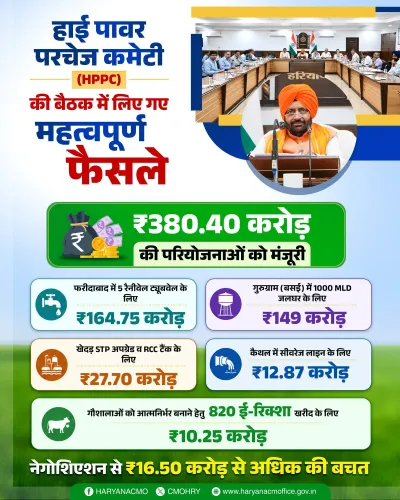
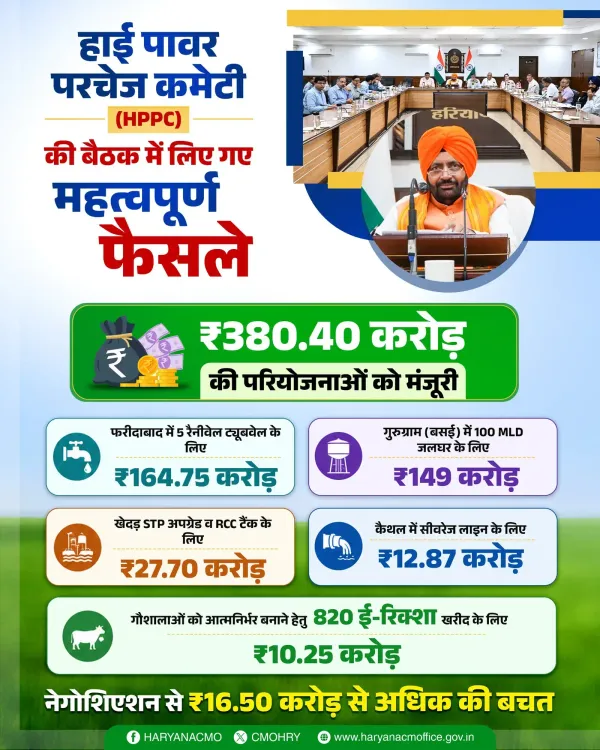
The Haryana Chief Minister's Office announced that CM Nayab Saini chaired an HPPC meeting on 21 July 2026 that cleared public welfare projects worth ₹380.40 crore and achieved savings of over ₹16.50 crore through effective negotiation, signalling the state's continued focus on transparent public procurement.
Key Takeaways
The HPPC , chaired by CM Nayab Saini , approved multiple public welfare projects totalling ₹380.40 crore on 21 July 2026 .
Effective negotiation during the meeting resulted in savings of over ₹16.50 crore in public funds.
The Chief Minister's Office framed the outcome as a step toward 'good governance, transparency, and financial discipline.' Haryana has progressively strengthened its procurement framework through e-tendering and GeM integration since the early 2010s.
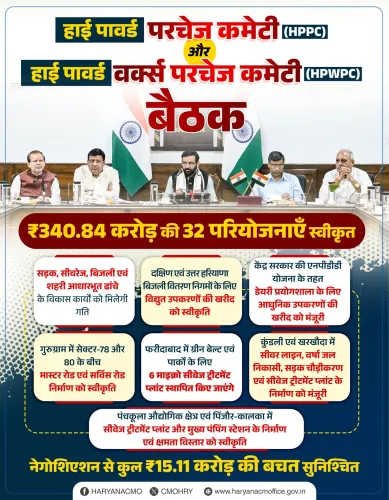
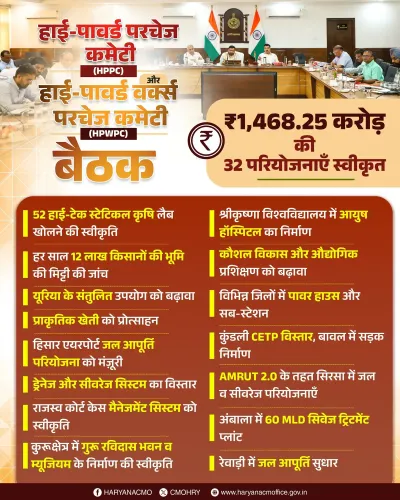
Sectoral details of the approved projects and rollout timelines have not yet been publicly disclosed.
Physical progress reports and follow-up tender outcomes will be key indicators of on-ground implementation.
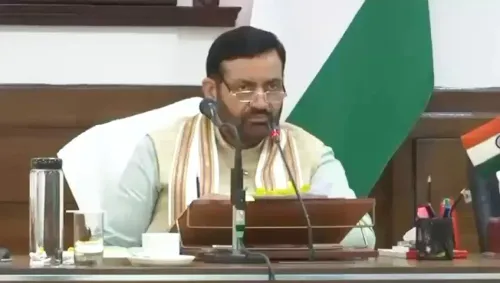
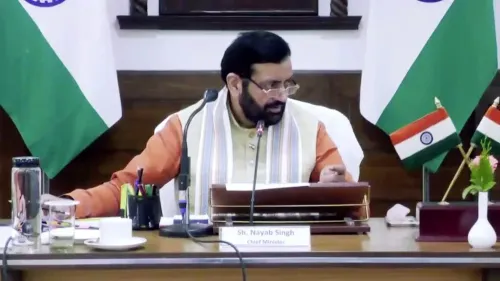
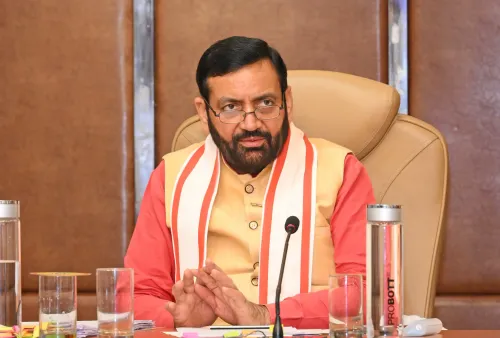
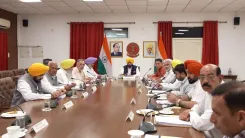
The Chief Minister's Office of Haryana announced on Tuesday, 21 July 2026 that the High Powered Purchase Committee (HPPC), chaired by Chief Minister Nayab Saini, approved public welfare projects worth ₹380.40 crore and secured savings of over ₹16.50 crore through effective negotiation during its latest meeting.
The official post from the Chief Minister's Office described the development as 'सुशासन, पारदर्शिता और वित्तीय अनुशासन की दिशा में एक और महत्वपूर्ण कदम' — 'another important step towards good governance, transparency, and financial discipline.' The savings were achieved through what the office termed an 'effective negotiation process,' underscoring the government's stated commitment to prudent use of public funds.
Context
The HPPC is a high-level committee chaired by the Haryana Chief Minister and tasked with scrutinising and approving major public expenditure proposals before they proceed to procurement. Its deliberations are intended to add a layer of executive oversight above departmental approvals, ensuring that large-scale spending receives direct political and administrative accountability.
Nayab Saini assumed office as Chief Minister of Haryana in July 2024, succeeding Manohar Lal Khattar, and has continued the BJP-led government's emphasis on administrative reform and fiscal oversight.
Policy Backdrop
Haryana has progressively strengthened its public procurement framework since the early 2010s, expanding mandatory e-tendering and integration with the Government e-Marketplace (GeM) to reduce leakages and improve competitive pricing. The documentation of negotiated savings — as distinct from simply announcing project approvals — reflects a pattern of governance communication that the state government has used repeatedly to signal fiscal prudence.
This approach mirrors directives on fiscal discipline issued in successive Union Budgets, which have pushed state governments to demonstrate value-for-money outcomes in public procurement rather than merely reporting expenditure volumes. The emphasis on both clearance and cost reduction in a single HPPC meeting is consistent with that broader framework.
Stakeholders and Impact
The primary beneficiaries of the approved projects are residents of Haryana who stand to gain from the various public welfare schemes cleared in the meeting. Taxpayers across the state have a direct stake in the reported ₹16.50 crore saving, which the government says will be redirected toward more effective public use rather than absorbed by higher contract costs.
Vendors and contractors participating in state procurement processes are also affected, as the HPPC's negotiation-led approach sets a benchmark for pricing discipline in subsequent tenders. Civil society observers and opposition parties are likely to watch for detailed project disclosures that would allow independent verification of both the approvals and the claimed savings.
What's Next
The government has not yet released a sectoral breakdown of the ₹380.40 crore in approved projects, and rollout timelines remain to be announced. Follow-up HPPC communiqués and departmental tender notices will be the key indicators of whether the approved allocations translate into ground-level implementation within projected schedules.
Sustained scrutiny of physical progress reports will determine whether this round of approvals and savings becomes a durable governance benchmark or remains a headline commitment. The Haryana government's ability to publish transparent tender outcomes will be closely watched as a test of the fiscal discipline it has publicly committed to.
Point of View
Who is still consolidating his political identity distinct from his predecessor Manohar Lal Khattar, such announcements serve a dual purpose — demonstrating executive grip over public spending while reinforcing the BJP's broader 'double-engine government' narrative. The absence of a project-wise breakdown, however, limits independent scrutiny and could invite opposition demands for greater transparency. Whether the claimed ₹16.50 crore saving is substantiated through published tender data will be the real test of the governance credibility this announcement stakes out.
NationPress
21 Jul 2026
Frequently Asked Questions
What is the HPPC in Haryana?
The High Powered Purchase Committee (HPPC) is a state-level body chaired by the Haryana Chief Minister that scrutinises and approves major public expenditure proposals before they move to procurement, adding a layer of executive oversight to large-scale spending decisions.
How much did Haryana's HPPC approve in its July 2026 meeting?
The HPPC, chaired by CM Nayab Saini, approved public welfare projects worth ₹380.40 crore in its meeting on 21 July 2026.
How did Haryana save ₹16.50 crore in the HPPC meeting?
The Haryana government says the savings of over ₹16.50 crore were achieved through an 'effective negotiation process' during the HPPC meeting, though a detailed breakdown of how negotiations were conducted has not been publicly released.
Who is Nayab Saini and when did he become Haryana CM?
Nayab Saini is the Chief Minister of Haryana, a position he has held since July 2024 when he succeeded Manohar Lal Khattar as the BJP's choice to lead the state government.
What projects were approved in Haryana's HPPC meeting on 21 July 2026?
The Chief Minister's Office described the approvals as covering 'various public welfare projects' worth ₹380.40 crore, but a sectoral or project-wise breakdown has not been officially disclosed as of the announcement.