Haryana CM Nayab Saini secures ₹50,000 crore investment proposals in Gujarat visit
Synopsis
Haryana CM Nayab Singh Saini returned from a two-day Gujarat roadshow with over ₹50,000 crore in investment proposals — spanning defence, semiconductors, real estate, and food processing. Combined with ₹12,000 crore signed on day one, the cumulative intent crosses ₹62,000 crore, setting the stage for the Happening Haryana Global Investors Summit in April 2027.
Key Takeaways
Haryana CM Nayab Singh Saini secured investment proposals worth more than ₹50,000 crore during a two-day visit to Gujarat on 27–28 October 2026 .
About ₹25,000 crore was proposed in defence, real estate, and oil and gas; ₹2,900 crore in semiconductors; and ₹1,400 crore in agriculture and food processing.
Day-one MoUs added roughly ₹12,000 crore , bringing cumulative announced intent to over ₹62,000 crore .
Haryana cited 56 industrial estates , 57% of its area within the NCR, and Gurugram 's ecosystem of 250+ Fortune 500 offices and 19 unicorns .
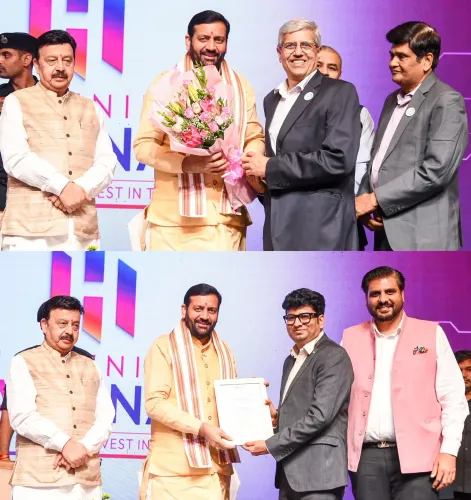
The CM invited Gujarat industrialists to the Happening Haryana Global Investors Summit in April 2027 .
A dedicated diaspora grievance portal and a Haryana Bhawan in Gujarat were also announced.
Haryana Chief Minister Nayab Singh Saini returned from a two-day visit to Gujarat on 28 October 2026 with investment proposals worth more than ₹50,000 crore, spanning sectors including defence, real estate, oil and gas, semiconductors, and agriculture and food processing. The outcome positions Haryana as an increasingly active competitor for industrial capital ahead of its Happening Haryana Global Investors Summit scheduled for April 2027.
Breakdown of Investment Proposals
The bulk of the proposed investments — roughly ₹25,000 crore — was concentrated in defence, real estate, and oil and gas. The semiconductor sector attracted proposals worth ₹2,900 crore, while agriculture and food processing drew commitments of ₹1,400 crore. Memorandums of Understanding (MoUs) were also signed for investments in compressed biogas and civil aviation, though specific figures for those deals were not immediately disclosed.
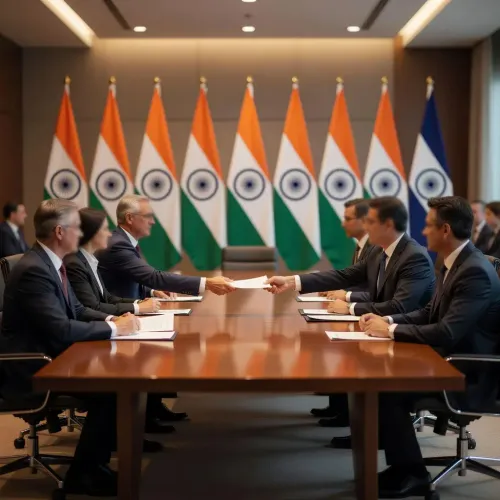
These announcements came on the second day of the visit, after Wednesday's engagements in Gandhinagar. On the first day, the delegation had already secured MoUs covering around ₹12,000 crore in proposed investments across defence textiles, technical textiles, industrial machinery, solar energy, cosmetics manufacturing, and waste-to-energy projects. Cumulatively, the two-day visit yielded proposals exceeding ₹62,000 crore in announced intent.
What Saini Told Investors
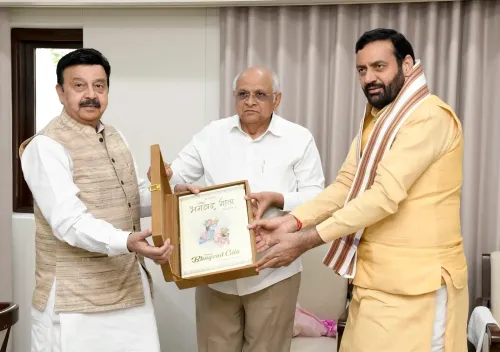
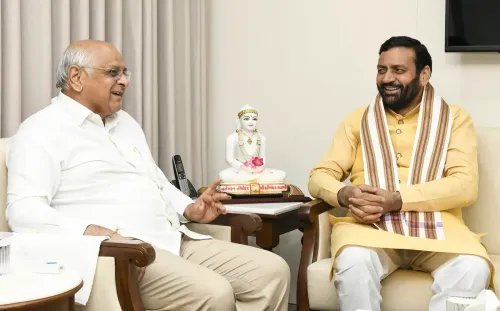
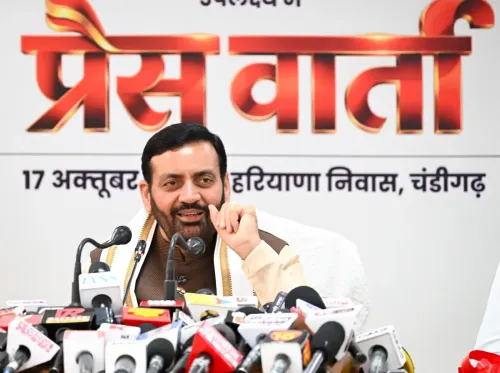
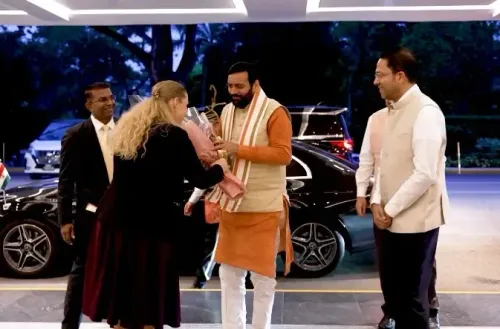
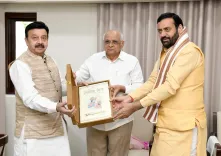
Saini held one-on-one meetings with business leaders in Gandhinagar, accompanied by Industries and Commerce Minister Rao Narbir Singh. He pitched Haryana on several structural advantages: proximity to major markets, 56 industrial estates, and the fact that approximately 57 per cent of the state's geographical area falls within the National Capital Region. The state also has access to airports in Delhi, Chandigarh, and Noida.
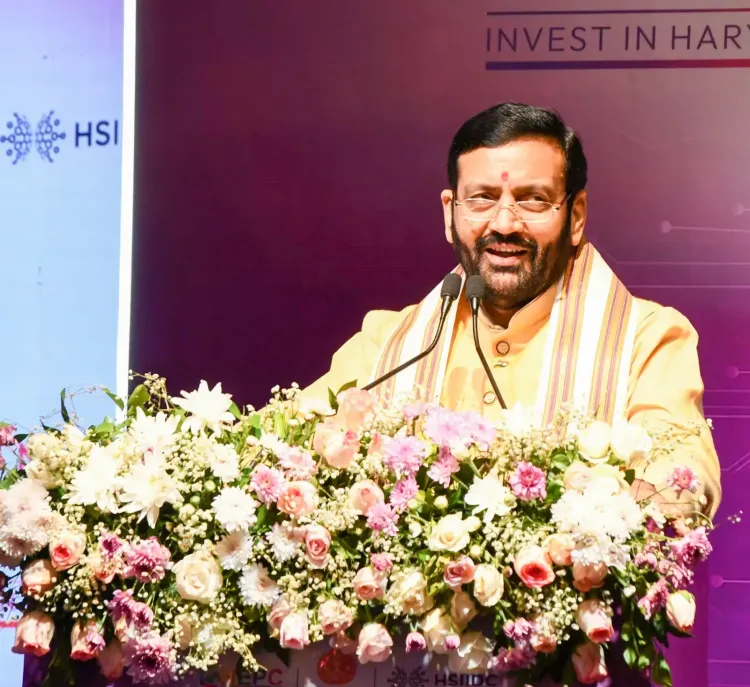
'The government is committed to providing simpler procedures, digital facilities and necessary assistance in accordance with the rules to facilitate the establishment of industries and implementation of investment projects,' Saini said. He added that Haryana aimed to contribute to Prime Minister Narendra Modi's 'Make in India' initiative and the broader goal of a 'developed India and a developed Haryana.'
Gurugram's Ecosystem and MSME Push
Saini drew particular attention to Gurugram's corporate and technology credentials — the city hosts offices of more than 250 Fortune 500 companies, around 270 global capability centres, and 19 unicorn companies. He said the state was working to develop MSME clusters across 143 blocks, arguing that large-industry expansion would generate downstream opportunities in transport, packaging, maintenance, and ancillary services.
Sectors identified as having 'further potential' included automobile manufacturing, engineering, electronics, textiles, food processing, pharmaceuticals, logistics, and warehousing.
Diaspora Outreach and Cultural Infrastructure
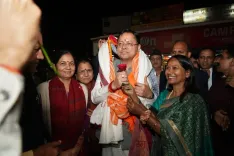
On the sidelines of the investor meetings, Saini met members of the Haryana diaspora in Surat and Ahmedabad. In Surat, he announced plans for a dedicated online portal to register and address grievances from Haryana residents living outside the state. The government also moved towards establishing a Haryana Bhawan in Gujarat — modelled on the existing facility in Maharashtra — to serve as a hub for cultural, social, and administrative activities.
The delegation included Chief Principal Secretary Rajesh Khullar, Industries and Commerce Department Commissioner and Secretary Amit Agrawal, Director General Yash Garg, and senior officials from the Haryana State Industrial and Infrastructure Development Corporation.
What Comes Next
The proposals are subject to conversion into on-ground investment, a step that historically separates intent from impact in such summits. With the Happening Haryana Global Investors Summit set for April 2027, the state government will be under pressure to demonstrate momentum by then. Saini has personally invited Gujarat-based industrialists to attend, signalling that the Gujarat outreach is part of a longer bilateral industrial strategy rather than a one-off roadshow.
Point of View
000 crore-plus figure is eye-catching, but investment roadshow MoUs are notoriously unreliable proxies for actual capital deployment — states routinely announce multiples of what eventually breaks ground. Haryana's pitch is strategically coherent: the NCR adjacency, Gurugram's Fortune 500 density, and the MSME cluster push form a credible differentiated narrative. The real test will come at the April 2027 summit, where the government will need to show conversion ratios, not just fresh announcements. Without a transparent tracking mechanism linking today's MoUs to tomorrow's jobs and units, this risks becoming another headline number that dissolves between promise and execution.
NationPress
28 Oct 2026
Frequently Asked Questions
How much investment did Haryana secure during CM Saini's Gujarat visit?
Haryana secured investment proposals worth more than ₹50,000 crore on the second day of the visit alone, in sectors including defence, real estate, oil and gas, semiconductors, and agriculture. Combined with ₹12,000 crore in MoUs signed on day one, the two-day total exceeds ₹62,000 crore in announced intent.
Which sectors attracted the most investment proposals from Gujarat?
Defence, real estate, and oil and gas collectively drew proposals of around ₹25,000 crore, making them the largest category. Semiconductors attracted ₹2,900 crore and agriculture and food processing ₹1,400 crore. MoUs were also signed for compressed biogas and civil aviation.
What is the Happening Haryana Global Investors Summit 2027?
It is a state-level investment summit that Haryana plans to hold in April 2027 to attract domestic and global capital. CM Saini personally invited Gujarat-based industrialists to attend, using the Gujarat roadshow as a pre-summit outreach exercise.
Why is Haryana positioning itself as an investment destination?
Haryana offers NCR proximity — roughly 57% of its area falls within the National Capital Region — along with 56 industrial estates, airport access via Delhi, Chandigarh, and Noida, and Gurugram's ecosystem of 250-plus Fortune 500 offices and 19 unicorn companies. The state is also developing MSME clusters across 143 blocks.
What other announcements did CM Saini make during the Gujarat visit?
Saini announced a dedicated online portal for grievances from Haryana residents living outside the state, unveiled during meetings with the diaspora in Surat and Ahmedabad. He also initiated steps to establish a Haryana Bhawan in Gujarat, modelled on the existing facility in Maharashtra.