Haryana achieves 100% e-court summons, tops national criminal law dashboard
Synopsis
Haryana has quietly pulled off one of India's most complete digital justice integrations — 100% electronic court summons and 90%+ e-charge sheets under the new criminal laws. With 44 national dashboard top-rankings in 59 months and a perfect citizen-service score, the state is setting a benchmark other states will struggle to match.
Key Takeaways
Haryana has achieved 100 per cent electronic generation of court summons through the Court Information System (CIS) .
E-charge sheet consumption has crossed 90 per cent under the new criminal laws, boosting investigation efficiency.
DGP Ajay Singhal reported that the state has topped the National New Criminal Laws Dashboard 44 times in 59 months since June 2021.
Haryana Police holds a perfect 10/10 on the Right to Service Dashboard ; over 88.84 lakh citizen applications resolved on time.
Advanced equipment procurement under ICJS 2.0 is under way to link police, prisons, prosecution, forensic labs, and courts digitally.
Haryana has become the first state to achieve 100 per cent electronic generation of court summons, while also crossing the 90 per cent mark in e-charge sheet consumption under the new criminal laws — a dual milestone that signals a structural shift in how the state's justice system operates. The achievements were formally presented at the 33rd State Apex Committee (SAC) meeting on Crime and Criminal Tracking Network and Systems (CCTNS) and Interoperable Criminal Justice System (ICJS), held on Monday, 15 June 2025, in Chandigarh.
Key Developments at the SAC Meeting
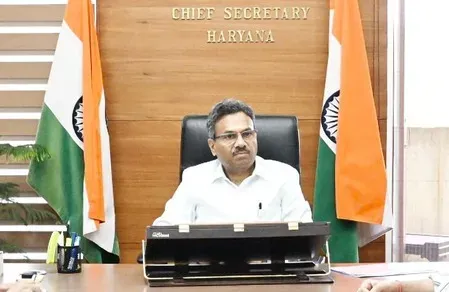
The meeting was chaired by Chief Secretary Anurag Rastogi and reviewed the rollout of new criminal laws alongside CCTNS and ICJS initiatives. Director General of Police Ajay Singhal informed the committee that Haryana has held the number one position on the National New Criminal Laws Dashboard since 7 June and has topped the rankings 44 times in the past 59 months since June 2021. The state also secured the first position on the Pragati Dashboard in April 2026.
Citizen Services: A Perfect Score
Haryana Police has maintained a 10 out of 10 score on the Right to Service (RTS) Dashboard through the HarSamay portal. More than 88.84 lakh citizen applications have been disposed of within prescribed timelines, positioning Haryana Police as one of the state's best-performing departments in public service delivery. This consistent performance underscores a broader push to make policing more accessible and accountable to ordinary citizens.
Paperless Justice: Courts and Police Now Integrated
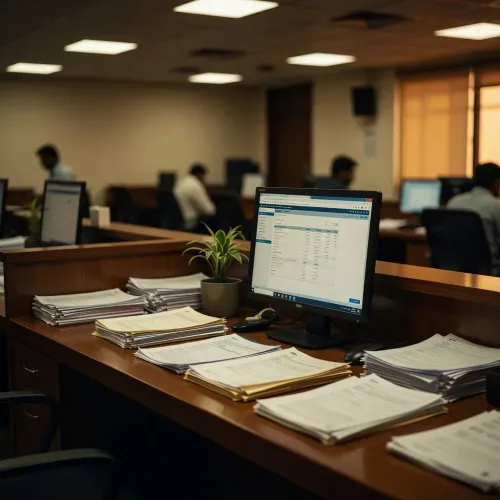
All court summons are now generated electronically through the Court Information System (CIS), marking a decisive move toward a paperless justice ecosystem. The successful integration of police and court systems has driven e-charge sheet acceptance past the 90 per cent threshold under the new criminal laws, improving both efficiency and transparency in criminal investigations and prosecutions. Notably, this is the kind of backend integration that often goes unnoticed but directly determines how quickly cases move through the system.
Infrastructure Push Under ICJS 2.0
A significant portion of the meeting focused on modernising police infrastructure under ICJS 2.0. Procurement and deployment of advanced equipment — including high-end desktop computers, UPS systems, multi-function printers, QR-code readers and printers, video conferencing endpoints, and LED display systems — are under way to strengthen digital policing and seamless information sharing across police, prisons, prosecution, forensic science laboratories, and courts.
What the Government Said
Chief Secretary Rastogi commended the department's performance and directed all stakeholders to sustain momentum, ensure timely completion of pending projects, and continue leveraging technology to make policing, investigation, and justice delivery more efficient, transparent, and citizen-friendly. The directive signals that the state intends to deepen — not merely maintain — its digital justice infrastructure in the months ahead.
Point of View
Not just ticking compliance boxes.
NationPress
22 Sept 2026
Frequently Asked Questions
What has Haryana achieved in e-court summons?
Haryana has achieved 100 per cent electronic generation of court summons through the Court Information System (CIS), making it a fully paperless process for summons issuance across the state's criminal justice system.
What is the e-charge sheet adoption rate in Haryana?
Haryana has crossed the 90 per cent mark in e-charge sheet consumption under the new criminal laws, significantly improving efficiency and transparency in criminal investigations and prosecutions.
How has Haryana ranked on the National New Criminal Laws Dashboard?
Haryana has secured the number one position on the National New Criminal Laws Dashboard 44 times in the past 59 months since June 2021, and has held the top spot continuously since 7 June 2025.
What is the HarSamay portal and how has it performed?
HarSamay is Haryana Police's citizen services portal, through which more than 88.84 lakh applications have been disposed of within prescribed timelines. The portal has helped the department maintain a perfect 10 out of 10 score on the Right to Service Dashboard.
What infrastructure is being added under ICJS 2.0 in Haryana?
Under ICJS 2.0, Haryana is procuring high-end desktop computers, UPS systems, multi-function printers, QR-code readers and printers, video conferencing endpoints, and LED display systems to strengthen digital information sharing across police, prisons, prosecution, forensic labs, and courts.