Rajasthan High Court admits plea against fuel sale curbs by PSU oil firms
Synopsis
Petrol pump dealers in Rajasthan have taken PSU oil giants IOCL, BPCL, and HPCL to the High Court, alleging that WhatsApp-based instructions to cap fuel sales are illegal under the Essential Commodities Act — since no formal government notification authorising such curbs exists. The case, listed for 25 May, could set a precedent on how oil companies communicate operational directives to dealers nationwide.
Key Takeaways
The Rajasthan High Court's Jodhpur Bench admitted a writ petition on 21 May challenging alleged fuel sale restrictions by IOCL , BPCL , and HPCL .
The next hearing is fixed for 25 May before Justice Mukesh Rajpurohit .
Dealers allege oil companies issued curbs via verbal directions and WhatsApp messages , threatening suspension of fuel supply for non-compliance.
The association argues the restrictions are illegal under the Essential Commodities Act, 1955 , as no statutory notification has been issued.
A separate memorandum to Food and Civil Supplies Minister Sumit Godara accuses the Department of Weights and Measures of penalising dealers for dispensing discrepancies as small as 25–27 millilitres .
Specific action on 4 May against M/s Vinayak Indian Oil in Amer tehsil was cited as an example of alleged procedural irregularities.
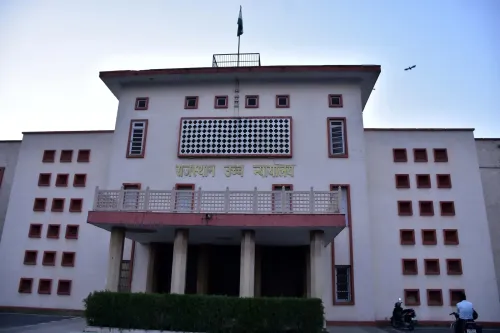
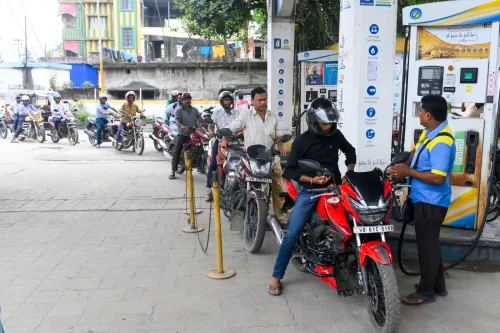
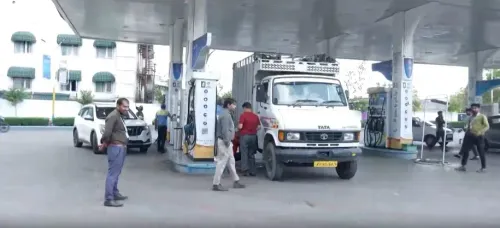
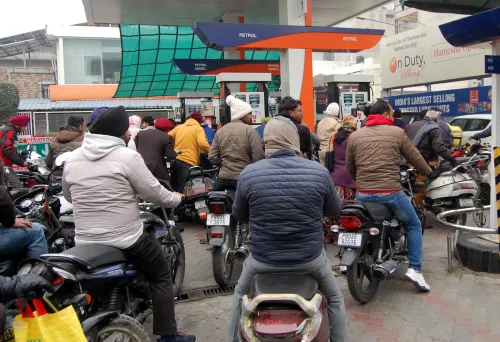
The Rajasthan High Court's Jodhpur Bench has admitted a civil writ petition challenging what petrol pump dealers describe as illegal restrictions on the sale of petrol and diesel imposed by three public sector oil companies. The petition, filed by the Petroleum Dealers Distributors Transporters Welfare Association, came up before Justice Mukesh Rajpurohit on 21 May, with the next hearing fixed for 25 May.
What the Petition Alleges
The association has challenged the conduct of Indian Oil Corporation Limited (IOCL), Bharat Petroleum Corporation Limited (BPCL), and Hindustan Petroleum Corporation Limited (HPCL). According to the petition, officials of these companies have been directing petrol pump operators — through verbal instructions and WhatsApp messages — to cap sales of petrol and diesel within prescribed limits.
Dealers were reportedly warned that exceeding these limits would invite punitive action, including suspension of fuel supply. The association contends that no formal statutory notification authorising such restrictions has been issued by either the Centre or any state government, rendering the curbs 'illegal and beyond jurisdiction'.
The Legal Argument
Senior advocate Rajesh Joshi and advocate Himanshu Ranjan Singh Bhati, appearing for the association, argued that petroleum products are classified as 'essential commodities' under the Essential Commodities Act, 1955. Under the Act, only the Central or state governments — through formal statutory notifications — hold the legal authority to regulate, restrict, or control the production, distribution, or sale of such commodities.
The court noted that a copy of the petition had already been served upon the Union government. It directed advocate Bharat Vyas to appear on behalf of the Centre, and instructed counsels for the three oil companies to obtain copies of the petition. Advocates Sameer Shrimali and Nishant Boda were directed to be reflected as counsel for the respondents in the cause list.
Parallel Grievances: Weights and Measures Disputes
Running alongside the court proceedings, association president Rajendra Singh Bhati submitted a memorandum to Food and Civil Supplies Minister Sumit Godara, demanding a video conference meeting within three days. The memorandum accused the Department of Weights and Measures of adopting allegedly 'oppressive' practices against pump operators.
The association alleged that dealers are being penalised for minor technical discrepancies in dispensing machines — as small as 25–27 millilitres — without adequate opportunity to present their case. It pointed specifically to action taken on 4 May against M/s Vinayak Indian Oil in Amer tehsil, alleging procedural irregularities and the unilateral imposition of heavy penalties on a woman dealer without a hearing.
A separate incident in Jodhpur was also cited, where a dealer was reportedly portrayed negatively in public despite the pump having been verified by the department just three days earlier. The association argued that since verification and calibration of dispensing machines are carried out by the department itself, dealers cannot be held solely liable for marginal errors.
What Happens Next
The Rajasthan High Court will hear the matter next on 25 May, by which time the Centre and the three oil companies are expected to respond formally. The outcome could have wider implications for how public sector oil companies communicate operational directives to dealers across the country, particularly given the essential-commodity status of fuel.
Point of View
Without the statutory backing the Essential Commodities Act requires. If the court upholds the association's argument, it could force a formal rethink of how IOCL, BPCL, and HPCL communicate supply-side directives nationwide. The parallel grievance over Weights and Measures enforcement adds a second layer: dealers caught between two arms of the state — one restricting sales, the other penalising minor measurement errors — with limited recourse in either direction. That combination is a governance design flaw, not just a local dispute.
NationPress
23 Sept 2026
Frequently Asked Questions
What is the Rajasthan High Court case about fuel sale restrictions?
The Rajasthan High Court's Jodhpur Bench is hearing a writ petition filed by the Petroleum Dealers Distributors Transporters Welfare Association, which alleges that IOCL, BPCL, and HPCL have been illegally instructing petrol pump operators to cap fuel sales via verbal directions and WhatsApp messages. The association argues these restrictions violate the Essential Commodities Act, 1955, as no formal government notification authorising them has been issued.
When is the next hearing in the Rajasthan fuel sale restrictions case?
The Rajasthan High Court has fixed 25 May for the next hearing before Justice Mukesh Rajpurohit. By then, the Centre and the three oil companies — IOCL, BPCL, and HPCL — are expected to formally respond to the petition.
Why do dealers say the fuel sale curbs are illegal?
Under the Essential Commodities Act, 1955, only the Central or state governments can legally regulate or restrict the sale of essential commodities such as petrol and diesel, and only through formal statutory notifications. The association contends that no such notification has been issued, making the oil companies' directives illegal and beyond their jurisdiction.
What are the separate allegations against the Department of Weights and Measures?
The association's memorandum to Food and Civil Supplies Minister Sumit Godara alleges that the Department of Weights and Measures is penalising dealers for dispensing discrepancies as small as 25–27 millilitres, without giving them a proper hearing or the right to appeal. A specific case on 4 May involving M/s Vinayak Indian Oil in Amer tehsil was cited as an example of alleged procedural irregularities.
Who are the parties in the Rajasthan High Court fuel petition?
The petitioner is the Petroleum Dealers Distributors Transporters Welfare Association, represented by senior advocate Rajesh Joshi and advocate Himanshu Ranjan Singh Bhati. The respondents are Indian Oil Corporation Limited, Bharat Petroleum Corporation Limited, Hindustan Petroleum Corporation Limited, and the Union government.