High-Frequency Economic Barometer: CAIT says it will boost MSMEs, small traders
Synopsis
India is set to launch a High-Frequency Economic Barometer on 14 July that will track GST collections, UPI transactions, freight movement, and power consumption in near real time. CAIT says the tool could be a game-changer for small traders and MSMEs — giving them, and the government, early warning signals that have historically arrived too late.
Key Takeaways
The High-Frequency Economic Barometer is set to launch on 14 July , welcomed by CAIT on 12 July .
It will integrate data from GST collections , UPI transactions , e-way bills , freight movement , power consumption , and digital commerce .
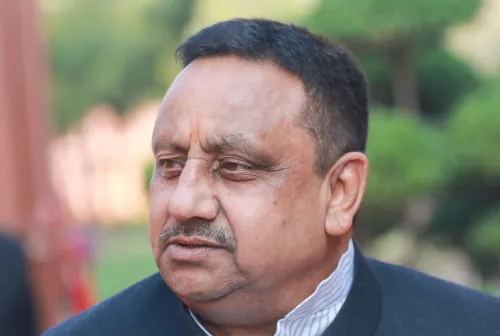
Praveen Khandelwal , MP and Secretary General of CAIT, called it the 'next significant chapter' in India's data-driven governance journey.
CAIT says the primary beneficiaries will be small traders , retailers , MSMEs , and entrepreneurs .
The tool is expected to function as an early warning system against global economic shocks, supply chain disruptions, and inflationary pressures.
The Confederation of All India Traders (CAIT) on Sunday, 12 July welcomed the government's decision to launch the 'High-Frequency Economic Barometer' on 14 July, asserting that the initiative will empower small businesses, MSMEs, and entrepreneurs while accelerating India's broader economic growth.
What the Barometer Does
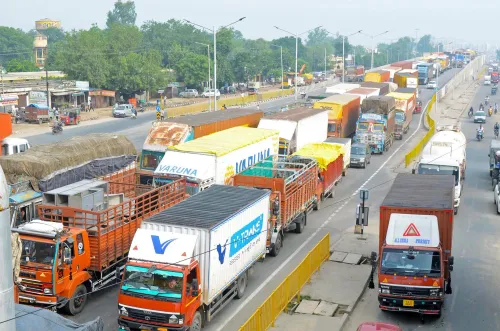
The High-Frequency Economic Barometer is designed to assess the health of the Indian economy in near real time by aggregating key indicators including GST collections, UPI transactions, e-way bills, freight movement, power consumption, banking activity, and digital commerce data. By consolidating these streams, the tool is expected to allow policymakers to identify emerging economic stress points at an early stage and respond with greater speed and precision.
What CAIT Said
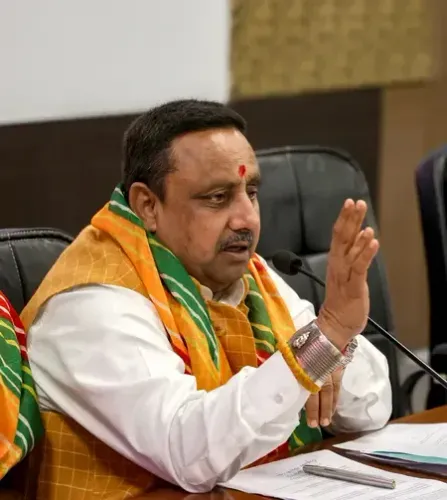
Praveen Khandelwal, Member of Parliament and Secretary General of CAIT, described the initiative as the next significant chapter in India's data-driven governance journey. 'Prime Minister Modi has elevated economic transparency and efficiency to new heights through initiatives such as Digital India, GST, UPI, and technology-driven governance. The High-Frequency Economic Barometer is the next significant chapter in this transformational journey and will position India among the world's most advanced and data-driven economies,' Khandelwal said.
He added that small traders, retailers, MSMEs, and entrepreneurs stand to gain the most, as timely access to economic trends, consumer behaviour patterns, and market demand signals will help them make better-informed business decisions and sharpen their competitiveness.
Why It Matters for Small Businesses
India's small business ecosystem — comprising tens of millions of traders and MSMEs — has historically operated with limited visibility into macro trends, often absorbing the impact of policy shifts after the fact. A near-real-time barometer, if effectively implemented, could narrow that information gap. Khandelwal noted that in an environment marked by global economic uncertainties, supply chain disruptions, inflationary pressures, and geopolitical challenges, the Barometer could serve as an early warning system, enabling the government to take corrective action before disruptions deepen.
Broader Policy Implications
CAIT described the launch as the beginning of a new era in India's economic policymaking framework. The body argued that improved forecasting accuracy would strengthen investor confidence and contribute to the vision of a Developed India. Notably, this initiative follows a broader pattern of integrating digital infrastructure — from the Goods and Services Tax (GST) network to the Unified Payments Interface (UPI) — into governance and economic monitoring. The Barometer's launch on 14 July is expected to draw participation from trade bodies and policymakers.
Point of View
But its value will hinge entirely on data quality and the government's willingness to act on signals that may be politically inconvenient. India already has a wealth of digital transaction data through GST and UPI — the gap has never been collection, but interpretation and response time. CAIT's enthusiasm is understandable, but small traders need more than a dashboard; they need credit access, regulatory simplification, and demand support. If the Barometer feeds those levers, it is transformative. If it becomes another data showcase, it joins a long list of well-designed portals that did not move outcomes.
NationPress
12 Jul 2026
Frequently Asked Questions
What is the High-Frequency Economic Barometer?
The High-Frequency Economic Barometer is a government initiative set to launch on 14 July that tracks India's economic health in near real time by aggregating data from GST collections, UPI transactions, e-way bills, freight movement, power consumption, and digital commerce. It is designed to help policymakers identify economic stress points early and respond faster.
When will the High-Frequency Economic Barometer be launched?
The Barometer is scheduled to launch on 14 July. CAIT announced its welcome of the initiative on 12 July.
How will the Barometer benefit small businesses and MSMEs?
According to CAIT, small traders, retailers, MSMEs, and entrepreneurs will gain timely access to economic trends, consumer behaviour data, and market demand patterns, enabling better-informed business decisions and improved competitiveness.
What economic indicators will the Barometer track?
The Barometer will integrate key indicators including GST collections, UPI transactions, e-way bills, freight movement, power consumption, banking activity, and digital commerce data to generate a near-real-time picture of the economy.
Why is CAIT calling this a historic initiative?
CAIT describes the Barometer as a historic step in India's shift toward data-driven economic governance, arguing it builds on earlier reforms like GST and UPI and will position India among the world's most advanced economies in terms of real-time policy responsiveness.