India's economy in 12 years: From Fragile Five to global growth engine
Synopsis
India's journey from the 'Fragile Five' to a self-reliant growth engine is not a single headline — it is a decade-long stack of structural bets: ₹12.22 lakh crore in public capex, a banking rescue that cut NPAs from 11.18% to 2.5%, a PLI scheme that made India the world's second-largest mobile manufacturer, and an $11 billion semiconductor fab rising in Gujarat. The question is whether execution can match the ambition.
Key Takeaways
India moved from the 'Fragile Five' to a major global growth economy over 12 years , anchored by a ₹12.22 lakh crore public Capital Expenditure plan equal to 4.4% of GDP .
Public sector bank NPAs fell from a peak of 11.18% to a multi-decade low of 2.5% after a ₹3.10 lakh crore recapitalisation and the introduction of the IBC .
The ₹1.97 lakh crore PLI Scheme made India the world's second-largest mobile manufacturer , with exports exceeding $28 billion annually.
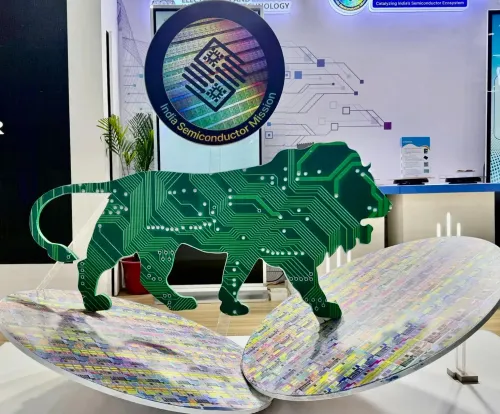
Tata Electronics' $11 billion semiconductor fab at Dholera, Gujarat is projected to cut front-end chip imports by $10–$12 billion per year once operational.
BSNL's indigenous 5G stack, built by TCS , Tejas Networks , and C-DoT , places India among only four countries with proprietary radio network technology.
India's non-fossil power capacity has reached 283.46 GW , including 150.26 GW of solar — a 53-fold expansion.
India has completed a sweeping economic transformation over the past 12 years, climbing out of the so-called 'Fragile Five' grouping to emerge as a data-driven, self-reliant engine of global growth, according to an analysis published in The Organiser. The shift, the article argues, was powered by aggressive capital investment, digital infrastructure, and a deliberate pivot toward technological sovereignty.
Capital Expenditure as the Cornerstone
Central to the turnaround, the article notes, was a decisive move away from short-term consumption-led stimulus toward a ₹12.22 lakh crore public Capital Expenditure blueprint — equivalent to 4.4 per cent of GDP. This fiscal reorientation, the analysis argues, repositioned India from a passive consumer of global technology to a sovereign architect of its own industrial future.
Banking Sector Rescued and Rebuilt
In 2014, public sector banks were under severe stress, with the Gross Non-Performing Asset (NPA) ratio at a peak of 11.18 per cent, the result of reckless corporate lending in prior years. The government responded with a ₹3.10 lakh crore recapitalisation of public sector banks, alongside the introduction of the Insolvency and Bankruptcy Code (IBC) as a structural resolution mechanism. The recovery has been dramatic: the NPA ratio has since fallen to a multi-decade low of 2.5 per cent, and public sector banks are now posting record annual net profits exceeding ₹1.4 lakh crore.
Manufacturing and Technology: Breaking Import Dependency
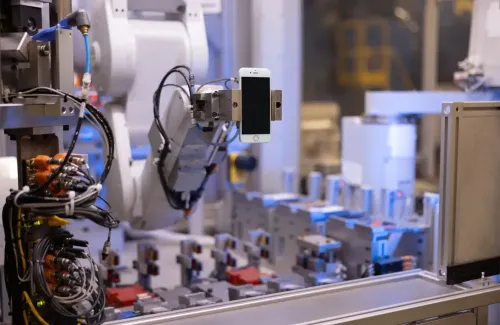
For decades, India wrote software for the world while importing 100 per cent of the silicon hardware needed to run it. The ₹1.97 lakh crore Production-Linked Incentive (PLI) Scheme was deployed to break that dependency. India has since become the world's second-largest mobile manufacturer, with annual mobile exports crossing $28 billion.
On the semiconductor front, Tata Electronics is building an $11 billion mega-fabrication plant at Dholera, Gujarat, in partnership with global chip veterans and deploying advanced ASML lithography equipment. Once operational, this single facility is projected to eliminate $10 billion to $12 billion in front-end chip imports annually, according to the article.
In telecom, state-run BSNL is rolling out a 5G network built entirely on indigenous technology, engineered by a domestic consortium comprising TCS, Tejas Networks, and C-DoT. This reportedly places India among only four countries globally that own proprietary radio network equipment.
Space, Rail, and Green Energy Milestones
The article also highlights India's strides in high-speed rail. The Vande Bharat express trains — designed and built entirely by engineers at the Integral Coach Factory (ICF) in Chennai — were delivered at roughly half the cost of equivalent imported designs from Europe or Japan.
In the private space sector, Skyroot Aerospace launched India's first private rocket in 2022 and is now preparing the maiden commercial orbital flight of its Vikram-1 launch vehicle, targeting a share of the global $25 billion small-satellite launch market.
India's data centre capacity has reached 1.6 GW, supported by the Green Energy Open Access Rules, which offer a fast-tracked 15-day approval window. Non-fossil installed power capacity has scaled to 283.46 GW, including a 53-fold expansion in solar capacity to 150.26 GW. A Semiconductor Vision for 2035 targets a domestic chip ecosystem worth $120 billion to $150 billion, with 55 to 70 per cent of value addition retained within India's borders.
Taken together, the data points to a structural reorientation of the Indian economy — one whose full implications for trade balances, employment, and geopolitical positioning will become clearer over the next decade.
Point of View
But the article draws on a single sympathetic source, and several of the headline figures — particularly on jobs created through PLI and IBC recovery rates — warrant independent scrutiny. India's NPA turnaround is real, yet a portion of the decline reflects write-offs and asset transfers rather than pure repayment. Similarly, the mobile manufacturing export boom is concentrated in Apple's iPhone assembly, raising questions about domestic value addition depth. The semiconductor fab and 5G indigenisation stories are genuine structural shifts, but both remain works in progress — the Dholera plant has not yet produced a single chip. The transformation narrative is broadly credible; the risk is that celebrating milestones too early obscures the execution gaps that still need closing.
NationPress
22 Jun 2026
Frequently Asked Questions
How has India's economy changed in the last 12 years?
India has transitioned from the so-called 'Fragile Five' group of vulnerable emerging markets to a more self-reliant, technology-driven economy, according to an analysis in The Organiser. Key drivers include a ₹12.22 lakh crore public capital expenditure push, a banking sector rescue, and PLI-led manufacturing growth that made India the world's second-largest mobile manufacturer.
What happened to India's public sector bank NPA crisis?
Public sector bank gross NPAs peaked at 11.18% in 2014 due to reckless corporate lending. A ₹3.10 lakh crore government recapitalisation and the introduction of the Insolvency and Bankruptcy Code (IBC) helped bring the ratio down to a multi-decade low of 2.5%, with banks now posting annual net profits exceeding ₹1.4 lakh crore.
What is the Tata Electronics semiconductor fab at Dholera?
It is an $11 billion mega-fabrication plant being built by Tata Electronics in Dholera, Gujarat, in partnership with global chip industry veterans and using ASML lithography equipment. Once operational, it is projected to reduce India's front-end chip import bill by $10 billion to $12 billion annually.
How has India's renewable energy capacity grown?
India's non-fossil installed power capacity has reached 283.46 GW, supported by the Green Energy Open Access Rules with a 15-day fast-track approval process. Solar capacity alone has expanded 53-fold to 150.26 GW, forming the backbone of a growing 1.6 GW data centre ecosystem.
What is India's Semiconductor Vision for 2035?
India's Semiconductor Vision for 2035 aims to build a domestic chip ecosystem valued at $120 billion to $150 billion, with 55 to 70 per cent of value addition retained within India. It encompasses fabrication, design, packaging, and allied industries, with the Dholera fab as its flagship project.