Lakhpati Didi initiative: Rural women build global enterprises from villages
Synopsis
Two women — one from a Haryana village where daughters were barred from studying, another who returned from city life post-pandemic — have built internationally selling enterprises under India's Lakhpati Didi scheme. With the government raising its target to 3 crore women, their stories reveal what the programme can achieve when training, credit, and market access actually converge.
Key Takeaways
Pooja Sharma , Haryana's self-described first Lakhpati Didi , has developed more than 80 products through the Kshitij Self-Help Group , many sold internationally.
Sharma has trained more than 5,000 people and has received awards at state and national levels, including a visit to Rashtrapati Bhavan .
Poonam Chauhan of Kotgarh village , Shimla, built the Kotgarh Kitchen brand processing apples, kiwis, apricots, and plums, supported by NRLM and PMFME funding.
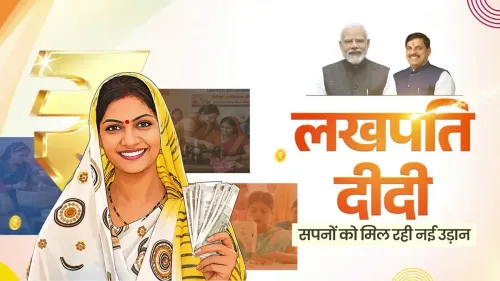
The Lakhpati Didi initiative, implemented under DAY-NRLM , targets women achieving annual household income of at least ₹1 lakh .
The government raised the target from 2 crore to 3 crore women in the Interim Budget 2024-25 .
Kotgarh Kitchen is expanding with a new dehydration unit and plans to enter fruit powder and herbal tea categories.
From managing cattle in a Haryana village to selling products in international markets, Pooja Sharma — who describes herself as Haryana's first Lakhpati Didi — has become one of the most visible symbols of a quiet entrepreneurial revolution sweeping India's rural hinterland. Her journey, and that of Poonam Chauhan from Kotgarh in Himachal Pradesh, illustrates how the government's Lakhpati Didi initiative is reshaping economic possibilities for women in India's villages.
From Homemaker to Entrepreneur
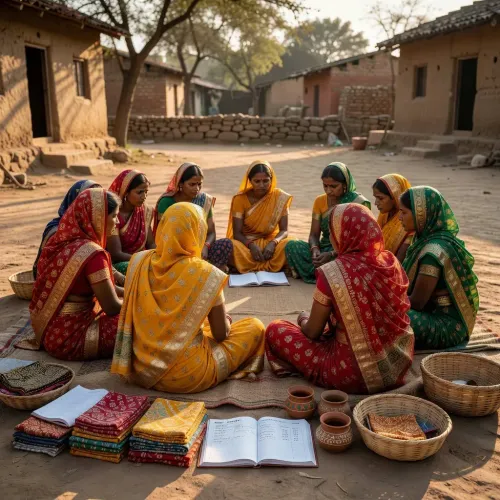
Sharma grew up in a village where, by her own account, daughters faced significant barriers to education and economic participation. 'I come from a village where daughters are not allowed to study much. Women in Haryana are not given much freedom, and their lives are often limited to the gas stove. I started my journey as a homemaker, rearing cattle,' she said.
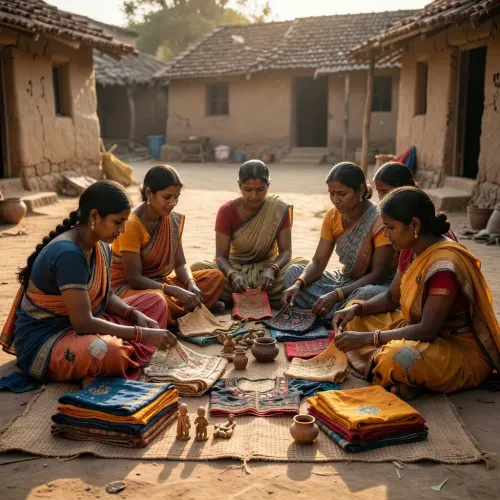
Her turning point came when she joined government livelihood programmes and established the Kshitij Self-Help Group. Training through a Krishi Vigyan Kendra and association with the Haryana State Rural Livelihoods Mission gave her group access to skills, market networks, and institutional backing. Participation in high-profile exhibitions including the Surajkund Mela helped the group establish a national and eventually international customer base.
Today, the group has developed more than 80 products, many sold internationally. 'Today, women do not have to depend on loans from outside at high interest rates. They can support themselves financially and no longer have to ask anyone for help to meet their basic needs,' Sharma said. She has since trained more than 5,000 people — women, men and children — and has received awards at both state and national levels, including an invitation to Rashtrapati Bhavan.
Kotgarh Kitchen: A Post-Pandemic Rural Revival
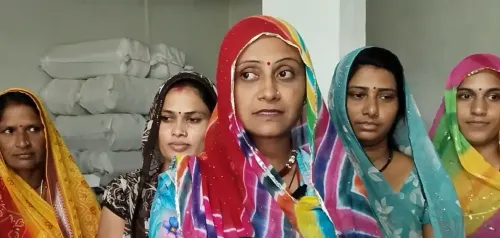
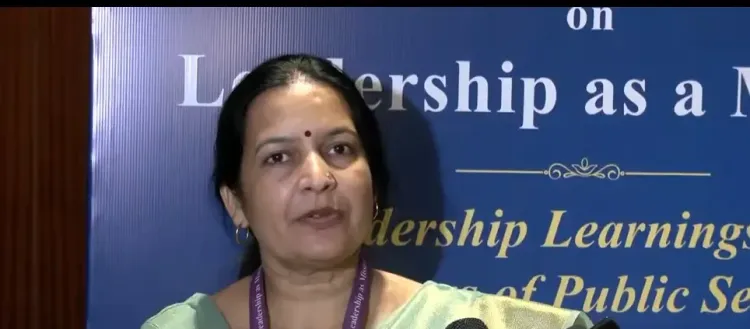
In Kotgarh village, Shimla district, Himachal Pradesh, Poonam Chauhan returned from city life during the Covid-19 pandemic and joined a local initiative in 2022 to revive agriculture and create livelihoods. What began as selling local snacks alongside village women evolved into a registered food-processing brand: Kotgarh Kitchen.
The enterprise processes locally grown apples, kiwis, apricots, and plums into jams and chutneys. The group has recently received government support through IFC and CFC funding and is installing a dehydration unit to expand production capacity. Plans include entering new categories such as fruit powders and food-powder-based soaps, the latter of which reportedly received strong market response. A detox tea blended from 14 herbs gathered from local forests and farms is another product that has drawn attention.
Chauhan credited the National Rural Livelihoods Mission (NRLM) and the Pradhan Mantri Formalisation of Micro Food Processing Enterprises (PMFME) scheme with enabling the group's expansion into formal food processing. 'We received a lot of help from NRLM. We received funding without even asking. After we received PMFME support, we started food processing. We are really thankful to the government for giving us these grants and trusting us,' she said.
About the Lakhpati Didi Initiative
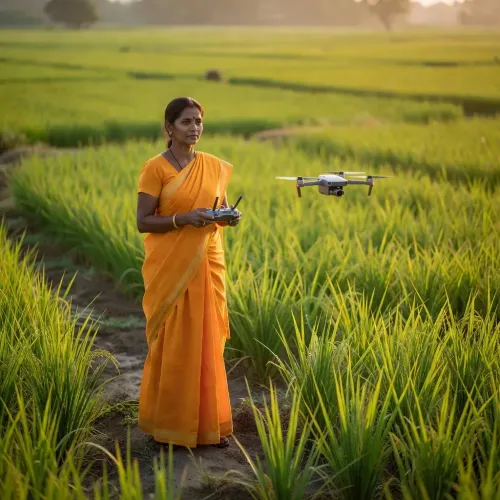
The Lakhpati Didi initiative was launched under the Deendayal Antyodaya Yojana–National Rural Livelihoods Mission (DAY-NRLM) with the goal of enabling women from rural Self-Help Group (SHG) households to achieve an annual household income of at least ₹1 lakh. Initially targeting 2 crore women, the goal was scaled up to 3 crore in the Interim Budget 2024-25. The programme focuses on livelihood diversification, skill development, financial inclusion, and entrepreneurship.
Wider Impact and What's Next
Notably, Sharma observed that even women without formal schooling are now conversant with product ingredients and market demands. 'Today, women who could not receive formal education understand what flax seeds and walnuts are. It makes me very happy to see them,' she said. This signals a shift beyond income generation — the initiative appears to be building financial and informational literacy in communities historically excluded from both.
The experiences of Sharma and Chauhan suggest that when training, institutional access, credit, and market linkages converge, rural women can transition from subsistence activities to export-ready enterprises. As the initiative scales toward its 3 crore target, the challenge will be replicating these conditions systematically across geographies.
Point of View
Not a statistical audit of the programme's reach. The real question is whether the market-linkage and training infrastructure that enabled Sharma and Chauhan is being replicated at scale across the more than 700 districts the scheme is meant to cover, or whether these remain isolated pockets of success. With the target raised to 3 crore women but no published outcome-verification framework, there is a risk that the headline number overstates structural change. India's self-help group ecosystem is large; turning it into an export-ready entrepreneurial base requires sustained institutional follow-through that goes well beyond grant disbursement.
NationPress
17 Nov 2026
Frequently Asked Questions
What is the Lakhpati Didi initiative?
The Lakhpati Didi initiative is a government programme implemented under the Deendayal Antyodaya Yojana–National Rural Livelihoods Mission (DAY-NRLM) that aims to help women from rural Self-Help Group households earn an annual household income of at least ₹1 lakh. The target was raised from 2 crore to 3 crore women in the Interim Budget 2024-25.
Who is Pooja Sharma and what has she achieved under Lakhpati Didi?
Pooja Sharma is a Haryana-based entrepreneur who describes herself as the state's first Lakhpati Didi. She founded the Kshitij Self-Help Group, developed more than 80 products — many sold internationally — and has trained over 5,000 people. She has received state and national awards and has visited Rashtrapati Bhavan in recognition of her work.
What is Kotgarh Kitchen and how was it set up?
Kotgarh Kitchen is a food-processing brand established by Poonam Chauhan and village women in Kotgarh, Shimla district, Himachal Pradesh. It processes locally grown fruits such as apples, kiwis, apricots, and plums into jams and chutneys, and was supported through NRLM and the PMFME scheme.
How does the PMFME scheme support rural food enterprises?
The Pradhan Mantri Formalisation of Micro Food Processing Enterprises (PMFME) scheme provides grants and institutional support to help micro-enterprises enter formal food processing. For Kotgarh Kitchen, PMFME funding was a key enabler in transitioning from informal snack sales to a structured food-processing operation.
What is the target of the Lakhpati Didi scheme and who is eligible?
The scheme targets women from rural Self-Help Group households across India, aiming to help 3 crore such women achieve a minimum annual household income of ₹1 lakh. It focuses on livelihood diversification, skill development, financial inclusion, and entrepreneurship under the DAY-NRLM framework.