HP CM Office Backs Women's Drug Rehab, Reintegration Push

Synopsis
The Chief Minister's Office of Himachal Pradesh says the state is combining strict anti-drug enforcement with treatment, counselling, and rehabilitation — including a dedicated centre helping women recover from addiction and rebuild their lives with dignity.
Key Takeaways
The Chief Minister's Office of Himachal Pradesh posted on June 8, 2026 affirming the state's dual approach: strict enforcement plus rehabilitation for drug-affected individuals.
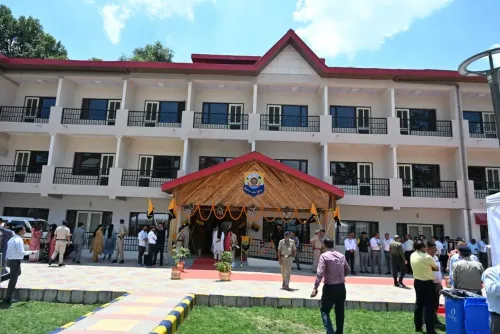
A dedicated centre has been highlighted that focuses specifically on helping women start new lives with confidence and a respectable social identity.
The state's approach aligns with the Nasha Mukt Bharat Abhiyan , the central de-addiction scheme launched in 2020 by the Ministry of Social Justice and Empowerment.
CM Sukhvinder Singh Sukhu has led Himachal Pradesh since December 2022 and has emphasised social welfare as a governance priority.
Key services highlighted include treatment, counselling, and rehabilitation aimed at mainstream reintegration of affected persons.
The Chief Minister's Office of Himachal Pradesh reaffirmed on Monday, June 8, 2026 that the state government is actively working to bring people affected by substance abuse back into the mainstream through treatment, counselling, and rehabilitation — alongside strict enforcement action against drugs. The post specifically highlighted a centre aimed at helping women rebuild their lives with confidence and dignity.
Context
The CMO's post, written in Hindi, states: 'Pradesh sarkar nashe ke viruddh sakht kaarvaai ke saath-saath upchaar, paramarsh aur punarvaas ke maadhyam se prabhavit logon ko mukhyadhara se jodne ke liye nirantar prayasrat hai' — ('The state government is continuously striving to connect affected people with the mainstream through treatment, counselling, and rehabilitation, alongside strict action against drugs.')
The post further notes that the centre is intended to help women 'start a new life with confidence, realise their dreams, and establish a respectable identity in society.' The reference underscores a gender-specific rehabilitation approach within the state's broader anti-drug framework.
Policy Backdrop
Himachal Pradesh's dual-track approach — enforcement plus rehabilitation — aligns with the Nasha Mukt Bharat Abhiyan, a central scheme launched in 2020 by the Ministry of Social Justice and Empowerment to coordinate de-addiction efforts across states. The scheme emphasises demand reduction through awareness, counselling, and treatment infrastructure.
Chief Minister Sukhvinder Singh Sukhu, who has led the state since December 2022, has consistently positioned social welfare and health-linked rehabilitation as priorities. Several Indian states have moved toward gender-specific de-addiction facilities, recognising that women face distinct social and familial barriers to seeking help and reintegrating after recovery.
Stakeholders and Impact
The primary beneficiaries of such centres are women recovering from addiction and their families, who often bear the compounded burden of social stigma alongside the health crisis. Counselling and skill-building programmes at such facilities are designed to restore economic agency and social standing to recovering individuals.
Families affected by substance abuse also stand to benefit indirectly, as successful reintegration of a member reduces household vulnerability. Community-level impact can include reduced crime rates and lower pressure on public health systems over time.
What's Next
Attention will now turn to state budget allocations for expanding de-addiction and rehabilitation infrastructure, and to coordination between Himachal Pradesh and the Ministry of Social Justice and Empowerment on implementation of centrally sponsored schemes. The government's stated commitment to ongoing rehabilitation work signals that further announcements on centre capacity or new facilities may follow.
Whether the state scales up gender-specific rehabilitation infrastructure beyond this centre will be a key indicator of how seriously the dual enforcement-rehabilitation mandate is being operationalised on the ground.
Point of View
The CMO is positioning the Sukhu administration as both tough and compassionate — a balance that carries political value in a hill state where drug abuse has become an increasingly salient electoral issue. The alignment with the centrally sponsored Nasha Mukt Bharat Abhiyan also suggests the state is keen to demonstrate active utilisation of Union government frameworks, which can unlock additional funding. Whether this translates into measurable infrastructure expansion or remains largely communicative will determine its longer-term policy credibility.
NationPress
16 Sept 2026
Frequently Asked Questions
What is the Himachal Pradesh government doing about drug abuse?
The Himachal Pradesh government is pursuing a two-pronged strategy: strict enforcement action against drug trafficking and supply, alongside treatment, counselling, and rehabilitation programmes to help affected individuals reintegrate into mainstream society.
What is the women's de-addiction centre in Himachal Pradesh for?
The centre is designed to help women recovering from addiction rebuild their lives with confidence, pursue their aspirations, and establish a dignified identity in society through structured support and rehabilitation services.
What is Nasha Mukt Bharat Abhiyan?
Nasha Mukt Bharat Abhiyan is a central government scheme launched in 2020 by the Ministry of Social Justice and Empowerment to reduce drug demand across India through awareness, counselling, treatment, and rehabilitation at the state level.
Who is the Chief Minister of Himachal Pradesh?
Sukhvinder Singh Sukhu has been the Chief Minister of Himachal Pradesh since December 2022 and has made social welfare and health-linked rehabilitation key priorities of his administration.
How does Himachal Pradesh support women affected by drug abuse?
Himachal Pradesh has set up gender-specific rehabilitation facilities offering counselling and reintegration support, aimed at helping women affected by substance abuse regain social standing and economic independence.