HP CM Sukhu Pledges to Accelerate Chitta-Free, Self-Reliant State Drive
Synopsis
Chief Minister Thakur Sukhvinder Singh Sukhu has reaffirmed Himachal Pradesh's commitment to becoming chitta-free and self-reliant, calling for accelerated coordination between the state government and local self-governance bodies to tackle drug abuse and build grassroots economic resilience.
Key Takeaways
CM Thakur Sukhvinder Singh Sukhu reaffirmed on 19 June 2026 the resolve to make Himachal Pradesh chitta-free and self-reliant.
The statement explicitly calls for the state government and local self-government bodies (Panchayati Raj Institutions) to work together with 'greater speed.' 'Chitta' refers to heroin and synthetic drugs that have spread through Himalayan transit corridors , particularly affecting districts such as Kangra, Mandi , and Una .
The anti-drug drive has been a central governance priority for the Sukhu government since it came to power in December 2022 .
The 'self-reliant' framing connects the state's agenda to the national Atmanirbhar Bharat theme, adapted to Himachal's specific socio-geographic challenges.
Concrete next steps — including joint action plans, de-addiction centre funding, and livelihood schemes — are expected to follow in upcoming assembly sessions.
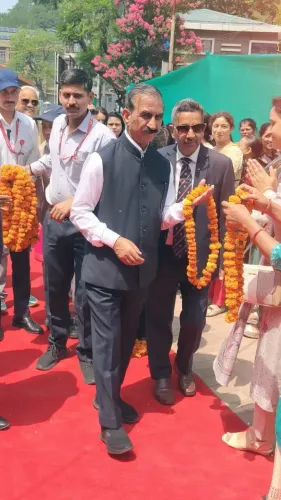
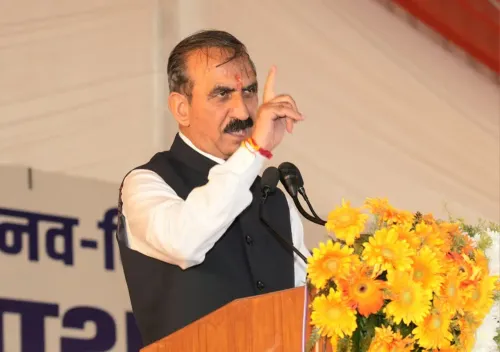
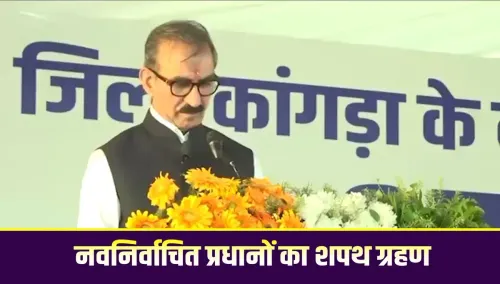
The Chief Minister's Office of Himachal Pradesh, on behalf of Chief Minister Thakur Sukhvinder Singh Sukhu, reaffirmed on Friday, 19 June 2026 the state government's commitment to building a drug-free and self-reliant Himachal Pradesh — this time with an explicit call for deeper coordination between the state administration and local self-government bodies.
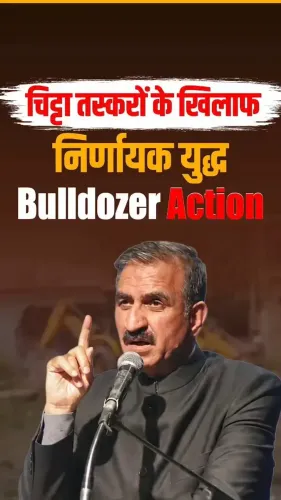
Posting on X, the Chief Minister's Office quoted CM Sukhu as saying: 'Rajya sarkar aur sthaniya swashashan milkar Himachal Pradesh ko chitta-mukt evam aatmanirbhar rajya banane ke sankalp ko aur adhik gati ke saath aage badhane ke liye pratibaddh hain' — ('The state government and local self-governance bodies are together committed to advancing the resolve to make Himachal Pradesh chitta-free and self-reliant with even greater speed.')
Context
'Chitta' is a colloquial term in Himachal Pradesh and parts of North India for heroin and synthetic drugs that have spread through Himalayan transit corridors over the past decade. The substance has caused significant social harm, particularly among youth in districts such as Kangra, Mandi, and Una. The Sukhu government, which came to power in December 2022, made the elimination of chitta a central plank of its governance agenda from its earliest days in office. The explicit mention of local self-government — Panchayati Raj Institutions — alongside the state machinery signals an intent to push anti-drug and self-reliance programmes down to the village level, rather than confining them to district or state administration.Policy Backdrop
Since 2022, the Sukhu administration has sought to integrate panchayats into both social reform and economic development planning. The anti-chitta drive aligns with a broader national pattern in which state governments have paired de-addiction efforts with grassroots governance structures to maximise reach in rural and semi-urban areas. The 'self-reliant' framing echoes the Atmanirbhar Bharat theme rolled out at the national level since 2020, adapted here to Himachal Pradesh's specific context — a hill state where livelihood vulnerabilities and geographic isolation have historically made communities susceptible to drug trafficking networks. By combining an anti-narcotics mandate with economic self-reliance goals, the government is framing the two challenges as interconnected.Stakeholders and Impact
The primary beneficiaries of this renewed push are expected to be Himachal Pradesh's rural youth and communities in districts most affected by drug abuse. Panchayati Raj Institutions — the constitutional local bodies at village, block, and district levels — are positioned as active partners rather than passive implementers, a distinction that carries implications for resource allocation and accountability at the ground level. Families dealing with addiction, women's self-help groups, and village-level health workers are among the stakeholders who stand to be directly involved if the state-panchayat coordination framework translates into on-ground action plans. The emphasis on 'greater speed' in the CM's statement suggests the government perceives the existing pace of implementation as insufficient.What's Next
Attention will now turn to whether the renewed commitment is followed by concrete measures — including joint state-panchayat action plans, budget allocations for de-addiction centres, and livelihood schemes — in upcoming assembly sessions or administrative orders. The framing of this statement as a direct quote from CM Sukhu rather than a routine departmental update indicates the Chief Minister's Office is treating the issue as a political priority. How quickly the state translates this resolve into verifiable programme outcomes will be the measure by which this pledge is ultimately judged.Point of View
But Himachal's Himalayan geography and transit-corridor drug problem make the stakes — and the difficulty — distinctly higher. Whether the rhetoric translates into measurable outcomes will determine how this pledge ages as the state approaches its next electoral cycle.
NationPress
19 Sept 2026
Frequently Asked Questions
What is 'chitta' and why is it a problem in Himachal Pradesh?
'Chitta' is a local term for heroin and synthetic drugs that have become a serious substance abuse problem in Himachal Pradesh, particularly in districts like Kangra, Mandi, and Una, largely due to the state's location along Himalayan drug transit routes.
What did CM Sukhu say about the chitta-free mission?
CM Thakur Sukhvinder Singh Sukhu stated that the state government and local self-governance bodies are together committed to advancing the resolve to make Himachal Pradesh chitta-free and self-reliant with even greater speed.
What role will panchayats play in Himachal Pradesh's anti-drug drive?
Panchayati Raj Institutions — village, block, and district-level local bodies — are being positioned as active partners alongside the state government in implementing anti-drug and self-reliance programmes at the grassroots level.
When did CM Sukhu come to power in Himachal Pradesh?
Thakur Sukhvinder Singh Sukhu became Chief Minister of Himachal Pradesh in December 2022 after the Congress party won the state assembly elections.
What does 'self-reliant Himachal Pradesh' mean in this context?
'Self-reliant Himachal Pradesh' refers to the state government's goal of building economic resilience and reducing dependence on external support, framed in line with the national Atmanirbhar Bharat theme but adapted to the state's specific challenges including drug abuse and geographic isolation.