CM Sukhu Administers 'Chitta-Mukt' Oath to New Pradhans in Kangra
Synopsis
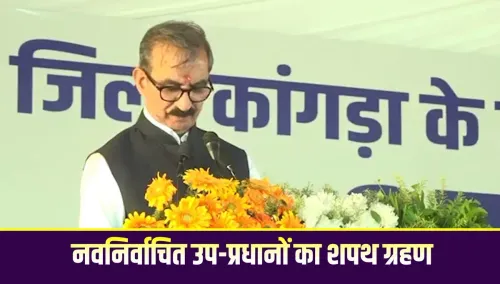
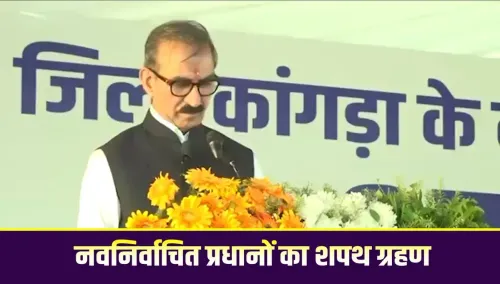
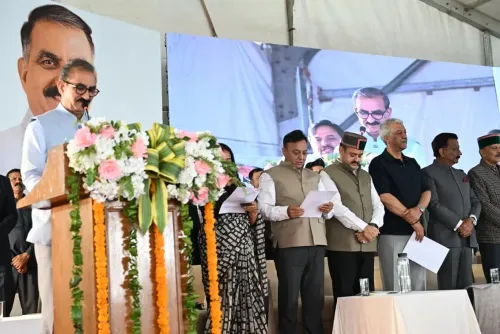
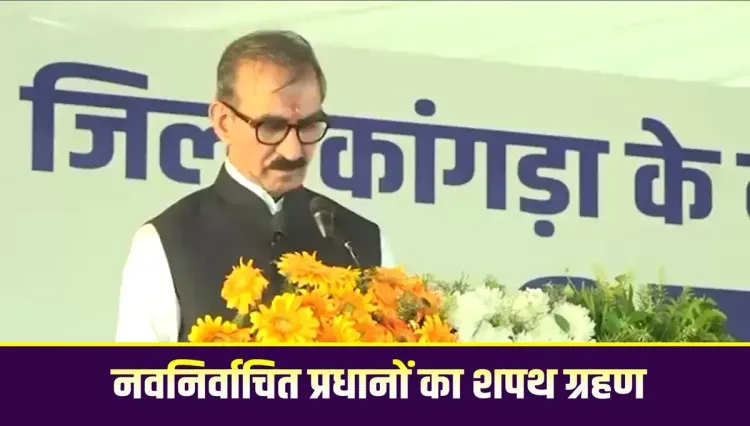
Himachal Pradesh CM Sukhvinder Singh Sukhu administered office, secrecy, and 'Chitta-mukt Himachal' oaths to newly elected panchayat pradhans at Dari Mela Ground in Kangra on 18 June 2026, embedding the state's anti-drug agenda into formal local governance.
Key Takeaways
Newly elected panchayat pradhans in Kangra district were administered oaths of office, secrecy, and the Chitta-mukt Himachal pledge on 18 June 2026 .
The ceremony was held at Dari Mela Ground , Kangra, and was shared by CM Sukhvinder Singh Sukhu on X.
The Chitta-mukt Himachal drive, launched in 2023 , links panchayat-level resolutions to the state's narcotics eradication agenda.
Elected pradhans publicly committed to building a drug-free, safe, and self-reliant Himachal Pradesh at the grassroots level.
Block-level monitoring committees are expected to track compliance with the Chitta-mukt pledge going forward.
The initiative mirrors anti-drug drives in Punjab and Haryana that route enforcement through elected village representatives.
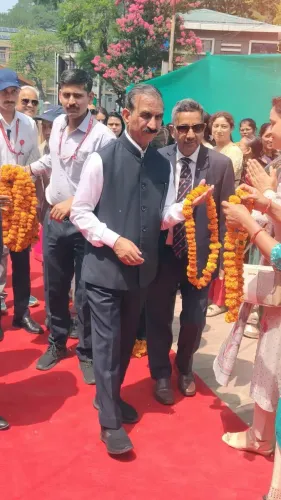
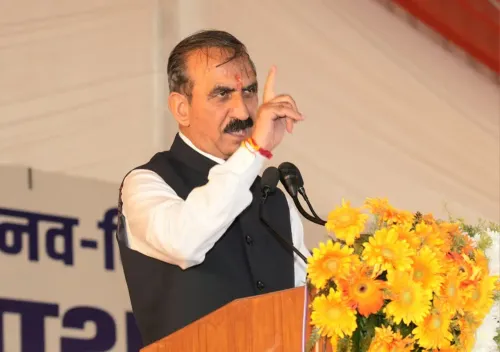
Himachal Pradesh Chief Minister Sukhvinder Singh Sukhu administered oaths of office, secrecy, and allegiance to the Chitta-mukt Himachal initiative to newly elected panchayat pradhans at a ceremony held at the Dari Mela Ground in Kangra district on 18 June 2026. The event saw elected representatives publicly renew their commitment to building a drug-free, safe, and self-reliant Himachal Pradesh at the grassroots level.
Context
Posting on X, CM Sukhu described the ceremony in Hindi, noting that newly elected pradhans were administered oaths of office, secrecy, and the 'Chitta-mukt Himachal' [Chitta-free Himachal] pledge. He wrote that the representatives 'reiterated their resolve to build a drug-free, secure, and self-reliant Himachal and expressed commitment to realising it at the ground level.' The Chief Minister added that he was 'fully confident that all newly elected representatives will serve the people with complete dedication, upholding the highest standards of transparency, impartiality, and public service.'
Kangra is the largest district in Himachal Pradesh and has been a focal point for panchayat-level governance drives. The Dari Mela Ground served as the venue for what appears to be a district-level oath ceremony for a fresh cohort of pradhans.
Policy Backdrop
The Chitta-mukt Himachal drive was announced by the state government in 2023, explicitly linking panchayat-level resolutions to the state's anti-narcotics agenda. 'Chitta' is a colloquial term in Himachal Pradesh for heroin and synthetic drugs that have become a serious concern among rural youth in the hill state.
Himachal Pradesh held its last round of panchayat elections in 2021 under the Panchayati Raj Act, establishing a new cohort of pradhans. Oath ceremonies that embed state policy priorities — such as narcotics control and fiscal transparency — into the formal induction of local representatives have become a hallmark of the Sukhu administration's approach to grassroots governance.
Indian states including Punjab and Haryana have adopted similar models, routing anti-drug messaging through elected village representatives to improve ground-level enforcement. Himachal Pradesh's approach mirrors this broader national pattern of using Panchayati Raj institutions as the first line of social-welfare delivery.
Stakeholders and Impact
The oath directly binds panchayat pradhans — the elected heads of gram panchayats — to the Chitta-mukt pledge as a formal part of their public duty, not merely a voluntary declaration. Village communities and rural youth in Kangra district and across Himachal Pradesh stand to benefit if the commitment translates into active local enforcement and rehabilitation referrals.
Panchayati Raj institutions in Himachal Pradesh form the three-tier rural local body structure responsible for implementing welfare schemes at the village level. By embedding the anti-drug resolution into the oath of office, the state government is making accountability for drug eradication a measurable governance expectation rather than an aspirational goal.
What's Next
Attention will now turn to the rollout of block-level monitoring committees tasked with tracking compliance with the Chitta-mukt pledge among newly sworn-in pradhans. The Himachal Pradesh assembly's next winter session is expected to see updated panchayat performance reports that could reflect early outcomes of this initiative.
The ceremony in Kangra sets a precedent for how the Sukhu government intends to institutionalise its anti-drug agenda — not through top-down directives alone, but by making every elected pradhan a named, oath-bound stakeholder in the mission.
Point of View
The Sukhu government is converting an aspirational anti-drug campaign into a formal governance obligation — a move that raises accountability stakes for every newly elected pradhan. This strategy reflects a broader shift in Indian state politics where social-welfare mandates are institutionalised through Panchayati Raj structures rather than left to discretionary implementation. For the Congress government in Shimla, the optics of a mass oath ceremony also serve a political purpose: demonstrating visible, ground-level action on narcotics ahead of the next assembly cycle. Whether block-level monitoring mechanisms can sustain this momentum beyond the ceremony will be the real test of the initiative's credibility.
NationPress
25 Sept 2026
Frequently Asked Questions
What is the Chitta-mukt Himachal initiative?
Chitta-mukt Himachal is a state government drive launched in 2023 to eradicate drug abuse — particularly 'chitta', a street term for heroin and synthetic drugs — through awareness, enforcement, and rehabilitation programmes anchored at the panchayat level.
What oath did panchayat pradhans take in Kangra on 18 June 2026?
Newly elected pradhans at the Dari Mela Ground in Kangra were administered three oaths: oath of office, oath of secrecy, and a pledge to uphold the Chitta-mukt Himachal initiative, committing them to work for a drug-free, secure, and self-reliant Himachal Pradesh.
Who is Sukhvinder Singh Sukhu?
Sukhvinder Singh Sukhu is the Chief Minister of Himachal Pradesh and an Indian National Congress leader who has held the post since December 2022, focusing on social welfare and anti-drug programmes in the state.
Why are panchayat pradhans central to Himachal Pradesh's anti-drug drive?
Panchayat pradhans are the elected heads of gram panchayats and the closest tier of government to village communities. By making the anti-drug pledge part of their formal oath, the state government ensures that narcotics eradication becomes a direct governance responsibility rather than a voluntary campaign.
What happens after the Chitta-mukt oath ceremony in Kangra?
Block-level monitoring committees are expected to track how newly sworn-in pradhans fulfil their Chitta-mukt pledge, with updated panchayat performance reports anticipated in the next Himachal Pradesh assembly winter session.