HP CM Office: Newly Elected Pradhans Take Chitta-Mukt Oath in Kangra
Synopsis
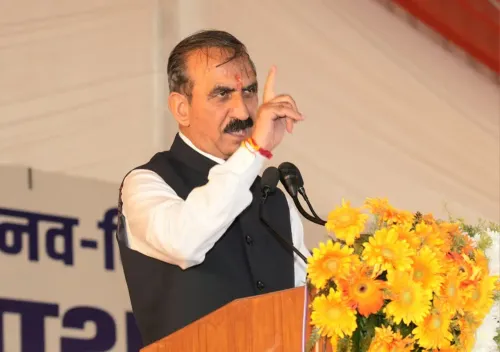
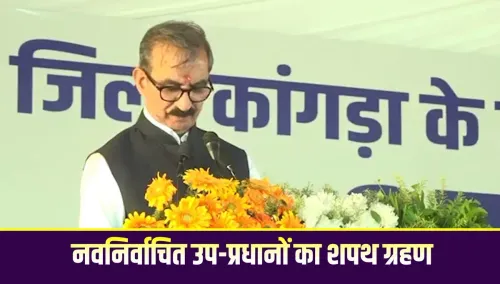
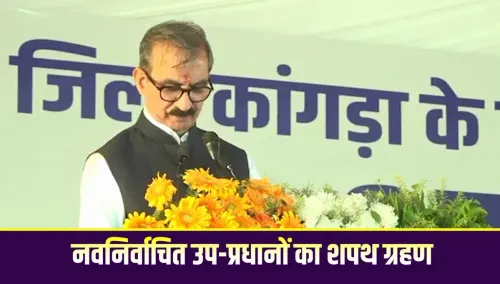
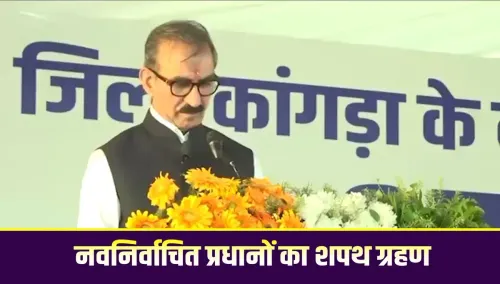
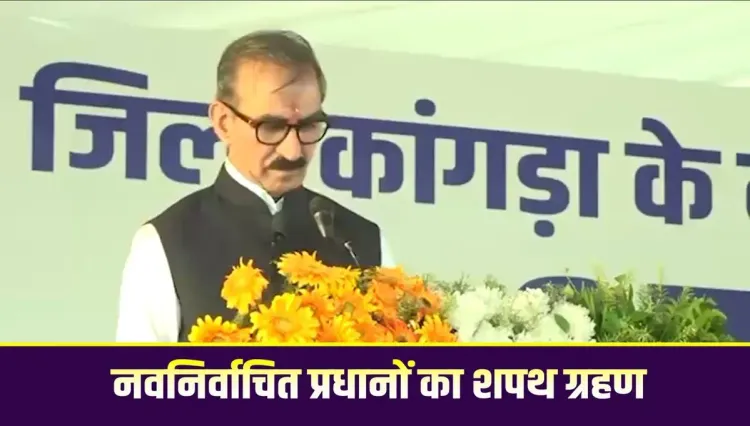
Newly elected gram panchayat pradhans in Kangra, Himachal Pradesh, were administered oaths of office and a Chitta-Mukt Himachal anti-drug pledge at Dadh Mela Ground on 18 June 2026, formally enlisting local-body representatives in the state's anti-narcotics drive.
Key Takeaways
The ceremony was held at Dadh Mela Ground, Kangra district on 18 June 2026 .
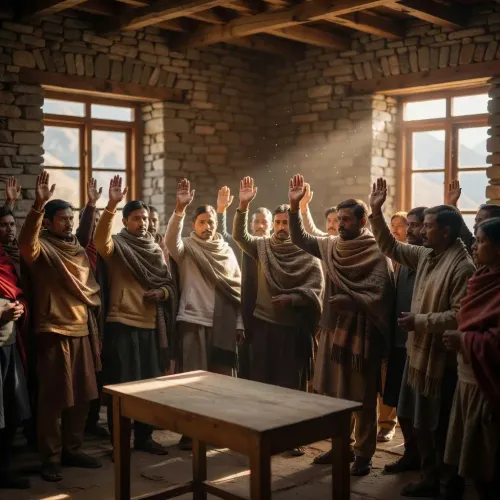
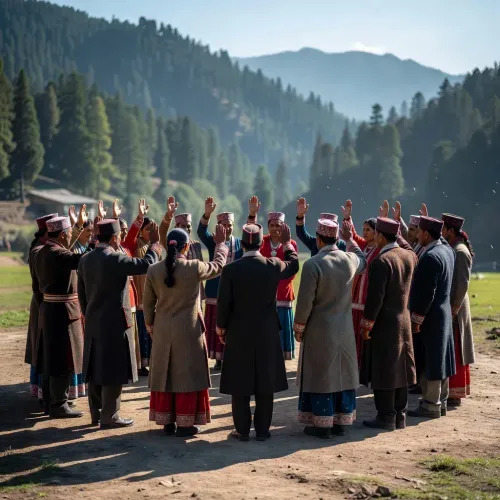
Newly elected panchayat pradhans took three oaths: oath of office, oath of secrecy, and the Chitta-Mukt Himachal anti-drug pledge.
Chitta-Mukt Himachal is the state government's campaign targeting synthetic drugs and opioids in the hill state.
Representatives reiterated their resolve to build a drug-free, safe, and self-reliant Himachal Pradesh .
The move formally makes gram panchayat pradhans frontline stakeholders in Himachal Pradesh's anti-narcotics drive.
Kangra is the largest district in Himachal Pradesh and a key administrative hub for such induction events.
The Chief Minister's Office of Himachal Pradesh announced on Thursday, 18 June 2026 that newly elected gram panchayat pradhans were administered oaths of office, secrecy, and commitment to a 'Chitta-Mukt Himachal' (drug-free Himachal) at a ceremony held at the Mela Ground in Dadh, Kangra district. The elected representatives publicly renewed their resolve to build a drug-free, safe, and self-reliant Himachal Pradesh.
Context
The ceremony at Dadh Mela Ground in Kangra — the largest district in Himachal Pradesh — brought together freshly inducted panchayat pradhans for a formal induction that went beyond the standard oath of office. Alongside the conventional pledges of duty and confidentiality, the newly elected local-body heads were made to swear a specific oath tied to the state government's flagship anti-narcotics drive, Chitta-Mukt Himachal.
The post by the CMO stated: 'navnirvaachit pradhano ko pad, gopaniyata evam Chitta-Mukt Himachal ki shapath dilaai gayi' — meaning, 'newly elected pradhans were administered oaths of office, secrecy, and Chitta-Mukt Himachal.' The representatives also 'reiterated their resolve for the construction of a drug-free, safe, and self-reliant Himachal.'
Policy Backdrop
Chitta-Mukt Himachal is a state-level anti-narcotics campaign specifically targeting synthetic drugs and opioids — colloquially called chitta — that have emerged as a serious concern across Himachal Pradesh's towns and villages. The initiative aims to mobilise institutions at every tier of governance, from the state cabinet down to the gram panchayat, in combating substance abuse.
Embedding the anti-drug pledge into the panchayat induction process marks a deliberate policy choice: gram panchayat pradhans, as the closest elected representatives to rural citizens, are being formally enlisted as frontline stakeholders in the campaign. This follows a broader pattern of the Himachal Pradesh government integrating the drug-free mandate into routine administrative and governance milestones.
Stakeholders and Impact
The primary stakeholders are the newly elected panchayat pradhans themselves, who now carry a formal, oath-bound obligation to advance drug-free objectives within their gram panchayat jurisdictions. Rural youth in Kangra and across Himachal Pradesh stand as the intended beneficiaries, given that synthetic drug abuse has disproportionately affected younger demographics in the hill state.
By formalising the pledge at the point of induction, the state government signals that anti-narcotics work is not optional or supplementary — it is a core duty of elected local representatives. Panchayat pradhans are expected to facilitate awareness drives, report substance abuse cases, and coordinate with district administration and police at the village level.
What's Next
Attention will now turn to how panchayat-level implementation of the Chitta-Mukt Himachal pledge translates into measurable outcomes — including community awareness programmes, coordination with district anti-narcotics cells, and periodic reporting to block and district authorities. State-level review meetings are anticipated to track progress following these induction ceremonies across Himachal Pradesh's 12 districts.
The integration of anti-drug oaths into panchayat inductions sets a precedent that could be replicated in other states grappling with similar substance abuse challenges, and will be watched as a test of whether grassroots governance can meaningfully supplement law-enforcement-led anti-narcotics efforts.
Point of View
Oath-bound obligation for every newly elected local representative. This reflects a broader trend of Indian state governments attempting to institutionalise social policy goals within administrative rituals, rather than relying solely on law enforcement or awareness campaigns. For Himachal Pradesh, where synthetic drug abuse has become a politically sensitive issue, routing accountability through the panchayati raj system offers both symbolic weight and a potential grassroots implementation network. Whether this translates into measurable outcomes will depend on follow-through mechanisms at the block and district levels.
NationPress
23 Sept 2026
Frequently Asked Questions
What is Chitta-Mukt Himachal?
Chitta-Mukt Himachal is a state government anti-narcotics campaign in Himachal Pradesh targeting synthetic drugs and opioids — locally called 'chitta' — with the aim of making the state drug-free through institutional and community-level action.
Where was the panchayat pradhans oath ceremony held in June 2026?
The oath ceremony was held at the Mela Ground in Dadh, located in Kangra district, Himachal Pradesh, on 18 June 2026.
What oaths did the newly elected pradhans take?
The newly elected panchayat pradhans took three oaths: the oath of office, the oath of secrecy, and a specific pledge tied to the Chitta-Mukt Himachal anti-drug campaign.
Why are panchayat pradhans being made to take an anti-drug oath?
The Himachal Pradesh government is formally enlisting gram panchayat pradhans — the closest elected representatives to rural citizens — as frontline stakeholders in its anti-narcotics drive, making drug-free objectives a core duty rather than a voluntary commitment.
What is the role of panchayat pradhans in Himachal Pradesh?
Panchayat pradhans are the elected heads of gram panchayats, responsible for local governance, rural development, and now, under the Chitta-Mukt Himachal initiative, for promoting drug-free and safe communities at the village level.