CM Sukhu Administers Oath to New Up-Pradhans in Kangra
Synopsis
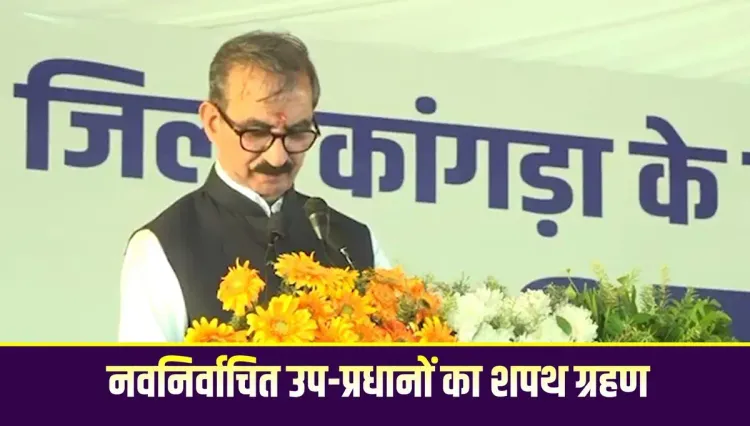
Chief Minister Sukhvinder Singh Sukhu administered the oath of office to newly elected up-pradhans at Dadhi, Kangra on 18 June 2026. All representatives renewed their pledge for a Chitta-mukt Himachal, with Sukhu expressing confidence they will drive the state's anti-drug, safety, and self-reliance mission at the grassroots level.
Key Takeaways
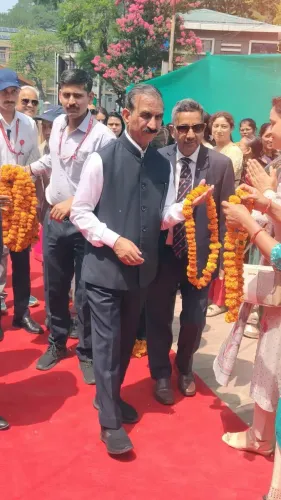
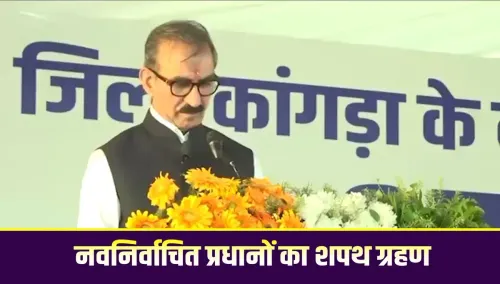
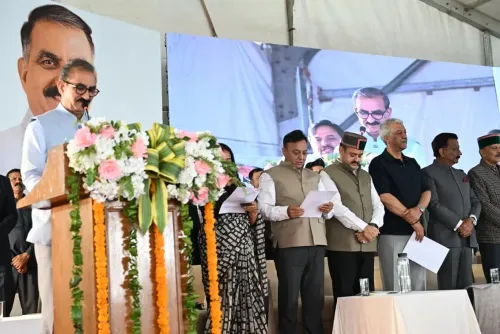
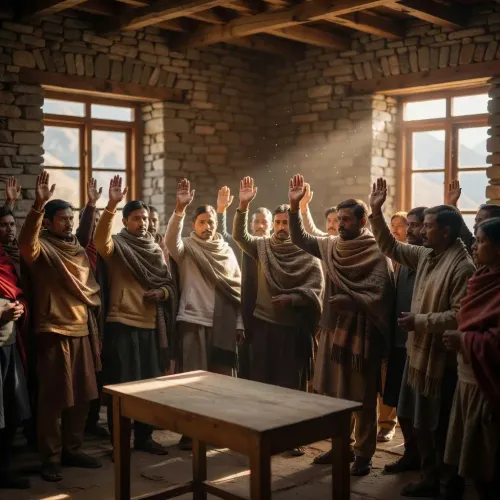
CM Sukhvinder Singh Sukhu administered the oath of office and secrecy to newly elected up-pradhans at Mela Ground, Dadhi, Kangra on 18 June 2026 .
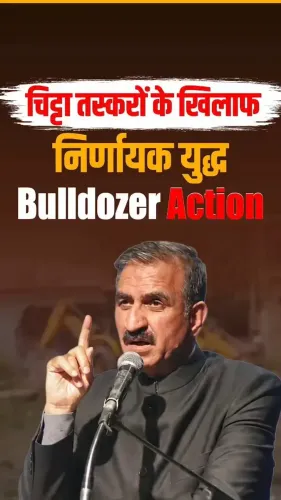
All representatives at the ceremony collectively renewed their pledge toward the Chitta-mukt Himachal (drug-free Himachal) campaign.
The Chief Minister expressed confidence that panchayat-level functionaries will accelerate the state's drive to become drug-free, safe, and self-reliant.
Public service, transparency, and accountability were cited as the core commitments expected of the newly sworn representatives.
The initiative embeds the anti-drug mandate into the formal accountability structure of Panchayati Raj institutions, empowered under the 73rd Constitutional Amendment of 1992 .
Kangra , Himachal Pradesh's largest district, serves as the venue, signalling the campaign's geographic reach into the state's most populous rural constituency.
Himachal Pradesh Chief Minister Sukhvinder Singh Sukhu administered the oath of office and secrecy to newly elected up-pradhans (deputy panchayat heads) at the Mela Ground in Dadhi, Kangra district, on Thursday, 18 June 2026. The ceremony doubled as a public reaffirmation of the state's flagship anti-drug campaign, with all representatives collectively pledging to work toward a drug-free Himachal Pradesh.
Context
Posting on X, Chief Minister Sukhu described the occasion as an opportunity to administer the oath to the newly elected up-pradhans. He wrote: 'चिट्टा-मुक्त हिमाचल' ['Chitta-free Himachal'], noting that all representatives present renewed their resolve toward this goal. He expressed full confidence that panchayat-level elected representatives would give fresh momentum to the campaign to make the state free from addiction, safe, and self-reliant.
The Chief Minister added that these representatives would uphold public service, transparency, and accountability as their highest priorities, and would live up to the expectations of the people they serve.
Policy Backdrop
The Chitta-mukt Himachal campaign is a state-level initiative targeting the eradication of drug abuse — particularly 'chitta', a street name for heroin or white-powder synthetic drugs — through awareness drives, enforcement, and community pledges at the grassroots level. Himachal Pradesh governments have run successive anti-narcotics drives since the 2000s, periodically enlisting panchayats for village-level enforcement and awareness.
The constitutional basis for this approach lies in the 73rd Constitutional Amendment of 1992, which established the three-tier Panchayati Raj system across India, empowering local bodies to implement development and social programmes. By routing the anti-drug pledge through an oath ceremony for freshly elected functionaries, the state government is embedding the campaign mandate into the formal accountability structure of rural governance.
Stakeholders and Impact
The most direct stakeholders are the newly sworn up-pradhans across Kangra, Himachal Pradesh's largest district, who now carry an explicit public commitment to the drug-free mission as part of their oath of office. Rural communities in the district stand to benefit if panchayat-level representatives actively translate the pledge into local enforcement and awareness action.
Across Indian states, governments have increasingly channelled anti-drug and public-health campaigns through panchayats to improve last-mile reach and community accountability. The Sukhu government's approach reflects this broader pattern of cooperative federalism, assigning social mandates to elected local bodies rather than relying solely on state-level bureaucracy.
What's Next
Attention will now turn to how newly sworn panchayat functionaries translate the Chitta-mukt Himachal pledge into concrete village-level action — whether through community meetings, coordination with police, or local awareness drives. The state government is expected to monitor progress and conduct performance reviews of these functionaries as part of its broader governance accountability framework.
If panchayat-level execution gains traction, the model could be replicated in other districts, strengthening the campaign's reach across Himachal Pradesh's rural hinterland and setting a benchmark for community-driven anti-narcotics governance in hill states.
Point of View
The Sukhu government is doing more than conducting routine panchayat business — it is institutionalising an anti-drug mandate at the very moment new functionaries assume office, making the commitment harder to ignore. This mirrors a wider national trend of routing public-health campaigns through elected local bodies to improve grassroots accountability and reduce dependence on top-down bureaucratic enforcement. For the Congress government in Shimla, the optics are equally important: associating freshly elected panchayat leaders with a visible social campaign reinforces the party's welfare and governance narrative ahead of future electoral cycles. The real test, however, lies in whether the pledge translates into measurable village-level outcomes or remains a ceremonial affirmation.
NationPress
17 Sept 2026
Frequently Asked Questions
What is the Chitta-mukt Himachal campaign?
Chitta-mukt Himachal is a state government campaign aimed at eradicating drug abuse — particularly 'chitta', a street term for heroin and synthetic white-powder drugs — through community pledges, awareness drives, and enforcement at the panchayat level.
Who are up-pradhans in Himachal Pradesh?
Up-pradhans are deputy heads of gram panchayats (village councils) in Himachal Pradesh, elected through local body elections and empowered under the Panchayati Raj system established by the 73rd Constitutional Amendment of 1992.
Where did CM Sukhu administer the oath ceremony on 18 June 2026?
The oath ceremony was held at the Mela Ground in Dadhi, located in Kangra district, Himachal Pradesh's largest district.
What did the newly elected up-pradhans pledge at the ceremony?
All representatives renewed their collective resolve toward a Chitta-mukt (drug-free) Himachal and committed to prioritising public service, transparency, and accountability in their roles.
Why is Himachal Pradesh involving panchayats in anti-drug efforts?
Involving panchayat-level functionaries improves last-mile reach and grassroots accountability for anti-drug campaigns, a model increasingly used across Indian states to implement public-health and social mandates through elected local bodies rather than relying solely on state bureaucracy.