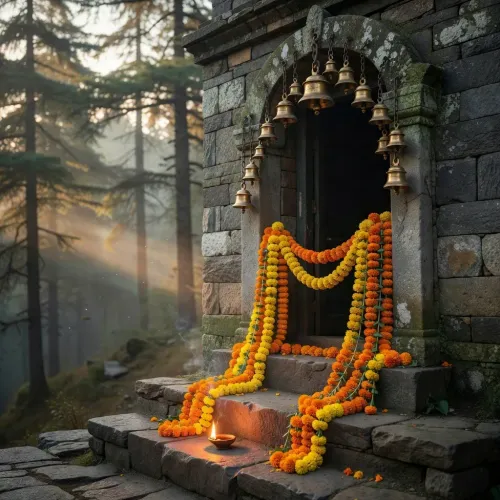
HP CM Office Hails Hatu Temple as Eternal Spiritual Symbol

Synopsis
The Chief Minister's Office of Himachal Pradesh on June 7, 2026, hailed Hatu Temple near Narkanda as an ancient, divine and timeless pilgrimage centre, calling it a living symbol of Sanatan culture and values. The post, accompanied by a video, underscores the state government's continued focus on religious heritage promotion.
Key Takeaways
The Chief Minister's Office of Himachal Pradesh posted a tribute to Hatu Temple on June 7, 2026 .
Hatu Temple is located atop Hatu Peak near Narkanda in Shimla district , making it one of the highest shrines in the region.
The temple is traditionally associated with Hateshwari Devi and is linked to Pandava legends in local lore.
The official post described the temple as a 'living symbol of Sanatan culture and values' illuminated by the faith of countless devotees.
The message was accompanied by a video, amplifying its reach to a wider digital audience.
No specific policy announcement or funding figure was attached to the post; follow-up measures on access and amenities remain to be watched.
The Chief Minister's Office of Himachal Pradesh on Sunday, June 7, 2026, invoked the ancient sanctity of Hatu Temple, describing it as a timeless centre of faith, devotion and spiritual consciousness that embodies the living values of Sanatan culture.
Context
The post, shared in Hindi, states: 'Hatu Mandir ki mahima prachin, divya aur kalatit hai' ('The glory of Hatu Temple is ancient, divine and timeless'). It further describes the shrine as a sacred centre of reverence, belief and spiritual awakening since time immemorial, calling it a living symbol of Sanatan culture and values, illuminated by the faith of countless devotees.
The message was accompanied by a video, lending a visual dimension to the tribute and signalling the government's intent to amplify awareness of the site among a wider digital audience.
About Hatu Temple
Hatu Temple is an ancient Hindu shrine located atop Hatu Peak, near Narkanda in Shimla district, Himachal Pradesh, at an elevation that makes it one of the highest temples in the region. It is traditionally associated with Hateshwari Devi and is woven into local lore connected to the Pandava legends, drawing pilgrims from across the state and beyond.
The temple commands sweeping views of the surrounding Himalayan ranges and is accessible via a road that winds through dense deodar forests, making it a confluence of natural grandeur and religious heritage. Its remote yet accessible location has made it a point of interest for both devout pilgrims and cultural tourists.
Policy Backdrop
State governments across the Himalayan belt have increasingly used official social media channels to spotlight heritage temples as expressions of Sanatan traditions, aligning such outreach with broader domestic religious tourism promotion and cultural preservation priorities.
Himachal Pradesh, home to hundreds of ancient temples and shrines, has over recent years seen growing emphasis on integrating such sites into state heritage tourism circuits. Spotlighting a site like Hatu Temple through the Chief Minister's Office signals an intent to position it within that larger cultural and touristic framework.
Stakeholders and Impact
The most immediate beneficiaries of such visibility are the pilgrims and local communities around Narkanda, for whom the temple holds deep religious significance. Increased official attention can translate into improved access infrastructure, better amenities for visitors, and greater footfall.
The regional tourism sector also stands to gain, as government-amplified awareness of heritage sites often precedes inclusion in curated travel itineraries and state tourism campaigns. Local priests, trust bodies managing the shrine, and small businesses in the vicinity are all stakeholders in any uplift that follows.
What's Next
The post does not announce a specific policy measure, funding allocation or event. However, such official spotlighting by the Chief Minister's Office frequently precedes follow-up action — whether improvements to access roads, basic pilgrim amenities, or formal inclusion in state heritage tourism circuits.
Observers will watch for concrete announcements that translate this cultural affirmation into on-ground development at Hatu Peak, particularly ahead of the peak summer pilgrimage and tourism season in Himachal Pradesh.
Point of View
Where official social media is used to reinforce cultural-religious identity alongside tourism goals. By framing the shrine as a 'living symbol of Sanatan culture,' the government signals both a civilisational pride narrative and a soft push for religious tourism in the Narkanda belt. The accompanying video elevates this beyond a routine post, suggesting deliberate content strategy. Whether this translates into tangible infrastructure or heritage-circuit inclusion will determine if the tribute carries policy weight.
NationPress
23 Oct 2026
Frequently Asked Questions
Where is Hatu Temple located?
Hatu Temple is located atop Hatu Peak near Narkanda in Shimla district, Himachal Pradesh . It is one of the highest temples in the region and is accessible via a road through deodar forests.
Which deity is worshipped at Hatu Temple?
The temple is traditionally associated with Hateshwari Devi . It is also connected to Pandava legends in local folklore, adding to its religious and cultural significance.
Why did the Himachal Pradesh CM Office post about Hatu Temple?
The Chief Minister's Office of Himachal Pradesh shared the post on June 7, 2026 , to highlight the temple's ancient spiritual and cultural heritage, describing it as a living symbol of Sanatan values and a sacred centre of faith.
Is Hatu Temple open to tourists?
Yes, Hatu Temple is accessible to both pilgrims and tourists. Its location on Hatu Peak near Narkanda offers panoramic Himalayan views, making it a destination for religious visitors and cultural travellers alike.
What is the significance of Hatu Temple in Himachal Pradesh?
Hatu Temple holds deep religious significance for devotees across Himachal Pradesh and beyond. Its antiquity, association with Hateshwari Devi , and Pandava-era lore make it one of the state's important pilgrimage and heritage sites.