HP CM Office: Himachal Has OPS, Punjab Still Waiting
Synopsis
The Chief Minister's Office of Himachal Pradesh on 19 July 2026 publicly contrasted its completed Old Pension Scheme restoration for state employees with Punjab's pending implementation, framing OPS delivery as a governance benchmark in a pointed inter-state comparison.
Key Takeaways
The Chief Minister's Office of Himachal Pradesh posted on 19 July 2026 stating that HP employees are receiving OPS while Punjab employees are not.
Himachal Pradesh formally notified OPS restoration for state government employees in 2023 following the 2022 election cycle.
Punjab , which also pledged OPS restoration after its 2022 election, has seen slower or partial implementation according to available records.
The Old Pension Scheme guarantees a defined benefit — typically 50% of last drawn salary — unlike the contributory New Pension Scheme introduced nationally from 1 January 2004 .
The post positions OPS delivery as a governance achievement for Himachal Pradesh, with state employees and pensioners as the key beneficiaries.
Punjab's future budget decisions and any central government guidance on pension harmonisation will determine the next phase of this debate.
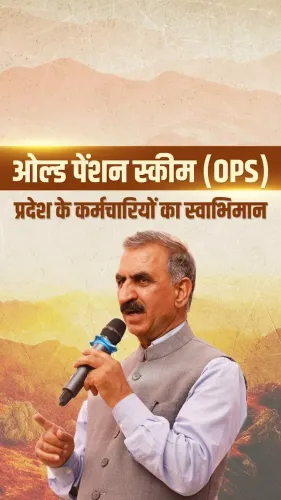
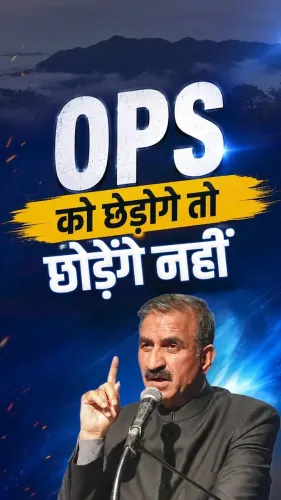
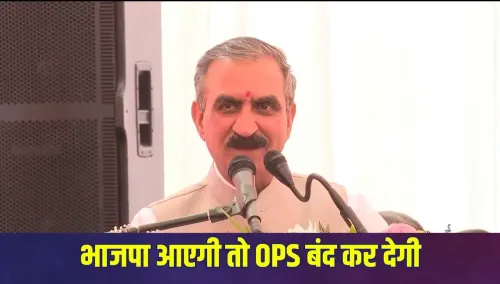
The Chief Minister's Office of Himachal Pradesh, in an official post on Sunday, 19 July 2026, drew a pointed contrast between Himachal Pradesh and Punjab on the restoration of the Old Pension Scheme (OPS), asserting that while Himachal Pradesh's government employees and officers are already receiving OPS benefits, their counterparts in Punjab continue to be denied the same.
The post stated in Hindi: 'पंजाब के कर्मचारियों और अधिकारियों को आज भी OPS का लाभ नहीं मिल रहा है, जबकि हिमाचल प्रदेश में कर्मचारियों और अधिकारियों को OPS मिल रही है।' ('Punjab's employees and officers are still not receiving the benefit of OPS today, whereas in Himachal Pradesh, employees and officers are getting OPS.')
Context
The Old Pension Scheme is a defined-benefit system that guarantees pensioners a fixed monthly payout — typically 50 per cent of the last drawn salary — unlike the New Pension Scheme (NPS) introduced by the Government of India for central employees recruited after 1 January 2004. Most states adopted NPS for new recruits around the same period, shifting pension risk from the government to the employee. Employee unions across India have long campaigned for a return to the older, more secure model.
Policy Backdrop
Himachal Pradesh formally notified the restoration of OPS for its state government employees in 2023, following electoral commitments made during the 2022 state assembly elections. The move made Himachal Pradesh one of the early states to complete the administrative and legal groundwork for the switch. Punjab, which also saw a change of government in 2022, announced intentions to restore OPS but has faced a slower implementation track, with full restoration remaining pending or partial according to available policy records.
The divergence between the two neighbouring states — both having made OPS pledges around the same political cycle — has become a recurring point of comparison in inter-state governance discourse. Several other states across India have announced OPS reversions in the post-2022 period, producing an uneven pension landscape nationwide.
Stakeholders and Impact
State government employees and pensioners are the primary stakeholders in this debate. For serving employees, OPS eliminates the market-linked uncertainty of NPS contributions and guarantees a predictable retirement income. For state governments, however, OPS carries a significant long-term fiscal liability, as pension payouts must be funded directly from the state exchequer rather than from a corpus built through employee and employer contributions.
The Chief Minister's Office framing the comparison publicly signals that the Himachal Pradesh government is positioning OPS delivery as a governance achievement — particularly relevant to the large base of state government employees who form an influential constituency in both states.
What's Next
Attention will now turn to Punjab's upcoming budget sessions and any cabinet-level decisions on pension funding timelines. Separately, signals from the central government on whether it will introduce a unified framework to harmonise state pension liabilities — or discourage OPS reversions on fiscal-sustainability grounds — will shape how far individual states can go in sustaining these commitments. For Himachal Pradesh, the challenge will be demonstrating that the OPS restoration remains fiscally manageable over successive budget cycles, lending credibility to its model for other states still weighing the transition.
Point of View
Using OPS delivery as a governance scorecard in a contest between two states that made near-identical electoral promises in 2022. By highlighting Punjab's lag, Himachal Pradesh is not merely informing employees — it is reinforcing its own credibility with a constituency that is both large and politically engaged. This fits a broader pattern seen across India since 2022, where OPS has become a litmus test of political will rather than purely a fiscal debate. The real stress test, however, will come in Himachal Pradesh's medium-term fiscal position, as defined-benefit pension liabilities compound over time.
NationPress
20 Jul 2026
Frequently Asked Questions
Has Himachal Pradesh restored the Old Pension Scheme for its employees?
Yes. Himachal Pradesh formally notified the restoration of OPS for its state government employees in 2023, following commitments made during the 2022 assembly elections. The Chief Minister's Office confirmed in July 2026 that employees are actively receiving OPS benefits.
Why are Punjab employees not getting OPS despite the government's promise?
Punjab also pledged OPS restoration after the 2022 elections, but implementation has remained pending or partial. The exact reasons — whether fiscal constraints, administrative delays, or policy sequencing — have not been officially detailed in available public records.
What is the difference between OPS and NPS for government employees?
OPS is a defined-benefit scheme guaranteeing a fixed pension — typically 50% of last drawn salary — funded by the state. NPS is a contributory, market-linked scheme where both the employee and government contribute to a corpus, with retirement payouts depending on investment returns.
When did India switch from OPS to NPS?
The Government of India replaced OPS with NPS for central government employees recruited on or after 1 January 2004. Most state governments followed with similar cutoffs for their own employees around the same period.
Which other states have restored OPS in India?
After 2022, several states announced reversions from NPS to OPS, including Rajasthan, Chhattisgarh, and Jharkhand, in addition to Himachal Pradesh. Implementation timelines and legal status vary by state, producing an uneven pension landscape across India.