HP CM Office: ITBP Signs MoU With Kinnaur Cooperative for Local Meat Supply
Synopsis
The ITBP and Kinnaur's district cooperative signed an MoU on 11 August 2026 to procure quality local hill sheep and goat meat for border troops, supporting both operational supply-chain resilience and the livelihoods of Kinnaur's pastoral communities near the Line of Actual Control.
Key Takeaways
An MoU was signed on 11 August 2026 between the Indo-Tibetan Border Police (ITBP) and the Kinnaur Jila Sahkari Vipanan Evam Upbhokta Sangh Limited .
The agreement covers local procurement and supply of quality hill sheep and goat meat for ITBP jawans posted in the region.
Kinnaur district in Himachal Pradesh borders Tibet and has a long tradition of high-altitude sheep and goat rearing.
The arrangement channels purchases through the district cooperative, benefiting local pastoral communities directly.
Central Armed Police Forces have pursued local fresh-food procurement at remote border posts since the mid-2010s to shorten supply chains.
Similar cooperative-sourcing MoUs have been adopted across CAPF sectors in Himachal Pradesh and Uttarakhand , with potential for expansion to other border districts.
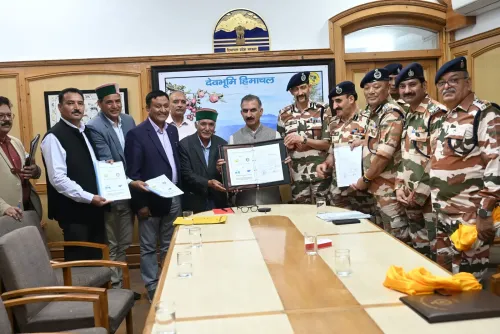
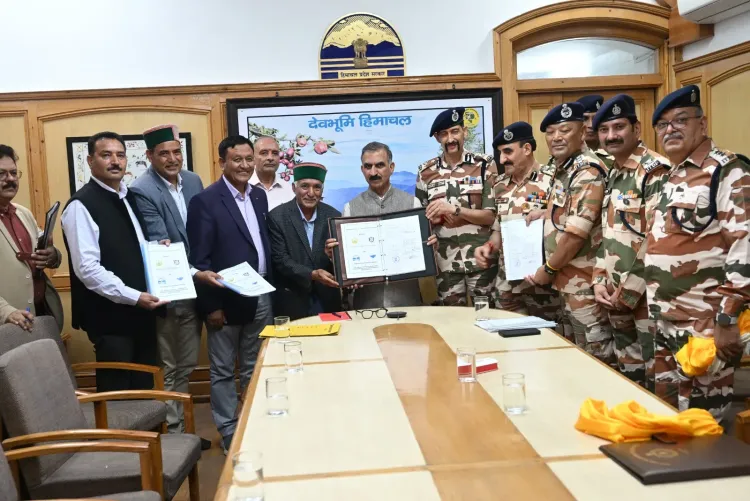
At the rugged edge of the India-China border, where supply lines are long and winters brutal, a quiet but consequential agreement is changing how Indo-Tibetan Border Police troops get fed. On Tuesday, 11 August 2026, the Chief Minister's Office of Himachal Pradesh announced the signing of a Memorandum of Understanding between the Indo-Tibetan Border Police (ITBP) and the Kinnaur Jila Sahkari Vipanan Evam Upbhokta Sangh Limited — the district-level cooperative society of Kinnaur — to procure and supply quality local hill sheep and goat meat directly to ITBP jawans posted in the region.
The post, shared from the official CMO Himachal Pradesh handle, stated: 'aaj Bharat-Tibet Seema Police aur Kinnaur Jila Sahkari Vipanan Evam Upbhokta Sangh Limited ke beech ek samjhauta gyapan (MoU) par hastakshar kiye gaye' — 'Today, a Memorandum of Understanding was signed between the Indo-Tibetan Border Police and the Kinnaur District Cooperative Marketing and Consumer Union Limited. Under this, quality hill sheep and goat meat will be procured and supplied locally for ITBP jawans.'
Why Kinnaur Meat, and Why Now
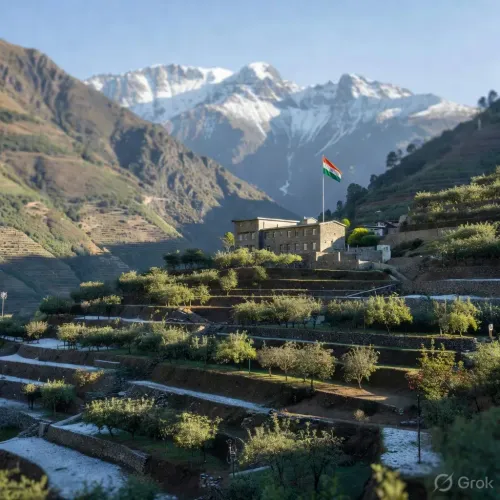
Kinnaur is one of Himachal Pradesh's highest-altitude districts, sharing a long border with Tibet and carrying a centuries-old tradition of pastoral sheep and goat rearing by local communities. The terrain that makes logistics nightmarish for conventional supply chains is precisely what makes locally reared livestock a strategic asset. Hill breeds raised at altitude produce meat suited to the conditions — and the animals are already there. Central Armed Police Forces have pursued local fresh-food procurement policies at remote border posts since the mid-2010s, driven by a simple operational logic: shorten the supply chain, reduce spoilage, and keep troops better fed. This MoU formalises that logic for Kinnaur, routing the purchase through the district cooperative rather than private intermediaries.A Cooperative That Now Has a Guaranteed Buyer
For the Kinnaur Jila Sahkari Vipanan Evam Upbhokta Sangh Limited, the agreement is more than a supply contract. A guaranteed institutional buyer in the ITBP gives local herders a stable, predictable market for their produce — a meaningful economic floor in a district where commercial connectivity is limited and pastoral livelihoods are under pressure. The cooperative model ensures the benefit flows to member livestock rearers rather than to a single trader. This arrangement mirrors similar local-sourcing MoUs that have appeared across other CAPF sectors in Himachal Pradesh and Uttarakhand — part of a broader pattern of paramilitary forces tying into district cooperatives for perishable supplies in high-altitude border zones near the Line of Actual Control.Border Self-Reliance, One District at a Time
The strategic subtext is hard to miss. Kinnaur sits in the western sector of the India-China border, an area of persistent sensitivity. Reducing dependence on long supply chains for something as operationally basic as protein for troops is a form of quiet resilience-building. It does not make headlines the way military hardware does. But it matters every single day. Whether comparable MoUs follow in other Himachal border districts — Lahaul-Spiti, Chamba — will be worth watching. If the Kinnaur model proves workable, the template is ready to scale.Point of View
The state simultaneously addresses troop welfare and rural economic stability in strategically sensitive border zones — a dual-dividend approach that has been quietly gaining traction across Himalayan CAPF deployments. The Himachal Pradesh government's decision to publicise this through the CMO handle signals that local procurement partnerships are now being framed as a governance achievement, not just a logistics fix. If the model scales to other high-altitude districts, it could reshape how India thinks about border-area supply chains beyond just infrastructure and connectivity.
NationPress
11 Aug 2026
Frequently Asked Questions
What is the ITBP-Kinnaur MoU about?
The MoU signed on 11 August 2026 establishes a framework for the Indo-Tibetan Border Police to procure quality hill sheep and goat meat locally from the Kinnaur district cooperative for supply to ITBP jawans posted in the region.
Who is the Kinnaur Jila Sahkari Vipanan Evam Upbhokta Sangh Limited?
It is the district-level cooperative marketing and consumer society of Kinnaur in Himachal Pradesh, engaged in marketing local agricultural and livestock produce to consumers and institutions.
Why is ITBP sourcing meat locally in Kinnaur?
Local sourcing shortens supply chains in a high-altitude, remote border district, reduces spoilage, and ensures fresher supplies for troops — a policy approach Central Armed Police Forces have pursued since the mid-2010s.
How does this MoU benefit Kinnaur's local communities?
The agreement gives local sheep and goat herders a guaranteed institutional buyer through the cooperative, providing a stable and predictable market for their livestock produce in a district with limited commercial connectivity.
Will similar MoUs be signed in other Himachal Pradesh border districts?
The research indicates comparable local-sourcing arrangements have appeared across CAPF sectors in Himachal Pradesh and Uttarakhand, and the Kinnaur model could serve as a template for districts like Lahaul-Spiti and Chamba, though no specific announcements have been made.