Jal Shakti Minister Paatil Shares MoU Signing With Manipur, Bihar
Synopsis
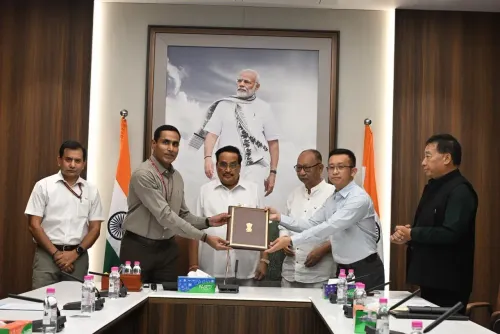
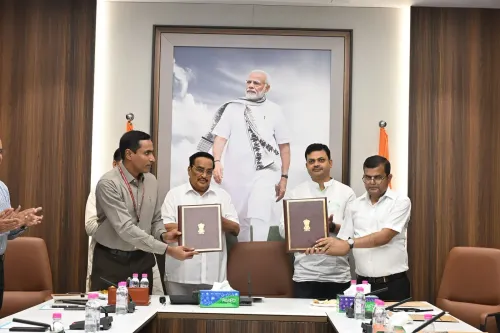
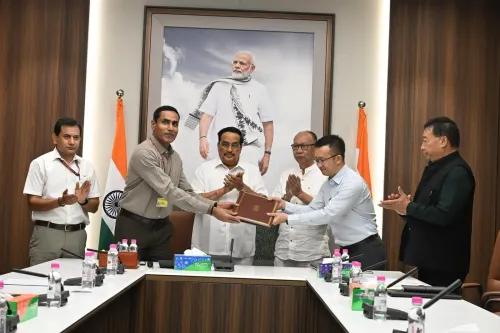
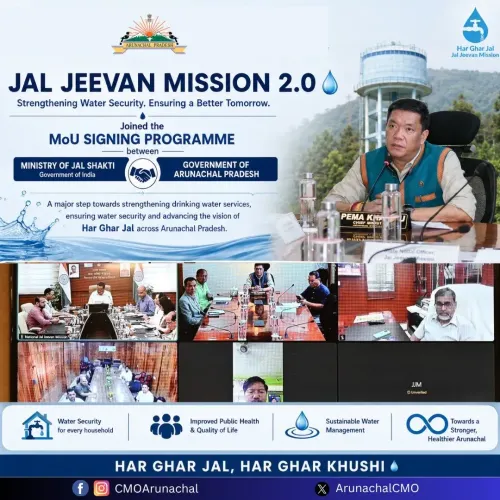
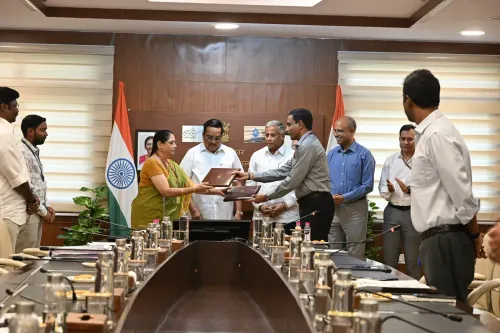
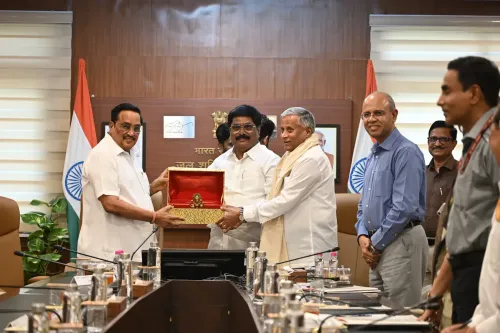
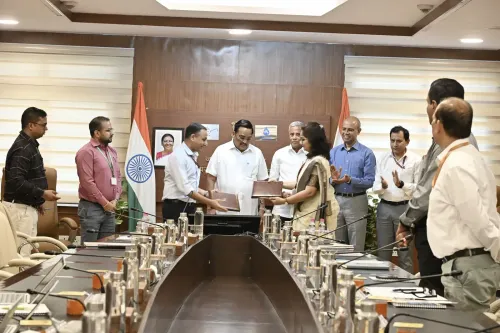
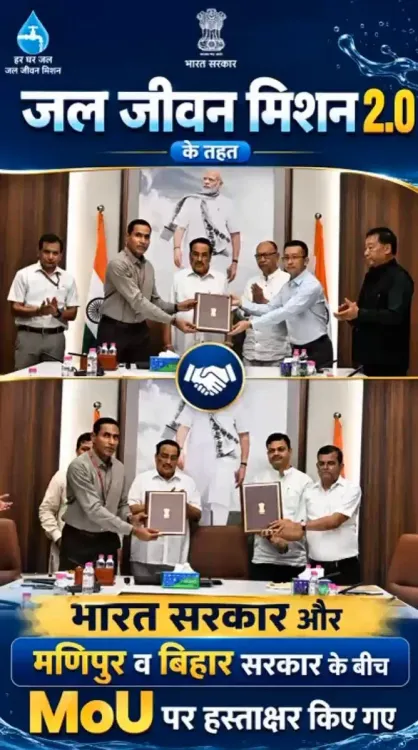
Union Jal Shakti Minister C. R. Paatil on June 11, 2026, shared a video of MoU signings between the Government of India and the governments of Manipur and Bihar under Jal Jeevan Mission 2.0, aimed at accelerating rural tap-water coverage in both states.
Key Takeaways
Union Jal Shakti Minister C.
Paatil posted a video on June 11, 2026 , showing MoU signings under Jal Jeevan Mission 2.0 .
MoUs were signed between the Government of India and the governments of Manipur and Bihar .
Jal Jeevan Mission was originally launched in 2019 to provide tap water to all rural households.
The MoU mechanism aligns central funding with state-level implementation accountability.
Bihar and Manipur face distinct infrastructure challenges — dense rural population and difficult terrain respectively.
Rural households, particularly women and children, are the primary beneficiaries of expanded tap-water coverage.
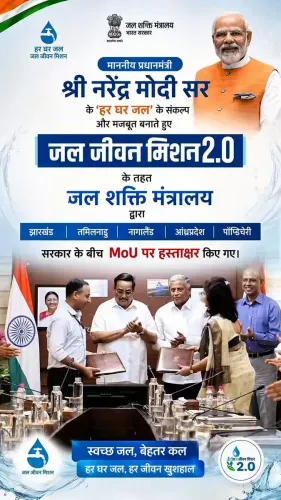
Union Jal Shakti Minister C. R. Paatil on Thursday, June 11, 2026, shared a glimpse of the Memoranda of Understanding signed between the Government of India and the governments of Manipur and Bihar under Jal Jeevan Mission 2.0, marking a fresh push to accelerate rural drinking-water infrastructure in two states with historically low tap-connection coverage.
Posting on X, the minister wrote: 'जल जीवन मिशन 2.0 के तहत भारत सरकार और मणिपुर व बिहार सरकार के बीच MoU पर हस्ताक्षर किए उस समय की एक झलक।' ('A glimpse of the moment when MoUs were signed between the Government of India and the governments of Manipur and Bihar under Jal Jeevan Mission 2.0.')
Context
The post, accompanied by a video, documents the formal agreement ceremony in which the Centre and the two state governments committed to coordinated implementation of the next phase of the flagship water mission. The MoU framework is designed to fix accountability at both the central and state levels, ensuring that funds, timelines, and coverage targets are jointly owned. Manipur and Bihar have been among the states where rural tap-water coverage has lagged relative to the national average.
Policy Backdrop
Jal Jeevan Mission was launched in 2019 with the goal of providing a Functional Household Tap Connection (FHTC) to every rural household in India. The scheme, administered by the Ministry of Jal Shakti, has used centre-state MoUs as a core instrument to align state action plans with central funding disbursements. The signing of fresh MoUs under a successor or expanded phase signals the government's intent to deepen the programme beyond initial coverage milestones and address gaps in service quality and sustainability.
Bihar, one of India's most populous states, and Manipur, a northeastern state with difficult terrain, represent distinct implementation challenges — dense rural populations in the former and remote, hilly geography in the latter. Central coordination through formal agreements is seen as critical to overcoming these barriers.
Stakeholders and Impact
The primary beneficiaries are rural households in Manipur and Bihar who currently rely on unpiped or unsafe water sources. Women and children, who bear the disproportionate burden of water collection in rural India, stand to gain the most from expanded tap connectivity. Local self-government bodies — gram panchayats — are also key stakeholders, as they are expected to manage village water supply systems once infrastructure is in place.
State governments gain access to central funding and technical support, while the Centre advances a flagship welfare commitment ahead of future electoral and policy reviews. The MoU mechanism also creates a paper trail for auditing progress against targets.
What's Next
Attention will now turn to the rollout timelines and connection targets that Manipur and Bihar have committed to under the new agreements. Parliamentary updates, state budget allocations for water infrastructure, and field-level progress reports on tap connections will be key indicators of whether the MoU translates into on-ground delivery. The Ministry of Jal Shakti is expected to publish state-wise dashboards tracking progress under the mission's expanded phase.
Point of View
A model that has defined the Jal Shakti Ministry's approach since 2019. By publicly sharing the signing ceremony, Minister Paatil reinforces the BJP government's political messaging around water security as a development achievement. The choice of Bihar and Manipur is strategically significant — Bihar is a politically crucial large state, while Manipur represents the Centre's northeastern outreach. Whether the agreements translate into measurable on-ground progress will determine their policy value beyond optics.
NationPress
23 Sept 2026
Frequently Asked Questions
What is Jal Jeevan Mission 2.0?
Jal Jeevan Mission 2.0 is the expanded phase of the central government scheme launched in 2019 to provide functional household tap connections for drinking water to rural households across India, with fresh MoUs being signed with states to deepen implementation.
Why did the Centre sign MoUs with Bihar and Manipur under Jal Jeevan Mission?
The MoUs formalise joint commitments between the Government of India and the state governments on funding, timelines, and coverage targets, helping accelerate tap-water infrastructure in states where rural coverage has historically lagged.
Who is C. R. Paatil?
C. R. Paatil is the Union Minister of Jal Shakti in the Government of India, a senior BJP leader, and former president of the BJP's Gujarat state unit.
What is the Jal Shakti Ministry responsible for?
The Ministry of Jal Shakti oversees India's water resources and drinking water supply policies, including flagship programmes like Jal Jeevan Mission aimed at providing tap water to rural households.
Which states signed MoUs under Jal Jeevan Mission 2.0?
According to Minister C. R. Paatil's post on June 11, 2026, Manipur and Bihar signed MoUs with the Government of India under Jal Jeevan Mission 2.0.