CM Sukhu: ITBP-KINFED MoU to boost Kinnaur herders
Synopsis
Himachal Pradesh CM Sukhvinder Singh Sukhu announced an MoU between ITBP and KINFED on 11 August 2026 to procure mountain sheep and goat meat locally in Kinnaur, promising ₹90 lakh annually to cooperatives initially and up to ₹9 crore if fully scaled.
Key Takeaways
ITBP and KINFED signed an MoU on 11 August 2026 to locally source mountain sheep and goat meat for border troops in Kinnaur.
The initial phase targets 10 percent of ITBP's total meat requirement through the cooperative channel.
Local cooperatives stand to gain approximately ₹90 lakh per year in the first phase.
Full scaling of the arrangement could generate up to ₹9 crore annually for the Kinnaur cooperative sector.
The MoU gives high-altitude pastoralists a guaranteed institutional market, reducing dependence on middlemen.
The agreement is also designed to strengthen civil-military ties between border communities and ITBP.
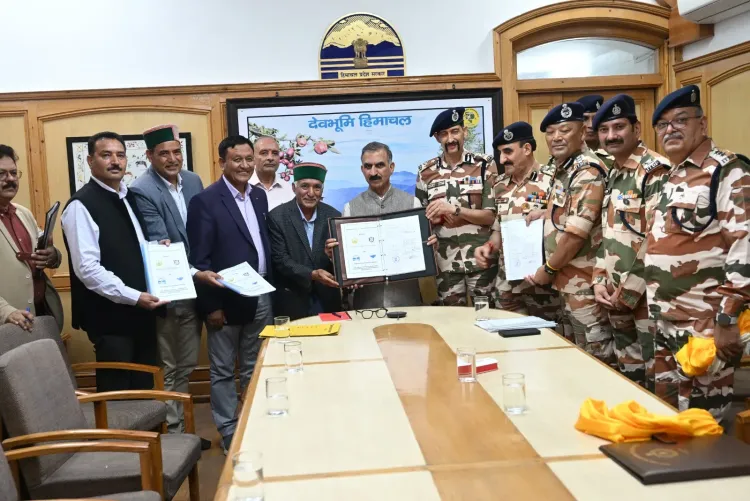
A quiet agreement signed in the high-altitude district of Kinnaur on 11 August 2026 could reshape the livelihoods of border-village pastoralists — and the dinner tables of soldiers guarding India's northern frontier. Himachal Pradesh Chief Minister Sukhvinder Singh Sukhu announced that the Indo-Tibetan Border Police (ITBP) and the Kinnaur District Cooperative Marketing and Consumer Federation Limited (KINFED) have signed a Memorandum of Understanding to source quality mountain sheep and goat meat locally for ITBP personnel.
What the MoU commits to — and what it could become
In the initial phase, the cooperative channel is expected to meet roughly 10 percent of ITBP's total meat requirement in the region — translating to an annual economic infusion of approximately ₹90 lakh for the local cooperative sector. That figure is not the ceiling. If the arrangement scales to cover ITBP's entire meat demand through cooperatives, the annual value could reach ₹9 crore, according to CM Sukhu's post.
The agreement hands local pastoralists something they have long lacked: a reliable, institutional buyer. High-altitude herders in Kinnaur have traditionally faced volatile market access, with livestock often sold at depressed prices to middlemen. A guaranteed procurement channel from a central paramilitary force changes that calculus entirely.
Kinnaur's frontier geography — and why it matters here
Kinnaur is no ordinary district. It shares a border with the Line of Actual Control, making it both strategically sensitive and economically marginal. ITBP battalions are a permanent fixture of the landscape. The force's logistical supply chains for perishables like meat have historically stretched from distant plains depots — expensive, slow, and disconnected from the communities soldiers live alongside.
This MoU is a small but deliberate correction to that model. By sourcing locally, ITBP reduces logistical friction while the cooperative sector gains an anchor contract. The agreement also serves a softer strategic purpose: strengthening the bond between border communities and the paramilitary force that shares their terrain.
Officials present and the cooperative machinery behind the deal
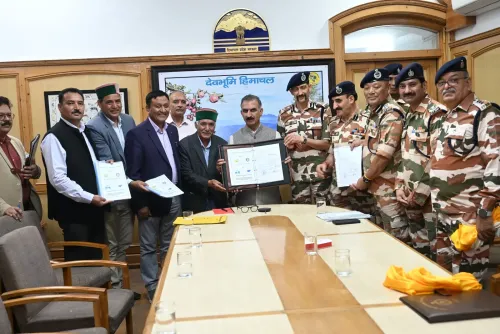
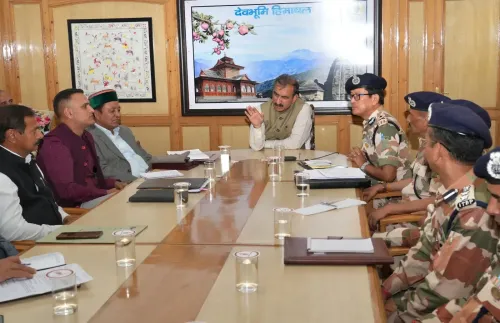
The signing ceremony was attended by Horticulture Minister Jagat Singh Negi, Inspector General of ITBP's Northern Frontier Manu Maharaj, DIG (ITBP) Shimla Ravi, and senior KINFED officials. The presence of the IG Northern Frontier signals that this is not a district-level administrative formality — it carries institutional weight within the paramilitary command.
KINFED, the apex cooperative body for Kinnaur, will manage procurement and supply logistics. Whether it has the cold-chain and processing infrastructure to scale beyond the initial 10 percent share will be the practical test of the MoU's ambition.
A template for other border districts?
India's border states have periodically tried to link paramilitary procurement with frontier-community economies, but district-level MoUs of this specificity are relatively rare. If Kinnaur's model delivers — steady supply, fair pricing, timely payment — it becomes a replicable blueprint for other high-altitude districts in Himachal Pradesh and potentially in Uttarakhand and Ladakh where similar conditions exist.
The first proof point will be simple: does the 10 percent share hold through the first supply cycle, and does the ₹90 lakh reach the herders?
Point of View
Because it institutionalises a revenue floor for one of Himachal Pradesh's most economically vulnerable border communities. For CM Sukhu, it is also politically astute: Kinnaur's tribal constituency has historically rewarded leaders who deliver tangible economic links to the state. The real test is execution — cooperative supply chains in high-altitude districts are fragile, and the gap between a signed MoU and a functioning procurement cycle is where such initiatives have stumbled before. If the model holds, it offers a replicable template for border districts across the Himalayan frontier at a moment when New Delhi is actively pushing economic integration along the LAC.
NationPress
26 Sept 2026
Frequently Asked Questions
What is the ITBP-KINFED MoU signed in Kinnaur?
It is a Memorandum of Understanding between the Indo-Tibetan Border Police and the Kinnaur District Cooperative Marketing and Consumer Federation Limited (KINFED) to procure quality mountain sheep and goat meat locally for ITBP personnel, announced by CM Sukhvinder Singh Sukhu on 11 August 2026.
How much money will Kinnaur cooperatives earn from the ITBP meat MoU?
In the initial phase, covering about 10 percent of ITBP's meat requirement, local cooperatives are expected to earn approximately ₹90 lakh per year. If the arrangement expands to cover ITBP's full demand, the annual value could reach ₹9 crore.
Who attended the ITBP-KINFED MoU signing ceremony?
The ceremony was attended by Himachal Pradesh Horticulture Minister Jagat Singh Negi, ITBP Northern Frontier Inspector General Manu Maharaj, DIG (ITBP) Shimla Ravi, and senior KINFED officials.
How will the ITBP-KINFED MoU benefit local farmers and herders in Kinnaur?
The MoU gives local pastoralists a reliable institutional buyer for their livestock, reducing dependence on middlemen and providing stable income. It is also expected to boost economic activity in border villages.
What is KINFED in Himachal Pradesh?
KINFED stands for Kinnaur District Cooperative Marketing and Consumer Federation Limited. It is the apex cooperative body in Kinnaur district responsible for marketing and supply functions, including agricultural and livestock produce.