HP CM's Office: Replacing MGNREGA Not in State's Interest
Synopsis
The Chief Minister's Office of Himachal Pradesh declared on 8 July 2026, after a Rural Development and Panchayati Raj Department review in Shimla, that discontinuing MGNREGA in favour of a proposed VB-G-Ram-Ji Yojana would be against the state's interests.
Key Takeaways
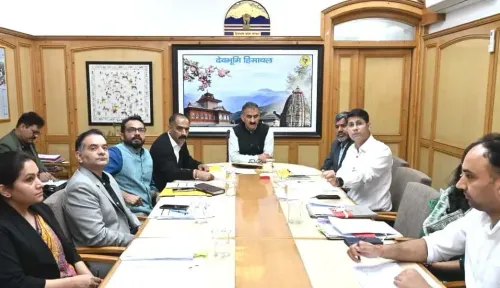
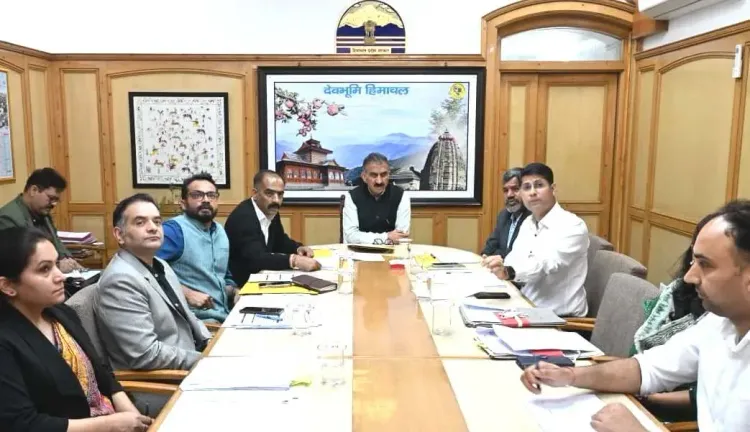
The Chief Minister's Office of Himachal Pradesh chaired a review meeting of the Rural Development and Panchayati Raj Department in Shimla on 8 July 2026 .
The CM Office formally stated that replacing MGNREGA with a scheme called VB-G-Ram-Ji Yojana is not in Himachal Pradesh's interest.
MGNREGA , enacted in 2005 , guarantees up to 100 days of unskilled wage employment per year to rural households and is primarily funded by the Union government.
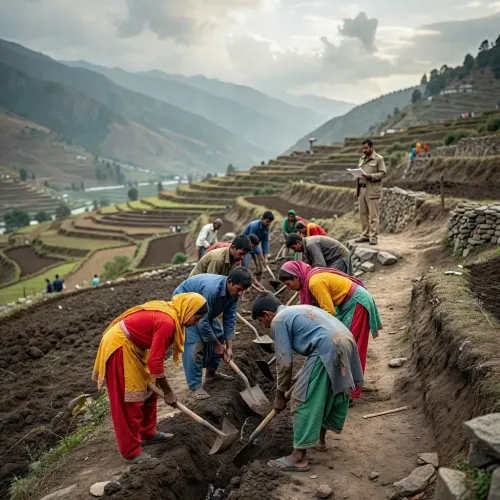
Himachal Pradesh's hilly terrain and seasonal migration patterns make MGNREGA particularly significant for the state's rural workforce.
The nature and origin of the proposed VB-G-Ram-Ji Yojana could not be independently verified from public records at the time of publication.
The statement signals a formal state-level position ahead of any potential central policy decision on rural employment scheme restructuring.
The Chief Minister's Office of Himachal Pradesh on Wednesday, 8 July 2026, stated that replacing the Mahatma Gandhi National Rural Employment Guarantee Act (MGNREGA) with an alternative scheme called the 'VB-G-Ram-Ji Yojana' would not be in the interest of the state, following a review meeting of the Rural Development and Panchayati Raj Department held in Shimla.
The post, shared on X, stated: 'Mahatma Gandhi Rashtriya Gramin Rozgar Guarantee Adhiniyam (MGNREGA) ko band kar uski jagah VB-G-Ram-Ji Yojana lagoo karna Himachal Pradesh ke hit mein nahin hai' — translated: 'Discontinuing MGNREGA and replacing it with the VB-G-Ram-Ji Yojana is not in the interest of Himachal Pradesh.' The statement followed an internal review of the department's ongoing programmes.
Context
The Mahatma Gandhi National Rural Employment Guarantee Act was enacted by Parliament in 2005 as a demand-driven, rights-based central scheme. It legally guarantees up to 100 days of unskilled wage employment per financial year to rural households across India. The Union government bears the primary funding responsibility, while states carry out implementation through gram panchayats.
In Himachal Pradesh, the scheme holds particular significance. The state's hilly terrain and seasonal migration patterns among rural communities have historically shaped both the demand for MGNREGA works and the administrative challenges in executing them. The Rural Development and Panchayati Raj Department oversees scheme delivery at the ground level through the panchayat network.
Policy Backdrop
MGNREGA has remained one of the largest centrally sponsored rural welfare programmes since its inception, with periodic debates around its design, funding norms, and possible restructuring. Indian states have at various points expressed views on how such programmes interact with local geography, labour markets, and administrative capacity — reflecting the federal division of responsibilities in welfare delivery.
The reference to a proposed 'VB-G-Ram-Ji Yojana' as a potential replacement for MGNREGA appears in the CM Office's post as the basis for the state's objection. The nature, scope, and origin of this proposed scheme could not be independently corroborated from established public records at the time of publication.
Stakeholders and Impact
The primary beneficiaries of MGNREGA in Himachal Pradesh are rural households dependent on seasonal and unskilled wage labour, particularly in remote hill districts where alternative employment opportunities are limited. Gram panchayats serve as the implementing units and are central to asset creation under the scheme — from road construction to water conservation works.
Any disruption to MGNREGA's continuity or its replacement with an untested alternative would directly affect the livelihoods of rural workers who rely on the guaranteed employment provision, especially during lean agricultural seasons. The CM Office's public articulation of this position signals a formal state-level stance against any such change.
What's Next
Observers will watch for responses from the Union Ministry of Rural Development regarding any proposals to restructure or replace MGNREGA, as well as whether the Himachal Pradesh government formally communicates this position through official channels to the Centre. State budget speeches and central circulars on MGNREGA funding norms will be key indicators of how the policy debate evolves. The CM Office's statement adds Himachal Pradesh's voice to the broader federal conversation on rural employment guarantees in India.
Point of View
Emerging from a departmental review rather than a legislative session, suggests the state is getting ahead of a policy conversation it expects to intensify.
NationPress
8 Jul 2026
Frequently Asked Questions
What did the Himachal Pradesh CM Office say about MGNREGA?
The Chief Minister's Office of Himachal Pradesh stated on 8 July 2026 that replacing MGNREGA with a scheme called VB-G-Ram-Ji Yojana would not be in the state's interest, following a departmental review meeting in Shimla.
What is MGNREGA and how does it work?
MGNREGA, the Mahatma Gandhi National Rural Employment Guarantee Act enacted in 2005, is a central government scheme that legally guarantees up to 100 days of unskilled wage employment per financial year to rural households across India, implemented through gram panchayats.
What is the VB-G-Ram-Ji Yojana mentioned in the Himachal Pradesh post?
The VB-G-Ram-Ji Yojana is referenced in the CM Office's post as a proposed replacement for MGNREGA; however, its nature, scope, and origin could not be independently verified from established public records at the time of publication.
Why is MGNREGA important for Himachal Pradesh?
Himachal Pradesh's hilly terrain and seasonal migration patterns among rural communities make MGNREGA a critical source of guaranteed wage employment, particularly in remote districts where alternative livelihood options are limited.
Who implements MGNREGA in Himachal Pradesh?
The Rural Development and Panchayati Raj Department of Himachal Pradesh oversees MGNREGA implementation in the state, with gram panchayats serving as the primary executing units for works and wage disbursement.