CM Yogi Calls Bundelkhand Expressway Region's Lifeline
Synopsis
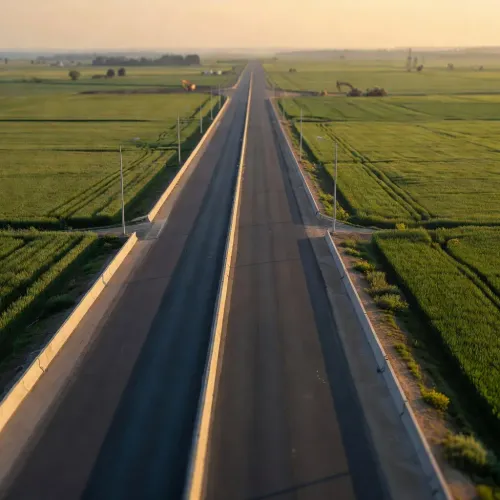
Uttar Pradesh Chief Minister Yogi Adityanath has called the 296-km Bundelkhand Expressway the region's lifeline, renewing focus on the corridor inaugurated in July 2022 that links Etawah to Chitrakoot across one of India's historically underserved regions.
Key Takeaways
Chief Minister Yogi Adityanath declared the Bundelkhand Expressway the 'lifeline' of Bundelkhand in a post on 8 July 2026 .
The expressway spans 296 kilometres , linking Etawah to Chitrakoot in southern Uttar Pradesh.
Prime Minister Narendra Modi inaugurated the corridor on 16 July 2022 ; the project was foundation-laid in 2019 .
Bundelkhand has historically faced drought, migration, and poor road connectivity, making the expressway a key development intervention.
The corridor is part of a broader Uttar Pradesh expressway grid that also includes the Agra-Lucknow and Purvanchal expressways.
Official traffic and economic-impact data, along with potential spur-road or industrial-corridor announcements, are the next milestones to watch.
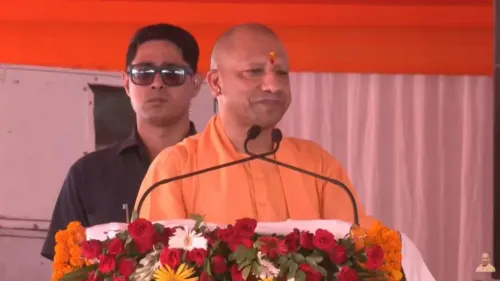
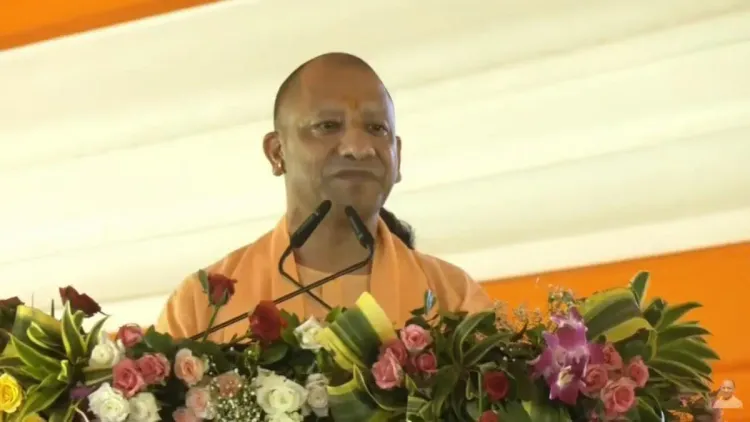
Uttar Pradesh Chief Minister Yogi Adityanath on Wednesday, 8 July 2026, described the Bundelkhand Expressway as the lifeline of the Bundelkhand region, marking a renewed spotlight on the 296-kilometre access-controlled corridor that has transformed connectivity across one of the state's most historically underserved areas.
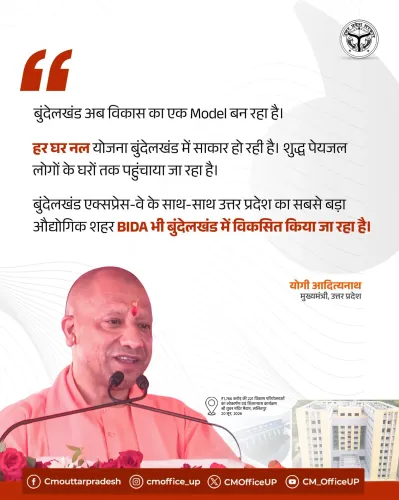
In his post on X, the Chief Minister wrote: 'बुंदेलखंड एक्सप्रेस-वे' आज बुंदेलखंड की Lifeline बन गया है... — translated as: 'The Bundelkhand Expressway has today become the lifeline of Bundelkhand.' The statement underscores the administration's view that the expressway is no longer merely a road project but a structural shift in the region's economic and social geography.
Context
The Bundelkhand Expressway links Etawah in the north to Chitrakoot in the south, cutting through a belt long defined by drought, seasonal migration, and poor road connectivity. Prime Minister Narendra Modi inaugurated the expressway on 16 July 2022, completing the first major north-south arterial road across the region. The project was conceived and foundation-laid under the Yogi Adityanath government in 2019.
Bundelkhand straddles parts of southern Uttar Pradesh and Madhya Pradesh and has historically ranked among India's more economically fragile zones. Inadequate road infrastructure was repeatedly cited as a barrier to investment, agricultural trade, and access to healthcare and education.
Policy Backdrop
The expressway is one pillar of a larger greenfield expressway grid that the Uttar Pradesh government has built or extended since 2017, alongside the Agra-Lucknow Expressway and the Purvanchal Expressway. The stated policy rationale has been to reduce travel time between peripheral districts and the National Capital Region, attract industrial investment, and address regional backwardness in areas such as Bundelkhand.
By connecting previously isolated districts to the broader highway network, the expressway has also been positioned as a catalyst for logistics, cold-chain infrastructure for farmers, and tourism linked to the religious and heritage sites of the Bundelkhand belt, including Chitrakoot.
Stakeholders and Impact
The primary beneficiaries are Bundelkhand residents — farmers moving produce to mandis, traders accessing wider markets, and daily commuters who previously relied on state highways with far longer transit times. Inter-state travellers moving between Uttar Pradesh and Madhya Pradesh have also seen reduced journey durations on key routes.
Farmers and agricultural cooperatives in the region have been among the most frequently cited groups in government assessments of the expressway's early impact, given Bundelkhand's dependence on rain-fed agriculture and the vulnerability of produce to delays in transportation.
What's Next
Attention will now turn to official traffic-count and economic-impact data for the expressway, which the state government is expected to release as the corridor approaches its fourth year of operation. Announcements on spur roads, industrial corridors, or logistics parks along the expressway's alignment would be the next concrete indicators of whether the 'lifeline' characterisation is being backed by fresh investment decisions.
Chief Minister Yogi Adityanath's renewed emphasis on the expressway suggests the administration intends to keep Bundelkhand's development trajectory as a visible plank ahead of future electoral and policy cycles in Uttar Pradesh.
Point of View
Given its history of drought, agrarian distress, and out-migration, and repeated invocations of the expressway serve to anchor the BJP government's narrative of transformation in a belt that cuts across electorally sensitive districts. The statement also fits a broader pattern in which the Uttar Pradesh administration uses its expressway grid as the most visible shorthand for the state's infrastructure ambitions under the current dispensation. Whether the 'lifeline' claim is substantiated will depend on hard data on freight movement, land-use change along the alignment, and industrial investment — metrics the government has yet to publish comprehensively.
NationPress
8 Jul 2026
Frequently Asked Questions
What is the Bundelkhand Expressway and where does it run?
The Bundelkhand Expressway is a 296-kilometre access-controlled highway in Uttar Pradesh linking Etawah in the north to Chitrakoot in the south, passing through the historically underdeveloped Bundelkhand region.
When was the Bundelkhand Expressway inaugurated?
Prime Minister Narendra Modi inaugurated the Bundelkhand Expressway on 16 July 2022 . The foundation stone was laid by the Yogi Adityanath government in 2019 .
Why did CM Yogi call the Bundelkhand Expressway a lifeline?
Chief Minister Yogi Adityanath used the term 'lifeline' to highlight the expressway's role in improving road connectivity, reducing travel time, and supporting farmers and traders in a region long marked by poor infrastructure and economic backwardness.
What is the significance of Bundelkhand as a region?
Bundelkhand spans parts of southern Uttar Pradesh and Madhya Pradesh and has historically faced drought, seasonal migration, and inadequate road links, making infrastructure investment there a politically and economically important priority.
What other expressways has the Uttar Pradesh government built?
Under the Yogi Adityanath government since 2017 , Uttar Pradesh has built or extended the Agra-Lucknow Expressway , the Purvanchal Expressway , and the Bundelkhand Expressway as part of a greenfield expressway grid aimed at connecting peripheral districts to the National Capital Region.