HP Exports 1.3 MT of Kullu Pomegranates to Dubai

Synopsis
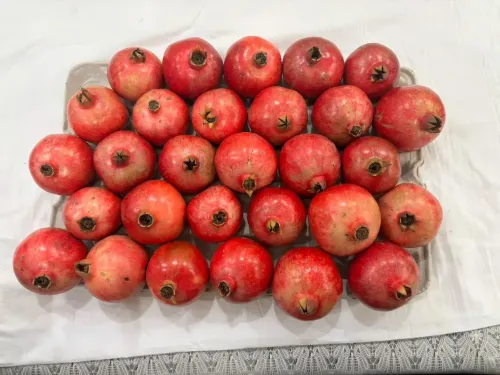
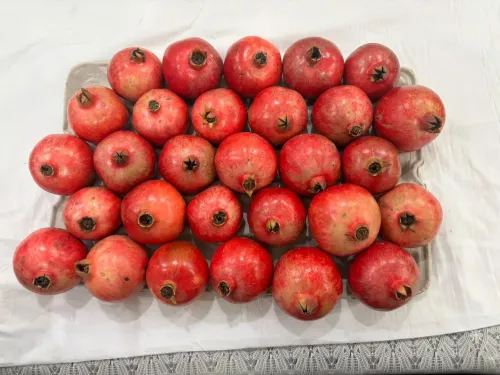
The Chief Minister's Office of Himachal Pradesh has announced the export of 1.3 metric tonnes of Kullu's Sindoori pomegranates to Dubai, UAE — a tangible step in the state's push to connect mountain farmers with premium global markets.
Key Takeaways
1.3 metric tonnes of Sindoori variety pomegranates from Kullu district have been exported to Dubai, UAE .
The shipment was announced by the Chief Minister's Office of Himachal Pradesh on October 22, 2026 .
The export is framed as part of a broader state effort to link Himachal farmers and horticulturalists with international markets.
Himachal Pradesh is diversifying beyond its traditional apple-dominant horticulture sector toward high-value crops like pomegranates.
The UAE is a priority destination for Indian agricultural exports under the Agricultural Export Policy 2018 .
The move aims to improve farmer realisations by reducing dependence on domestic mandis.
A consignment of pomegranates grown in the mountains of Kullu district has crossed the Arabian Sea — a small shipment with a pointed message about where Himachal Pradesh's horticulture ambitions are headed. The Chief Minister's Office of Himachal Pradesh announced on Thursday, October 22, 2026, that 1.3 metric tonnes of the Sindoori variety pomegranate from Kullu have been exported to Dubai, United Arab Emirates.
The official post stated that 'many steps are being taken to take the hard work of Himachal Pradesh's farmers and horticulturalists to international markets,' with the Dubai shipment cited as a concrete step in that direction. The Sindoori variety, known for its deep-red arils and sweetness, represents Kullu's push into premium fruit cultivation beyond the state's iconic apple belt.
Why a Gulf Market, and Why Now
The United Arab Emirates is one of India's most active destinations for fresh produce — a high-purchasing-power market with a large South Asian diaspora and year-round demand for quality fruit. Several Indian states have been routing pomegranates and other horticultural produce directly to Gulf buyers in recent years, deliberately bypassing crowded domestic mandis to capture better prices at the farm gate.
Himachal's horticulture sector has historically revolved around apples, but the state has been steadily broadening its crop basket. Pomegranates, better suited to the drier, lower-altitude zones of districts like Kullu, offer growers a viable second income stream — and a potential hedge against the climate-linked volatility that has unsettled apple yields in recent seasons.
The National Policy Push Behind the Shipment
India's Agricultural Export Policy 2018 laid out a framework for exactly this kind of outcome: state governments identifying niche and high-value varieties, building export clusters, and opening market-access channels to priority foreign destinations. The India-UAE bilateral trade relationship provides a ready commercial corridor, with existing frameworks easing phytosanitary and logistics hurdles for fresh fruit consignments.
For Kullu's farmers, the practical upside is direct: an export price denominated in a stronger currency, and a buyer who is not the neighbourhood trader at the local mandi. Whether this first shipment scales into a sustained trade flow will depend on how quickly the state can aggregate supply, ensure cold-chain continuity, and support growers with certification and packaging standards.
One consignment of 1.3 metric tonnes is modest by trade volumes. But in horticulture, the first export is the hardest — it proves the market will buy. Kullu's Sindoori pomegranate just made that case to Dubai.
Point of View
But erratic weather patterns and market saturation have made the search for alternative high-value crops urgent. Routing Sindoori pomegranates directly to a Gulf premium market aligns with the national Agricultural Export Policy 2018 and signals that the state government is willing to invest in supply-chain infrastructure for non-apple produce. The real test will be whether this first consignment translates into a recurring trade relationship, with stable volumes, cold-chain support, and grower incentives that make export-oriented farming viable at scale for Kullu's smallholders.
NationPress
22 Oct 2026
Frequently Asked Questions
Which variety of pomegranate was exported from Himachal Pradesh to Dubai?
The Sindoori variety of pomegranate, cultivated in Kullu district of Himachal Pradesh, was exported to Dubai, UAE.
How much pomegranate did Himachal Pradesh export to Dubai?
1.3 metric tonnes of Sindoori pomegranates from Kullu district were exported to Dubai, United Arab Emirates .
Why is Himachal Pradesh exporting pomegranates to the UAE?
Himachal Pradesh is exporting to the UAE to help farmers earn better prices in international markets and reduce dependence on domestic mandis, in line with India's Agricultural Export Policy 2018 .
Is Himachal Pradesh only known for apples or other fruits too?
While apples remain Himachal Pradesh's signature horticultural product, the state is actively diversifying into pomegranates, stone fruits, and other high-value crops, particularly in lower-altitude districts like Kullu .
What is the Sindoori pomegranate variety?
The Sindoori variety is a pomegranate cultivar grown in parts of Himachal Pradesh, including Kullu district, valued for its quality and suitability for premium export markets such as the Gulf region.