IAF Mi-17 helicopters douse Kasauli forest fire with 40,000 litres of water
Synopsis
The IAF flew night sorties with Mi-17 helicopters and night vision goggles, lifting water from Sukhna Lake to douse a fast-moving forest fire in Kasauli — a hill town where 22% of Himachal's forests are already classified fire-prone. The 15-hour joint Army-IAF operation is a sharp reminder of how India's armed forces are increasingly the first line of defence against climate-aggravated natural disasters.
Key Takeaways
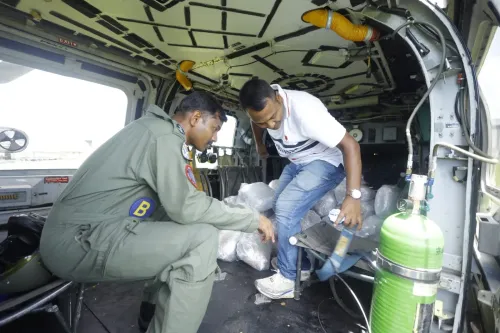
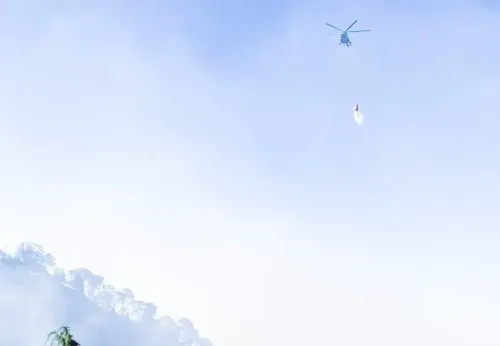
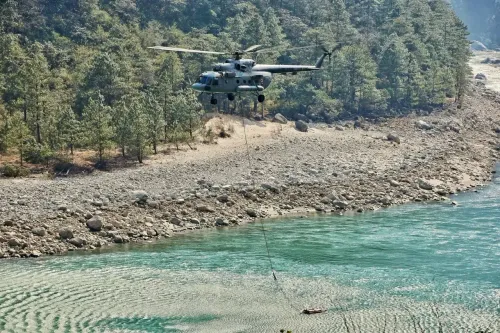
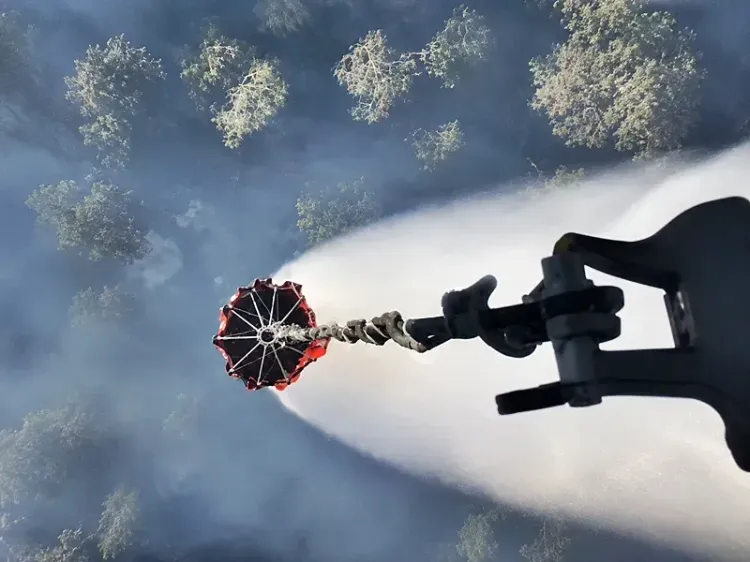
IAF Mi-17 helicopters conducted over 15 sorties , dropping more than 40,000 litres of water on the Kasauli forest fire using Bambi buckets.
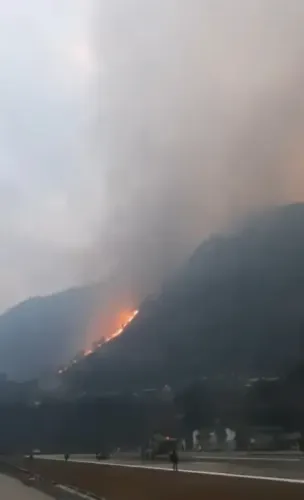
The fire broke out at approximately 3 pm on 26 May in the Gilbert Trail and Upper Mall area of Kasauli's western slopes.
A joint operation lasting over 15 hours involved the Indian Army's Kasauli Brigade , the IAF , and civil authorities from Kasauli and Chandigarh.
Night operations were carried out with crews using night vision goggles ; water was sourced from Sukhna Lake, Chandigarh .
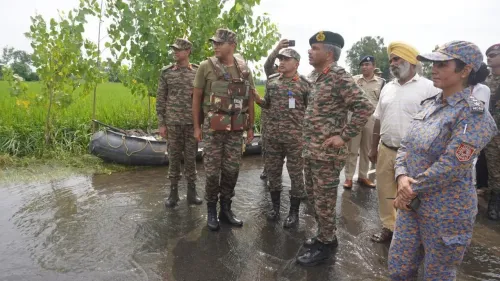
Lt Gen Pushpendra Singh , Army Commander, Western Command, visited the site to review operations.
According to the Himachal Pradesh Forest Department , 22% of the state's forest area — around 8,267 sq km — is fire-prone, largely due to inflammable pine needle litter.
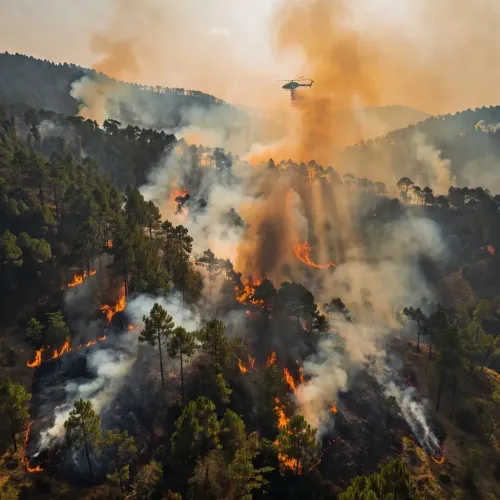
The Indian Air Force (IAF) deployed Mi-17 helicopters to combat a massive forest fire in Kasauli, Himachal Pradesh, dropping over 40,000 litres of water across more than 15 sorties using Bambi buckets sourced from Sukhna Lake in Chandigarh. The blaze, which broke out at around 3 pm on 26 May in the Gilbert Trail and Upper Mall area on the western slopes of Kasauli, has been significantly contained following a sustained overnight operation lasting over 15 hours. No civilian or responder casualties have been reported.
How the Operation Unfolded
The fire erupted amid a prolonged dry spell and spread rapidly across densely forested and difficult terrain. The Indian Army's Kasauli Brigade launched an immediate response within hours of the outbreak, deploying ground troops, fire-tenders, and water carriers to create firebreaks and isolate vulnerable pockets. IAF helicopters conducted night operations, with crew equipped with night vision goggles, to sustain the aerial assault through darkness.
The operation involved close coordination between the Indian Army, the IAF, civil officials from both Kasauli and the Chandigarh administration, and local agencies. Subdivisional Magistrate (Kasauli) Mahinder Chauhan confirmed to reporters that multiple fires had been reported in the area, necessitating the deployment of fire-tenders across several points.
Senior Command Reviews Ground Situation
Lt Gen Pushpendra Singh, Army Commander, Western Command, visited the affected area to review ongoing operations and assess the ground situation firsthand. He commended the deployed personnel for their 'swift response, courage and relentless efforts under extremely challenging conditions,' according to an official statement.
Army personnel — both combatant and non-combatant — continue to operate in the field, dousing residual hotspots and preventing flare-ups. Aerial firefighting missions are ongoing over stretches that remain inaccessible to ground teams. All personnel and equipment deployed in the operation are reported safe.
Why Kasauli's Forests Are Vulnerable
According to the Himachal Pradesh Forest Department, 22% of the state's total forest area — approximately 8,267 sq km — is classified as fire-prone. A significant share of these incidents originates in pine forests, which are found at altitudes up to 5,500 feet. During summer months, pine trees shed dry needles that are highly inflammable, creating conditions ripe for rapid fire spread. This is a recurring seasonal pattern across the state's mid-altitude forest belt.
Broader Context
The Kasauli operation underscores the growing frequency of forest fire emergencies in the Himalayan foothills during extended dry spells — a trend that forest officials and climate researchers have flagged as worsening with each passing summer season. The scale of the inter-agency response, involving the Army, IAF, and civil administration, reflects the logistical complexity of firefighting in terrain that ground vehicles cannot easily access. With aerial operations continuing, authorities are monitoring residual hotspots to prevent a re-ignition.
Point of View
But it also signals a structural problem: India's armed forces are being pressed into routine ecological firefighting because civilian forest management infrastructure cannot cope with terrain and scale. Himachal's 8,267 sq km of fire-prone forest is a known, mapped risk — yet the state's response capacity still depends on Army brigades and IAF helicopters as the primary surge resource. The pine needle hazard is seasonal and predictable; the question is why pre-positioned civilian firefighting assets and controlled-burn programmes have not reduced that dependence. As dry spells lengthen, this gap will only widen.
NationPress
20 Sept 2026
Frequently Asked Questions
What caused the Kasauli forest fire in May 2025?
The fire broke out on 26 May amid a prolonged dry spell, igniting in the Gilbert Trail and Upper Mall area on the western slopes of Kasauli. Pine forests in the region are particularly vulnerable during summer as shed pine needles are highly inflammable.
How did the IAF help fight the Kasauli forest fire?
IAF Mi-17 helicopters conducted more than 15 sorties using Bambi buckets, dropping over 40,000 litres of water sourced from Sukhna Lake in Chandigarh. Night operations were also carried out with crews equipped with night vision goggles.
Were any lives lost in the Kasauli forest fire?
No loss of life or injuries was reported among civilians or emergency responders. All Army and IAF personnel and equipment deployed in the operation remained safe, according to official statements.
Which agencies were involved in the firefighting operation?
The operation involved the Indian Army's Kasauli Brigade, the Indian Air Force, civil officials from the Kasauli subdivision and the Chandigarh administration, and local agencies. Lt Gen Pushpendra Singh, Army Commander of Western Command, personally reviewed the ground situation.
How much of Himachal Pradesh's forest is fire-prone?
According to the Himachal Pradesh Forest Department, 22% of the state's total forest area — approximately 8,267 sq km — is classified as fire-prone, with pine forests at altitudes up to 5,500 feet posing the greatest seasonal risk.