SC quashes NSA detention in Sambhal case, slaps ₹10 lakh cost on UP govt

Synopsis
The Supreme Court has ruled that the Uttar Pradesh government illegally used the NSA to detain Mulla Afroz over the November 2024 Sambhal violence — and slapped a ₹10 lakh cost on the state. Opposition MPs Imran Masood and Chandrashekhar Azad say the fine is too small and warn that more such cases are coming. The ruling signals a pointed judicial rebuke with potential ripple effects across pending Sambhal and Saharanpur detentions.
Key Takeaways
The Supreme Court quashed the NSA detention of Mulla Afroz , arrested over the November 2024 Sambhal violence , ruling it illegally exercised.
The court imposed a cost of ₹10 lakh on the Uttar Pradesh government and set aside the Allahabad High Court order that had upheld the detention.
Congress MP Imran Masood warned that officials pursuing partisan agendas risk personal legal jeopardy, and flagged a pending Saharanpur mosque case .
Nagina MP Chandrashekhar Azad called the ₹10 lakh penalty inadequate, arguing it should have been ₹10 crore ; he also disclosed he himself was detained under the NSA for 16 months .
Opposition leaders allege the NSA is being used systematically to suppress dissent in communally sensitive cases in Uttar Pradesh .
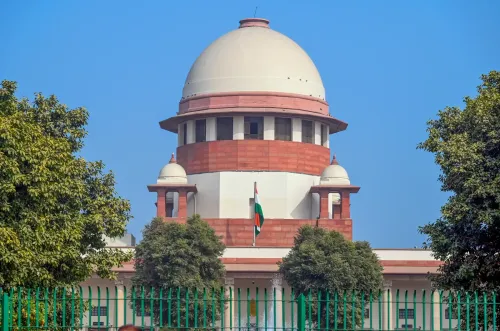
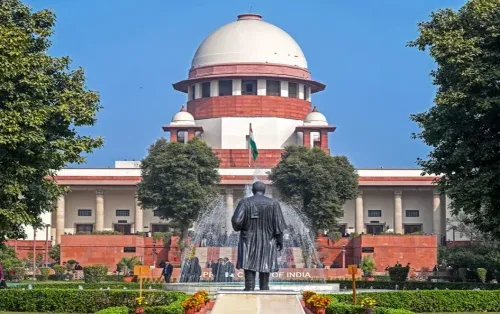
The Supreme Court has quashed the preventive detention of Mulla Afroz under the National Security Act (NSA) in connection with the November 2024 Sambhal violence, ruling that the power of preventive detention had been illegally exercised. The court also imposed a cost of ₹10 lakh on the Uttar Pradesh government and set aside an Allahabad High Court order that had previously upheld the detention. The ruling has drawn sharp political reactions from opposition leaders who see it as an indictment of the state's law-enforcement conduct.
What the Supreme Court Ruled
The court's order came on a petition filed by Mulla Afroz, who was arrested in connection with violence that erupted in Sambhal in November 2024. The bench found the invocation of the NSA to be unlawful and, in an unusual step, imposed monetary costs on the state — a signal that the judiciary viewed the detention as more than a procedural lapse. By simultaneously setting aside the Allahabad High Court's endorsement of the detention, the Supreme Court effectively delivered a two-tier rebuke to the state administration.
Congress MP Imran Masood's Reaction
Congress MP Imran Masood underscored that the ruling went beyond a mere quashing of the detention order. 'It has not only been quashed. Please read the complete news. Along with quashing the NSA, a fine of ₹10 lakh has also been imposed on the state government,' he said. Masood warned that officials pursuing what he characterised as a partisan agenda risked personal legal consequences, adding: 'The agenda they are pursuing with their eyes closed will eventually lead to files reaching the Supreme Court and could send them behind bars.' He also signalled that a Saharanpur mosque case would follow a similar trajectory. Masood argued that demolishing mosques and targeting individuals on religious grounds violated the Indian Constitution — 'the same Constitution that gives you the authority to hold office also guarantees the protection of our rights,' he said.
Chandrashekhar Azad Calls ₹10 Lakh Fine Too Little
Aazad Samaj Party (Kanshi Ram) president and Nagina MP Chandrashekhar Azad welcomed the ruling but argued the financial penalty was grossly inadequate. 'A ₹10 lakh fine is too little. The government and police send innocent people to jail on the government's orders, and when the judiciary imposes a fine on them, it is only ₹10 lakh. In my view, the fine should have been ₹10 crore,' he said. Azad further alleged that the NSA was being systematically deployed to suppress opposition voices, citing his own experience: 'I am sitting before you today after the government detained me under the NSA despite me being innocent. I was kept in jail for 16 months,' he said. He warned that public resistance would ultimately force a change of government.
Broader Context: NSA Use in UP Under Scrutiny
The Sambhal ruling is not an isolated instance of judicial pushback against preventive detention in Uttar Pradesh. Critics and civil liberties groups have long argued that the NSA — a colonial-era law allowing detention without trial for up to 12 months — has been disproportionately applied in communally sensitive cases in the state. The November 2024 Sambhal violence, triggered by a court-ordered survey of the Shahi Jama Masjid, left several people dead and led to widespread arrests. This Supreme Court ruling adds to a growing body of orders questioning the legal basis of post-Sambhal detentions. The Uttar Pradesh government has not yet publicly responded to the court's cost imposition.
What Comes Next
The Supreme Court's cost order creates a precedent that could embolden petitioners in other pending NSA cases arising from the Sambhal and Saharanpur incidents. Legal observers note that the financial penalty, while symbolic in quantum, signals judicial willingness to hold state instrumentalities accountable. The Allahabad High Court will likely face renewed scrutiny of its initial order upholding the detention. Opposition parties are expected to raise the ruling in the ongoing session and use it to press the state government on its law-enforcement approach in communally sensitive areas.
Point of View
It is a deliberate signal that the illegality was not merely technical. The ₹10 lakh figure may be modest, but the precedent of financial accountability is not. What is missing from the political debate is a reckoning with the Allahabad High Court's own role: it upheld a detention that the Supreme Court found to be illegally exercised, raising uncomfortable questions about the quality of scrutiny at the intermediate appellate level. With Saharanpur cases reportedly in the pipeline and the Sambhal violence still politically live, UP's law enforcement conduct is likely to face further judicial and parliamentary pressure.
NationPress
29 Sept 2026
Frequently Asked Questions
Why did the Supreme Court quash Mulla Afroz's NSA detention?
The Supreme Court ruled that the power of preventive detention under the National Security Act had been illegally exercised against Mulla Afroz, who was arrested in connection with the November 2024 Sambhal violence. The court also set aside the Allahabad High Court order that had earlier upheld the detention.
What cost did the Supreme Court impose on the UP government?
The Supreme Court imposed a cost of ₹10 lakh on the Uttar Pradesh government for the illegal exercise of preventive detention. Nagina MP Chandrashekhar Azad called the penalty inadequate and argued it should have been ₹10 crore.
What was the Sambhal violence of November 2024?
The Sambhal violence erupted in November 2024 in Uttar Pradesh following a court-ordered survey of the Shahi Jama Masjid, resulting in deaths and widespread arrests. Several individuals, including Mulla Afroz, were subsequently detained under the National Security Act.
What did Congress MP Imran Masood say about the ruling?
Imran Masood said the ruling was not just a quashing of the NSA order but also carried a ₹10 lakh cost on the state, and warned officials that pursuing politically motivated agendas could lead to personal legal consequences. He also indicated a Saharanpur mosque case would come up before the Supreme Court in a similar manner.
How does this ruling affect other NSA detentions in UP?
The ruling sets a precedent that could strengthen petitions challenging other NSA detentions linked to the Sambhal and Saharanpur incidents. Legal observers note that the cost imposition signals judicial willingness to hold state instrumentalities financially accountable for unlawful preventive detentions.