CM Himanta Shares ABDM Milestone: 90 Cr ABHA Registrations
Synopsis
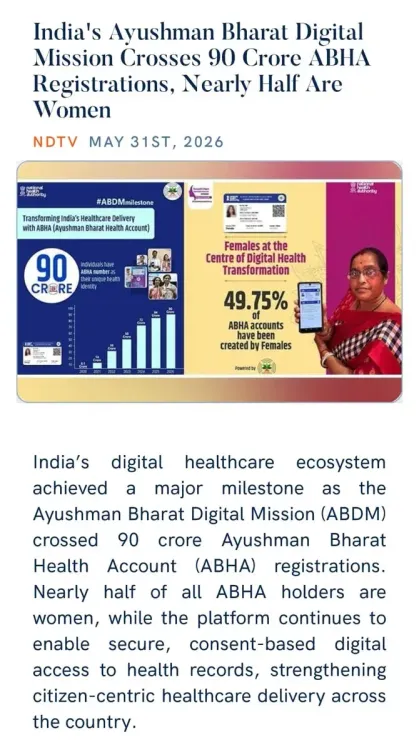
India's Ayushman Bharat Digital Mission has crossed 90 crore ABHA registrations, with nearly half belonging to women — a milestone Assam Chief Minister Himanta Biswa Sarma highlighted on 1 June 2026, signalling broad-based uptake of the country's flagship digital health identity programme.
Key Takeaways
The Ayushman Bharat Digital Mission (ABDM) has crossed 90 crore ABHA registrations as of June 2026 .
Nearly half of all registered ABHA accounts are held by women , indicating significant gender-inclusive outreach.
ABHA is a unique 14-digit digital health ID that links personal health records across hospitals, clinics, and insurers.
The mission was formally launched in September 2021 by Prime Minister Narendra Modi as part of the broader Ayushman Bharat framework.
Assam CM Himanta Biswa Sarma shared the milestone via the NaMo App on 1 June 2026 .
The next phase of ABDM focuses on deepening active health record linkages beyond registration numbers.
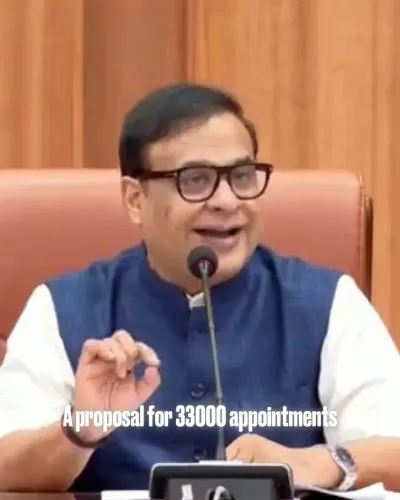
Assam Chief Minister Himanta Biswa Sarma on Monday, 1 June 2026, shared news of a significant milestone for India's digital health infrastructure — the Ayushman Bharat Digital Mission (ABDM) crossing 90 crore registrations under the Ayushman Bharat Health Account (ABHA) scheme, with nearly half of all registered accounts belonging to women.
Context
The post, shared via the NaMo App, highlights a landmark figure for one of India's most ambitious digital public health programmes. The ABHA is a unique 14-digit digital health ID that allows citizens to store, access, and share their personal health records across hospitals, clinics, and insurance providers in a unified ecosystem. Reaching 90 crore registrations places the programme among the largest digital health identity initiatives in the world.
The near gender parity in registrations — with women accounting for close to half of all ABHA accounts — is being cited as a marker of inclusive outreach, particularly significant given historically lower female participation in formal digital services in India.
Policy Backdrop
The Ayushman Bharat Digital Mission was formally launched in September 2021 by Prime Minister Narendra Modi, building on the broader Ayushman Bharat framework that began with the Pradhan Mantri Jan Arogya Yojana (PM-JAY) in 2018. PM-JAY extended health insurance coverage worth up to Rs 5 lakh per family per year to low-income households, while ABDM added a digital layer to enable portable, interoperable health records across the country.
The Ministry of Health and Family Welfare and the National Health Authority (NHA) have been the central drivers of ABDM rollout, coordinating with state governments to integrate existing health insurance schemes and hospital networks into the digital health ecosystem. The mission draws from the architecture of Aadhaar-linked digital public infrastructure, applying similar principles of universal, unique identification to the health sector.
Stakeholders and Impact
For ordinary citizens, an ABHA account means health records from different providers — government hospitals, private clinics, diagnostic labs — can be linked to a single ID, reducing duplication of tests and paperwork. This is especially relevant for patients managing chronic conditions or seeking referrals across facilities.
The high proportion of women registrants is notable against the backdrop of India's broader digital inclusion challenges. It suggests that targeted outreach through schemes such as Ayushman Arogya Mandirs (formerly Health and Wellness Centres) and frontline health workers like ASHAs and ANMs may be contributing to narrowing the gender gap in digital health access. States, including Assam, have been active in driving ABDM enrolment at the grassroots level, with Chief Minister Sarma having consistently championed health digitisation efforts in the North-East.
What's Next
The focus for ABDM now shifts to deepening active usage of ABHA accounts — moving beyond registration numbers to ensuring that health records are actually being linked and accessed through the platform. Integration with state-level health insurance schemes, private hospital networks, and pharmacy chains remains a work in progress across several states.
Analysts and health policy observers will watch the next Union Health Budget and National Health Authority reports for new targets around ABHA-linked health record creation, telemedicine adoption, and state-level ABDM integration milestones. The 90-crore registration figure, if sustained with quality data linkages, could position India's digital health stack as a global model for low- and middle-income countries building similar infrastructure.
Point of View
Amplified by a BJP state chief minister via the party's own digital platform, is as much a political signal as a health policy update — framing the Modi government's digital public infrastructure push as a governance success ahead of any electoral cycle. The near gender parity in registrations is the more substantive data point: it suggests frontline health worker networks are converting welfare scheme beneficiaries into digital health system participants at scale. However, registration numbers alone do not capture the harder challenge of active record linkage and interoperability, which remain uneven across states. The real test of ABDM's impact will come when patients and providers routinely exchange health data through the platform, rather than simply holding dormant ABHA IDs.
NationPress
17 Oct 2026
Frequently Asked Questions
What is ABHA and how do I register for it?
ABHA stands for Ayushman Bharat Health Account — a unique 14-digit digital health ID that links your medical records across hospitals and clinics. You can register for free on the ABDM official portal or through the Aarogya Setu app using your Aadhaar or mobile number.
How many people have registered for ABHA in India?
As of June 2026, India's Ayushman Bharat Digital Mission has crossed 90 crore ABHA registrations, making it one of the largest digital health identity programmes in the world.
What is the Ayushman Bharat Digital Mission?
The Ayushman Bharat Digital Mission (ABDM) is a central government initiative launched in September 2021 to create a unified digital health ecosystem in India, enabling citizens to store and share health records through a unique ABHA ID.
Why is women's participation in ABHA registrations significant?
Nearly half of all 90 crore ABHA registrations belong to women, which is significant because women have historically had lower participation in formal digital services in India. It reflects targeted outreach through frontline health workers and government schemes.
What is the difference between Ayushman Bharat PM-JAY and ABDM?
PM-JAY, launched in 2018, provides health insurance coverage of up to Rs 5 lakh per family per year to low-income households. ABDM, launched in 2021, is the digital layer that creates health IDs and enables portable health records — the two programmes together form the broader Ayushman Bharat framework.