India's Ambition: Becoming the Global 'Food Basket'
Synopsis
India is on track to become the world’s 'food basket' with record agricultural production, as highlighted by Union Minister Shivraj Singh Chouhan. Discover how government policies and innovations are transforming the agricultural landscape.
Key Takeaways
India aims to become the world's 'food basket' through record agricultural production.
The country has achieved a food grain output of approximately 357 million tonnes.
India has surpassed China as the largest rice producer, with over 150 million tonnes.
Government initiatives are vital for improving farmers' incomes and agricultural sustainability.
Natural farming practices are gaining traction to promote eco-friendly agriculture.
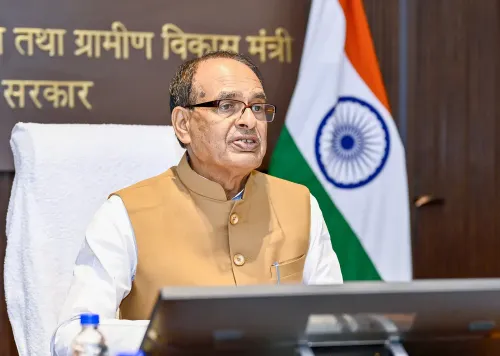
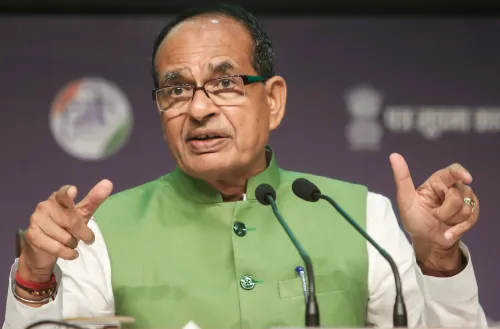
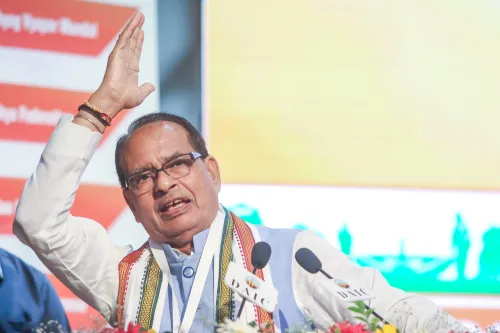
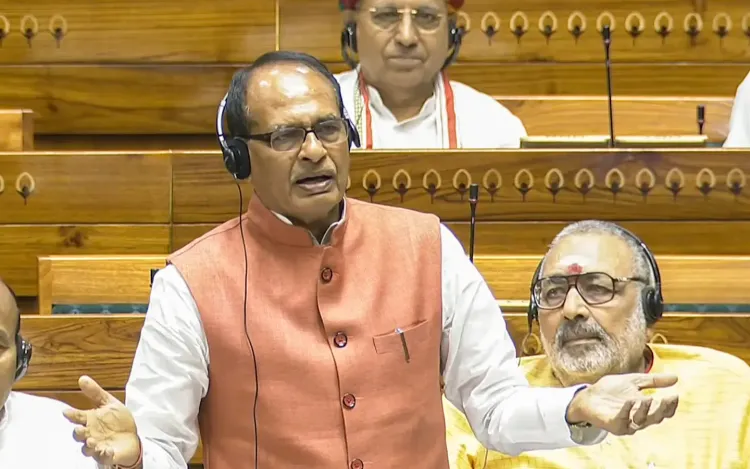
New Delhi, March 10 (NationPress) India is on a determined path to establish itself as the world’s ‘food basket’, achieving record levels of agricultural output and bolstered by favorable government policies, stated Union Agriculture and Farmers’ Welfare Minister Shivraj Singh Chouhan on Tuesday.
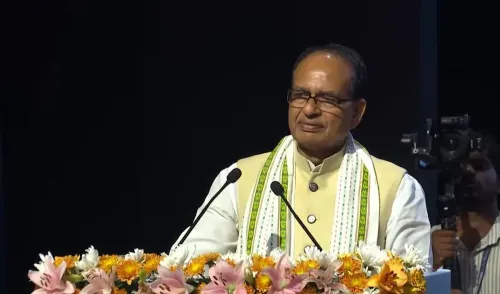
During his address in the Lok Sabha, Chouhan emphasized that the central government is consistently working to fortify the agriculture sector and enhance the earnings of farmers.
He pointed out that numerous central initiatives have not been effectively executed in West Bengal, leading to the marginalization of farmers in the region who miss out on essential welfare benefits.
“India is experiencing unprecedented food grain production, and the agricultural prowess of our nation is gaining global acknowledgment,” Chouhan remarked.
“With the guidance of Prime Minister Narendra Modi, India’s total food grain yield has soared to approximately 357 million tonnes, significantly boosting food security and farmers’ earnings,” he elaborated.
Chouhan noted that India has emerged as the world’s leading producer of rice, with production surpassing 150 million tonnes, outpacing China.
“Record outputs have also been recorded in various other crops, including wheat, mustard, soybean, and groundnut,” he continued.
Reflecting on history, the minister recalled a time when India relied on wheat imports under the PL-480 program, highlighting the drastic transformation in the present scenario.
“Our granaries are now filled with wheat and rice, and the government is currently contemplating storage challenges for our food supplies,” he stated, adding that India’s farmers and agricultural strategies are being recognized globally.
Chouhan further explained that the government is prioritizing the enhancement of production in pulses, fruits, and vegetables to bolster nutritional security and elevate farmers’ incomes.
Pulses production has risen from around 19 million tonnes to approximately 25–26 million tonnes.
Moreover, horticultural production in India has surpassed 369 million tonnes, providing a significant additional revenue stream for farmers.
The Union minister also underscored the government’s commitment to promoting natural farming, particularly in extensive areas near rivers like the Ganga, where chemical-free farming practices are being encouraged.
Point of View
Emphasizing the government's support and the country's achievements in food production. It reflects a commitment to enhancing farmers' livelihoods and promoting sustainable practices.
NationPress
23 Sept 2026
Frequently Asked Questions
What steps is India taking to achieve its goal of being the world's food basket?
India is implementing supportive government policies, enhancing agricultural production, and promoting natural farming practices to achieve its goal of becoming the world's food basket.
How has India's agricultural output changed in recent years?
India's agricultural output has significantly increased, with food grain production reaching approximately 357 million tonnes, making it the largest producer of rice globally.
What challenges are farmers facing in West Bengal?
Farmers in West Bengal are facing challenges due to the improper implementation of central schemes, which limits their access to essential welfare benefits.
What is the government's focus regarding pulses and horticulture?
The government is focused on increasing the production of pulses, fruits, and vegetables to enhance nutritional security and provide additional income sources for farmers.
What is the significance of natural farming in India?
Natural farming is significant as it promotes sustainable agriculture practices, particularly along rivers like the Ganga, aimed at reducing chemical usage.