Are India-GCC Relations at a Geoeconomic Inflection Point?
Synopsis
India and the GCC have decided to revive FTA negotiations after 15 years, indicating a shift from energy-centric ties to broader geoeconomic partnerships. This development reflects the Gulf states' strategic transformation and India's evolving economic strategy, potentially enhancing trade and connectivity between the regions.
Key Takeaways
Revival of FTA negotiations marks a strategic turning point.
Gulf states are diversifying their economies beyond oil.
India's labor force is crucial for Gulf growth strategies.
Reduced tariffs will enhance export competitiveness for India.
Legal framework will support trade corridors linking South Asia and Europe.
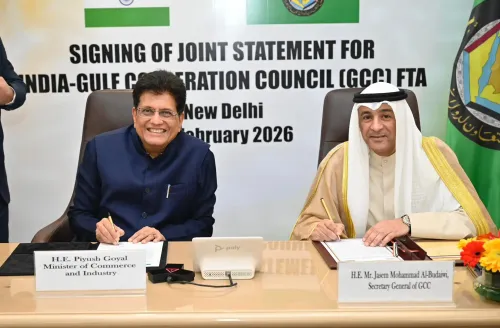
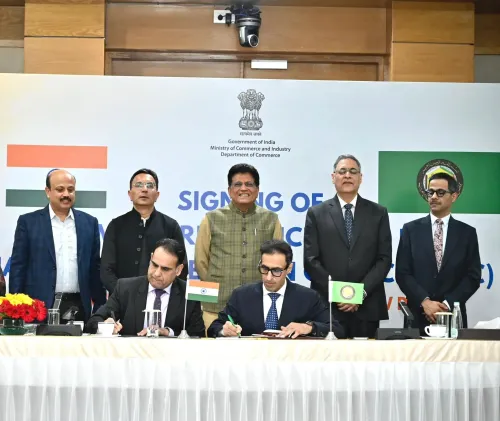
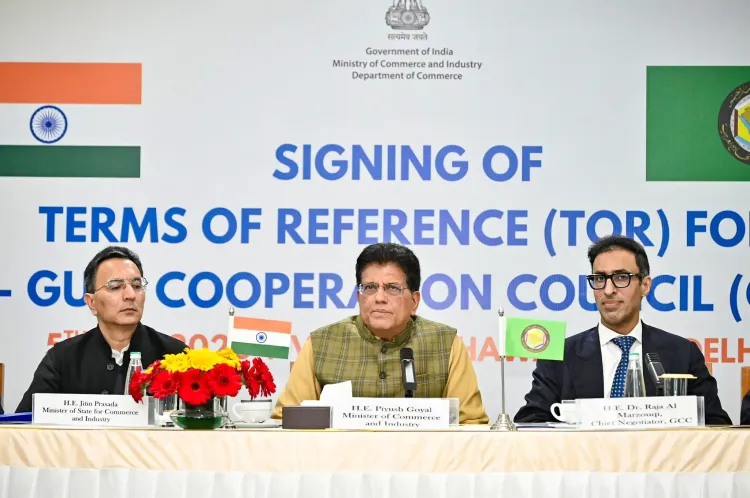
New Delhi, Feb 19 (NationPress) The formal decision by India and the Gulf Cooperation Council (GCC) to recommence discussions on a Free Trade Agreement (FTA) after a hiatus of nearly fifteen years signifies a crucial geoeconomic turning point in their relationship. This evolving partnership is no longer solely centered around energy; instead, the emphasis on geoeconomic realignments has gained substantial traction, as highlighted in a report.
The resurgence of these negotiations transcends mere trade; it serves as a strategic indicator. This move illustrates how West Asian countries are adapting to a fragmented global environment by broadening their geoeconomic alliances. Nowadays, in West Asia, trade diplomacy is increasingly viewed as a mechanism for ensuring strategic stability. The reset of the India–GCC FTA is a clear representation of this shift, as per an article in India Narrative.
The Gulf nations are currently experiencing a structural overhaul. Major initiatives, sovereign wealth investments, and growth in non-oil sectors are reshaping their economic frameworks. Areas such as manufacturing, logistics, hydrogen energy, fintech, and advanced infrastructure are becoming central to the Gulf's growth strategies. These transformations necessitate profound integration with rapidly growing Asian markets, making India, with its robust labor force and technological prowess, an essential partner, as noted in the article.
Simultaneously, New Delhi is revamping its economic approach. It is actively seeking trade agreements to secure market access and embed itself within resilient supply chains. Recent trade agreements, such as CEPA and FTAs, have showcased India’s readiness to engage in tariff rationalization and regulatory alignment when strategic advantages surpass protectionist considerations. Consequently, the revival of these FTA discussions reflects a significant structural convergence, as observed in the article.
The initial negotiations were halted in 2008 due to unresolved issues concerning tariffs, petrochemical access, service mobility, and standards. However, the geopolitical and economic landscape has transformed dramatically since then, creating a conducive environment for talks to resume.
For India, this FTA could markedly boost export competitiveness in sectors like pharmaceuticals, agro-products, textiles, machinery, and IT services. Lower tariffs and standardized regulations will reduce barriers in a region where regulatory fragmentation has previously hindered growth. For GCC countries, gaining access to India’s expansive consumer market and industrial ecosystem provides significant diversification potential. Gulf sovereign wealth funds have already committed billions to Indian infrastructure, renewable energy, and startups. An FTA framework would formalize and safeguard these investments.
Additionally, this agreement aligns with India’s aspirations for enhanced connectivity. The proposed India–Middle East–Europe corridor (IMEC) indicates a mutual interest in establishing trade routes connecting South Asia to Europe via West Asia. In this context, the FTA could establish the legal and regulatory framework supporting these transport and logistics networks, as mentioned in the article.
Point of View
This revitalization of India-GCC relations reflects a pragmatic approach to adapting to global economic shifts. The focus on geoeconomic partnerships signifies a strategic evolution that benefits both regions. The initiatives undertaken will not only enhance trade but also foster long-term stability and growth.
NationPress
29 Sept 2026
Frequently Asked Questions
What is the significance of the India-GCC FTA?
The India-GCC FTA signifies a strategic shift towards deeper economic integration, moving beyond energy reliance to encompass broader trade and investment opportunities.
Why were previous FTA negotiations stalled?
Previous negotiations were halted due to disagreements over tariffs, petrochemical access, and service mobility, which have since been addressed by changing geopolitical and economic contexts.
What sectors could benefit from the FTA?
Sectors like pharmaceuticals, textiles, machinery, IT services, and agro-products could see enhanced competitiveness through reduced tariffs and standardized regulations.
How does this FTA relate to India's connectivity goals?
The FTA is aligned with India's connectivity ambitions, particularly the proposed India-Middle East-Europe corridor, facilitating trade links between South Asia and Europe.
What impact does the FTA have on Gulf states?
For Gulf states, the FTA offers access to India's vast consumer market and industrial base, providing diversification opportunities and strengthening investment ties.