India Applauds IEA's Move to Release Emergency Oil Reserves Amid Supply Disruptions
Synopsis
India has expressed its approval of the IEA's decision to release emergency oil stocks to address supply challenges due to the conflict in the Middle East. This strategic move aims to stabilize global energy markets and support international cooperation.
Key Takeaways
India supports the IEA's decision to release emergency oil stocks .
The IEA plans to release 400 million barrels to mitigate supply disruptions.
The conflict in the Middle East has drastically reduced oil exports.
India is ready to implement measures to ensure market stability .
The coordinated stock release is a historic action by the IEA.
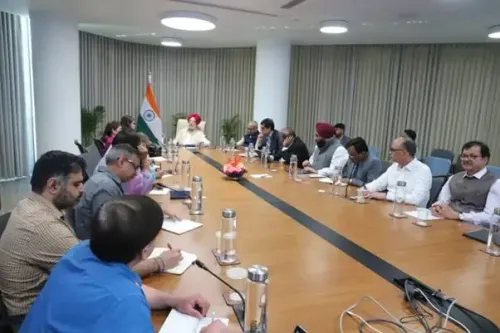
New Delhi, March 11 (NationPress) In a significant move, India expressed its approval on Wednesday regarding the International Energy Agency's (IEA) resolution to release emergency oil reserves in light of ongoing supply challenges stemming from the conflict in Iran. An official noted that the government is actively observing the shifting dynamics in global energy markets, especially in the Middle East.
India is prepared to implement necessary actions to foster global market stability, aligning with the IEA's initiatives, the official further remarked.
As an associate member of the IEA, India plays a proactive role in the realm of international energy collaboration.
In a crucial development amidst the escalating crisis in West Asia, IEA affiliates reached a consensus on Wednesday to release 400 million barrels of oil from the emergency reserves of 32 member nations to mitigate disruptions in oil markets.
The emergency stocks will be accessible to the market over a timeframe tailored to the circumstances of each member nation, and some countries will also implement additional emergency measures.
The IEA members collectively manage over 1.2 billion barrels of emergency stockpiles, along with another 600 million barrels held by industries under government mandate.
This coordinated release marks the sixth occasion in the IEA's history, which was established in 1974, with prior collective actions occurring in 1991, 2005, 2011, and twice in 2022.
The decision to engage in this emergency collective action was made during an extraordinary meeting convened by IEA Executive Director Fatih Birol to evaluate market conditions in light of the Middle East conflict and explore options to address supply interruptions.
Since the onset of the conflict on February 28, oil flows through the Strait of Hormuz have been significantly disrupted, with export levels of crude and refined products currently at less than 10% of pre-conflict levels.
This situation has compelled operators in the region to halt or reduce a considerable amount of production.
In 2025, an average of 20 million barrels per day of crude oil and oil products passed through the Strait of Hormuz, accounting for approximately 25% of the global seaborne oil trade.
According to the IEA, options for rerouting oil flows to bypass the Strait of Hormuz are quite limited.
Point of View
India's response aligns with its commitment to global energy cooperation, emphasizing the importance of stability in international markets. The proactive measures taken by the IEA and India's readiness to support these initiatives highlight a collaborative approach to addressing global energy challenges.
NationPress
6 Oct 2026
Frequently Asked Questions
What prompted the IEA to release emergency oil stocks?
The IEA decided to release emergency oil stocks due to significant supply disruptions caused by the ongoing conflict in the Middle East, specifically the war in Iran.
How much oil is being released from emergency reserves?
The IEA members agreed to release 400 million barrels of oil from their emergency reserves.
What role does India play in the IEA?
India is an associate member of the IEA and actively participates in international energy cooperation.
What impact has the conflict in the Middle East had on oil supply?
The conflict has drastically reduced oil flow through the Strait of Hormuz, with current export volumes at less than 10% of pre-conflict levels.
What measures will be taken by individual IEA member countries?
Each member country will implement the release of emergency stocks in a manner that suits their national circumstances, and some may introduce additional emergency measures.