INDIA Bloc launches pan-India 'Save Democracy March' from October 2
Synopsis
The INDIA bloc has unveiled its most structured protest campaign yet — district-level marches, an MP march on the Election Commission, a presidential delegation, five national rallies, and a climactic Delhi rally on 1 November. Congress president Kharge framed it as a fight against 'vote chori', signalling the Opposition is betting heavily on electoral grievance as its unifying theme heading into the election season.
Key Takeaways
INDIA bloc announced a 'Save Democracy March' in every district from 2 to 8 October .
All Opposition MPs will march to the Election Commission on 6 October .
INDIA bloc leaders will seek an audience with President Droupadi Murmu in the second week of October to present their case on alleged electoral irregularities.
Five national rallies are planned across October and November, with dates to be confirmed.
A major rally is scheduled in New Delhi on 1 November , focused on alleged 'vote chori' by the ECI.
The bloc will also approach the Supreme Court to expedite pending cases on the SIR and other electoral malpractice matters.
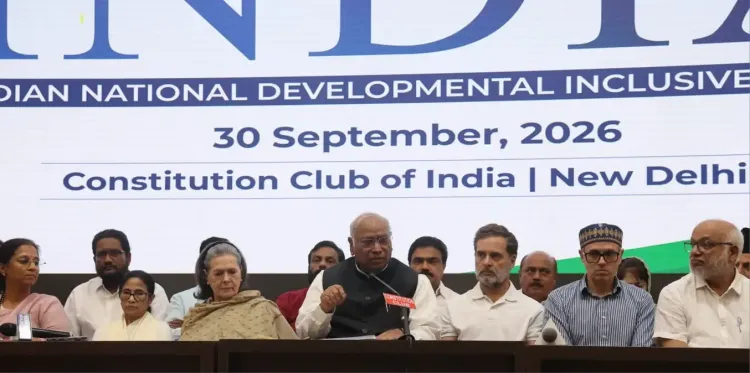
The INDIA bloc on 30 September unveiled a sweeping protest roadmap, anchored by a 'Save Democracy March' in every district across the country, a delegation to President Droupadi Murmu, and a mass rally in New Delhi on 1 November, as the Opposition escalated its campaign against what it described as the Election Commission of India (ECI)'s partisan conduct and electoral malpractices.
The Protest Blueprint
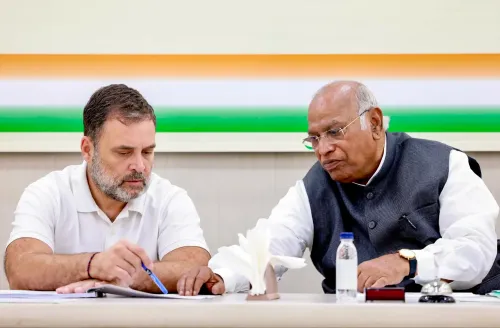
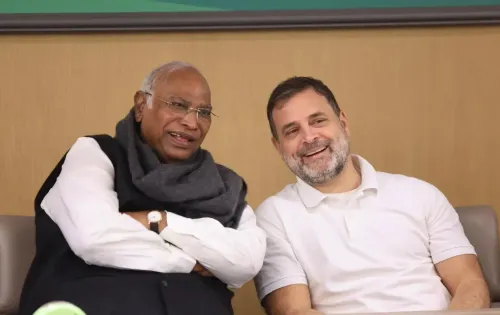
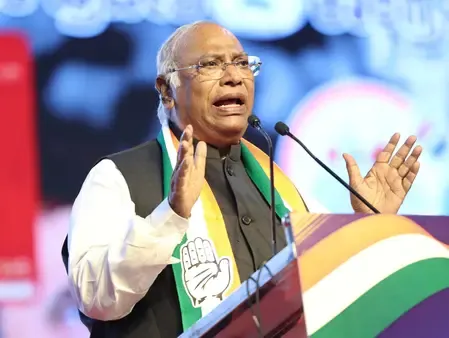
Congress president Mallikarjun Kharge laid out the Opposition's phased action plan at a press conference, outlining a series of coordinated demonstrations designed to pressure the ECI and mobilise public opinion. The plan spans October and November, with activities structured week by week.
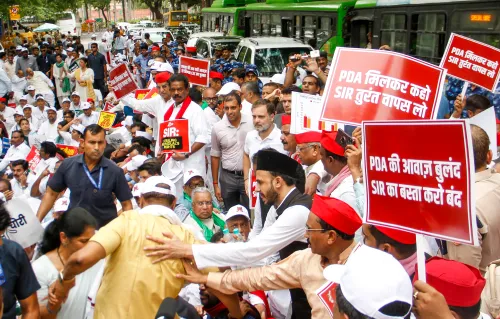
From 2 October to 8 October, the bloc will organise the 'Save Democracy March' in every district, with protests staged outside District Magistrate offices. 'We will organise protests in front of every District Magistrate, informing the people about the gross irregularities in the election procedure,' Kharge said.
Opposition MPs to March on Election Commission
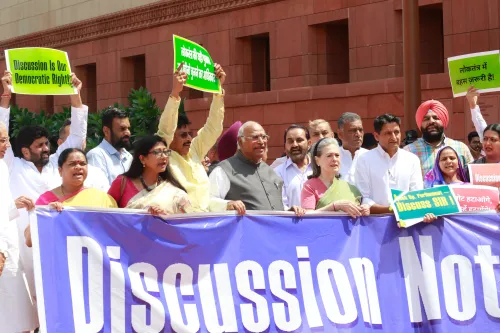
On 6 October, all Opposition Members of Parliament are scheduled to march to the Election Commission headquarters. In the second week of October, INDIA bloc leaders plan to seek an appointment with the President of India to formally present their case. 'The Opposition leaders will make a representation on how the underhand tactics are being used to crush the Opposition and befool the people of the country,' Kharge said.
Five large-scale rallies are also planned across the country in October and November, with dates yet to be finalised. These rallies, according to Kharge, will focus on explaining to citizens how their voting rights are being eroded.
November 1 Delhi Rally and Supreme Court Appeal
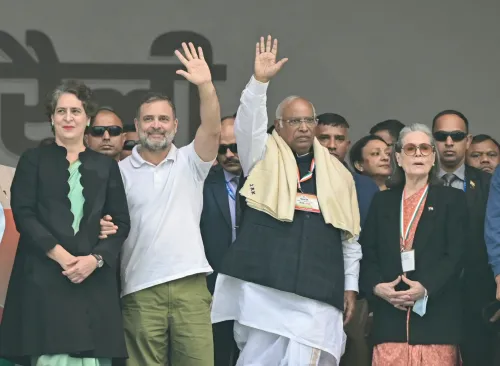
The protest calendar culminates in a major rally in Delhi on 1 November, which Kharge said will specifically address what the bloc terms 'vote chori' — alleged vote theft — by the ECI. Additionally, all INDIA bloc leaders are set to approach the Supreme Court to expedite pending cases related to the Special Intensive Revision (SIR) of electoral rolls and other alleged malpractices.
Political Context and Key Voices
Kharge pointed to Congress leader Rahul Gandhi and West Bengal Chief Minister Mamata Banerjee as having consistently raised concerns about electoral irregularities, arguing that their warnings went unheeded. He drew a sharp political contrast, accusing the Bharatiya Janata Party (BJP)-led Centre of first deploying 'notebandi' (demonetisation) to hurt the economy and now resorting to what he called 'vote bandi' to deprive citizens of their franchise.
The ECI has not issued a formal response to the bloc's specific allegations as of the time of this report. The Opposition's claims remain contested, and the government has previously rejected characterisations of electoral mismanagement. All allegations by the INDIA bloc are their stated position and have not been independently verified.
What Comes Next
The INDIA bloc's coordinated rollout marks one of the most structured Opposition campaigns ahead of upcoming state elections. Whether the protests translate into sustained public mobilisation — or remain confined to political optics — will likely depend on turnout at district-level marches and the Supreme Court's response to any expedited hearing requests.
Point of View
A parliamentary walkout to the ECI, a presidential petition, and a Supreme Court appeal represent a multi-front pressure strategy rather than a single headline event. But ambition and execution are different things; past Opposition joint actions have struggled to sustain momentum beyond the first week. The framing of 'vote chori' is politically potent but legally unsubstantiated so far — the Supreme Court's willingness to expedite SIR-related cases will be the real test of whether the bloc's grievances carry judicial weight or remain campaign rhetoric. Mainstream coverage tends to focus on the rally announcements; the more consequential development to watch is what, if anything, the Court does with the expedited hearing request.
NationPress
30 Sept 2026
Frequently Asked Questions
What is the INDIA bloc's 'Save Democracy March'?
The 'Save Democracy March' is a nationwide protest campaign announced by the INDIA bloc, under which demonstrations will be held outside District Magistrate offices in every district across India from 2 to 8 October. The marches aim to highlight what the Opposition describes as gross irregularities in the electoral process carried out by the Election Commission of India.
When will Opposition MPs march to the Election Commission?
All INDIA bloc Members of Parliament are scheduled to march to the Election Commission headquarters on 6 October as part of the bloc's structured protest plan announced by Congress president Mallikarjun Kharge on 30 September.
What is the significance of the 1 November Delhi rally?
The 1 November rally in New Delhi is the centrepiece of the INDIA bloc's protest calendar, intended to spotlight what the Opposition calls 'vote chori' — alleged vote theft — by the Election Commission. It is expected to be the largest single event in the campaign, drawing leaders from across the bloc's constituent parties.
Why is the INDIA bloc approaching the Supreme Court?
The INDIA bloc plans to appeal to the Supreme Court to expedite pending cases related to the Special Intensive Revision (SIR) of electoral rolls and other alleged electoral malpractices. The Opposition argues these cases have direct bearing on the integrity of the voting process and require urgent judicial attention.
Who are the key leaders driving the INDIA bloc's protest campaign?
Congress president Mallikarjun Kharge announced the protest roadmap and is leading the campaign publicly. Kharge cited Congress leader Rahul Gandhi and West Bengal Chief Minister Mamata Banerjee as having consistently raised electoral concerns, and indicated that all INDIA bloc leaders will participate in the delegation to President Droupadi Murmu.