India-Canada CEPA could double trade to $70 bn by 2030: Anand
Synopsis
Canada wants to more than double trade with India to $70 billion by 2030 — and it is betting on a CEPA sealed before PM Modi's December visit. With LNG, uranium, critical minerals and $100 billion-plus in Canadian investment on the table, the deal could redefine a relationship that has been rebuilding after recent strains.
Key Takeaways
Canadian Foreign Minister Anita Anand said on 28 November 2026 that a CEPA could lift India-Canada trade to $70 billion annually by 2030 .
The two countries traded $30.4 billion in goods and services last year.
The sixth round of CEPA talks is underway, with both sides aiming to conclude before PM Narendra Modi's proposed December visit to Canada.
Energy, uranium, critical minerals and investment are the core pillars, Canada's Trade Minister Maninder Sidhu said after meeting Piyush Goyal .
Canadian institutional investors and pension funds, including Fairfax , have invested over $100 billion in India.
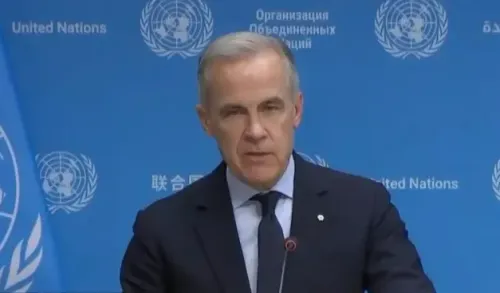
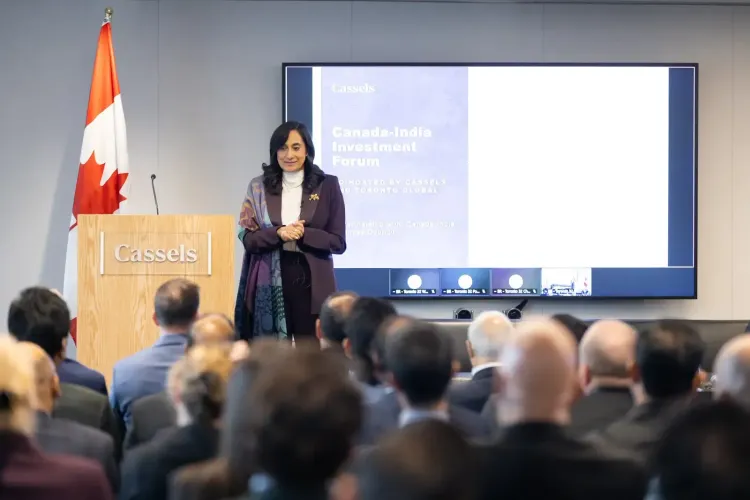
India and Canada are aiming to more than double their bilateral trade to $70 billion annually by 2030 through a proposed Comprehensive Economic Partnership Agreement (CEPA), Canadian Foreign Minister Anita Anand said on Saturday, 28 November 2026. Speaking at the Canada-India Investment Forum, Anand said the pact could build on the $30.4 billion in goods and services the two countries traded last year. Her remarks come as both sides push to conclude negotiations ahead of Prime Minister Narendra Modi's proposed visit to Canada in December.
Key Developments
Addressing the forum, Anand set out the scale of ambition behind the talks. “At today’s Canada-India Investment Forum, we discussed how a comprehensive economic partnership agreement could help more than double that figure to $70 billion annually by 2030,” she said.
The Canadian minister argued that greater predictability and more reliable market access would give businesses the confidence to make long-term investments, expand operations and build stronger commercial partnerships between the two economies.
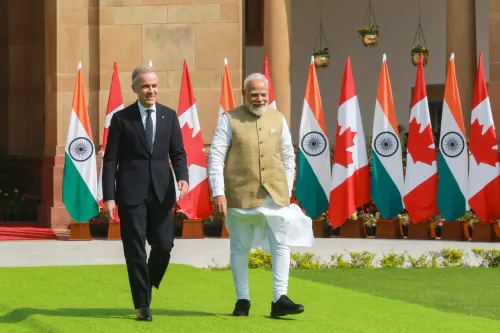
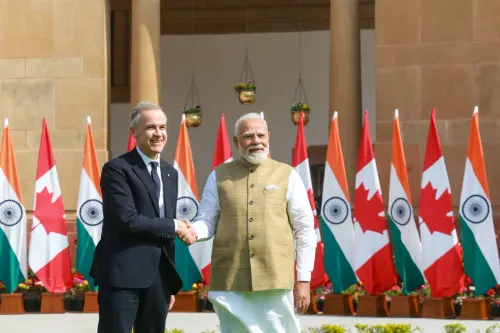
She also tied the trade push directly to the upcoming high-level engagement. “As we look ahead to Prime Minister Narendra Modi’s visit, there is a significant opportunity to build on this momentum and unlock even greater economic potential between our two countries,” Anand said.
Sixth Round of Talks and the December Deadline
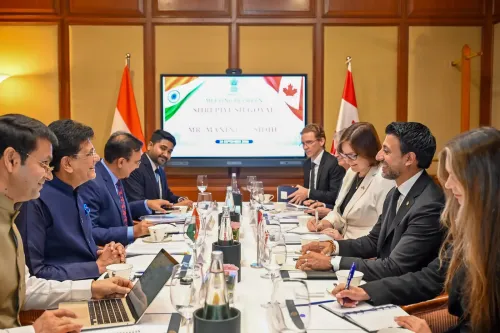
Negotiations on the CEPA are reportedly moving at a rapid pace, with both governments targeting a conclusion before Modi's anticipated trip. Earlier this month, Canada's Minister of International Trade Maninder Sidhu said the sixth round of trade talks with India was underway, with the aim of finalising the agreement before the Prime Minister's visit next month.
Sidhu also met India's Commerce and Industry Minister Piyush Goyal to advance the negotiations. Both sides identified energy, uranium, critical minerals and investment as the core pillars of the partnership.
Energy, Investment and Technology at the Core
Notably, energy has emerged as a central plank of the talks. According to Sidhu, Canada is scaling up its liquefied natural gas (LNG) projects and aims to become the fifth-largest global exporter within five years — capacity that Ottawa says would allow it to help meet India's rising energy demand.
Canada also remains a leading investor in India. Canadian institutional investors and pension funds, including Fairfax, have together invested over $100 billion in the country. The discussions further touched on expanding technology collaboration in artificial intelligence and data infrastructure.
Why the Target Matters
Moving from $30.4 billion to $70 billion in roughly four years would require trade to grow at a pace well beyond its recent trajectory, which is why both sides are framing the CEPA as the key enabler. The agreement is expected to lower barriers and offer the regulatory certainty that investors on both sides have long sought.
This comes amid a broader effort by New Delhi and Ottawa to rebuild economic momentum after a period of strained diplomatic relations in recent years. For Indian exporters, a deal could open wider access to the Canadian market, while Canada sees India as a fast-growing destination for its energy, minerals and capital.
What Happens Next
All eyes are now on whether negotiators can close the remaining gaps before Modi's proposed December visit. A signed or substantially concluded CEPA during the trip would mark a significant milestone in India-Canada ties and set the tone for the bilateral relationship through the end of the decade.
Point of View
A pace neither economy has sustained with the other. The real story is strategic — Canada is pitching itself as an energy and critical-minerals supplier just as India seeks to diversify away from concentrated supply chains. Racing to close a CEPA before a prime ministerial visit risks trading depth for optics, as rushed deals often leave thorny issues like services, mobility and agriculture for later. India should welcome the momentum but insist the fine print delivers market access for its exporters, not just a ceremonial signing.
NationPress
28 Nov 2026
Frequently Asked Questions
What did Anita Anand say about India-Canada trade?
Canadian Foreign Minister Anita Anand said a Comprehensive Economic Partnership Agreement could help more than double India-Canada bilateral trade to $70 billion annually by 2030. She made the remarks at the Canada-India Investment Forum on 28 November 2026.
How much trade do India and Canada currently do?
India and Canada traded $30.4 billion in goods and services last year. The proposed CEPA aims to raise this to $70 billion annually by 2030.
When is the India-Canada CEPA expected to be concluded?
Both sides are aiming to conclude CEPA negotiations before Prime Minister Narendra Modi's proposed visit to Canada in December. The sixth round of talks is currently underway.
What are the key areas of the India-Canada CEPA talks?
Energy, uranium, critical minerals and investment have been identified as the core pillars of the negotiations. Talks have also covered technology collaboration in artificial intelligence and data infrastructure.
How much has Canada invested in India?
Canadian institutional investors and pension funds, including Fairfax, have invested over $100 billion in India, making Canada one of the country's leading investors.