India targets drug-free nation by 2029: Mizoram launches 3-year action plan

Synopsis
Mizoram, one of India's most vulnerable drug-trafficking corridors, has launched a three-year state action plan to combat narcotics — anchored to PM Modi's national pledge of a drug-free India by December 2029. With 828 km of porous border shared with Myanmar and Bangladesh, and proximity to the Golden Triangle, the state is now at the centre of India's most ambitious anti-drug push.
Key Takeaways
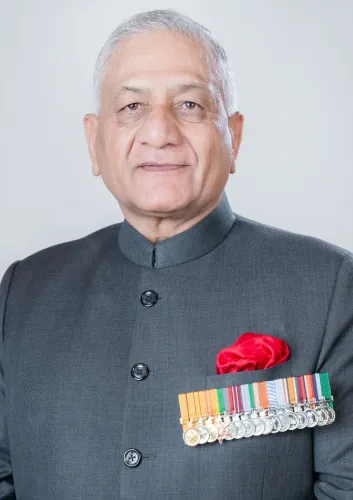
Mizoram Governor V.K.
Singh launched the 'State Action Plan to Combat Drug Menace 2026–2029' in Aizawl on 29 September 2026 .
India has set a national goal of eliminating the drug trade by 31 December 2029 , anchored to PM Narendra Modi 's 100-week Nasha Mukt Bharat Sankalp Abhiyan .
Mizoram shares 510 km with Myanmar and 318 km with Bangladesh — making it a key drug-trafficking corridor near the Golden Triangle .
Tlangmawi was declared Mizoram's first Drug-Free Village , held up as a model for other communities.
Cross-border operation 'Operation Jericho' and rehab programme 'Hulhliap Short Stay Centre' were recognised for their contributions.
Sapdanga called for collective action across enforcement agencies, NGOs, and churches, with intensified border operations.
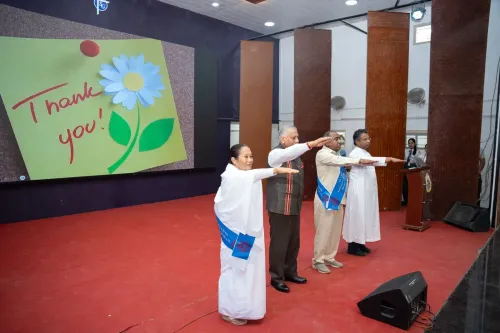
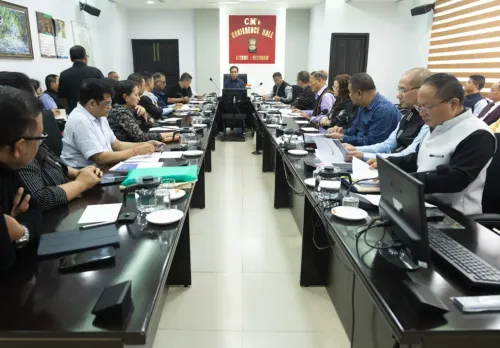
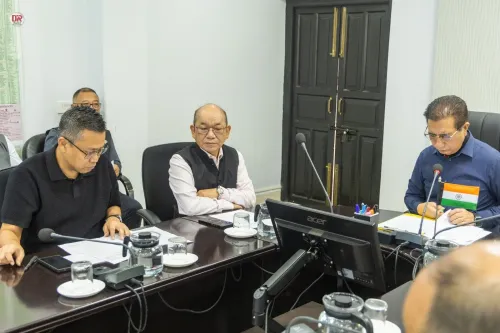
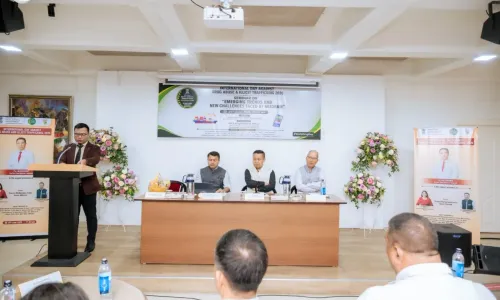
Mizoram Governor General (Dr) V.K. Singh (Retd) on 29 September 2026 launched the 'State Action Plan to Combat Drug Menace 2026–2029' in Aizawl, reaffirming India's national goal of eliminating the drug trade by 31 December 2029. The event underscored Mizoram's critical role as a frontline state in the country's anti-narcotics push, given its long and porous borders with Myanmar and Bangladesh.
National Mission and State Plan
Governor Singh recalled Prime Minister Narendra Modi's launch of the 100-week nationwide 'Nasha Mukt Bharat Sankalp Abhiyan' on 2 August, a campaign aimed at preventing substance abuse among youth. The new state action plan dovetails with this national effort, focusing on community participation, awareness activities, and protecting young people from the drug menace.
'This is only the beginning. We will be able to see results in three years. For it to succeed, we must take all stakeholders along positively,' the Governor said at the launch event.
Mizoram as a Border Flashpoint
The Governor drew attention to Mizoram's strategic and sensitive geography: the state shares a 510 km border with Myanmar and a 318 km border with Bangladesh. Together with Manipur, Mizoram has become one of the Northeast's most significant drug-trafficking corridors, owing to its proximity to the Golden Triangle — one of the world's primary illicit narcotics-producing regions. Six districts of Mizoram alone share roughly 910 km of unfenced international border with Myanmar.
'We carry a heavy responsibility as gatekeepers for the rest of the country. We should always stay focused and keep vigil. We should do away with the mindset that seeks quick profits through drug trafficking,' Singh said.
Key Initiatives and Recognition
The Governor welcomed the declaration of Tlangmawi as Mizoram's first Drug-Free Village, calling it a demonstration of community resolve. He also lauded the cross-border anti-drug operation 'Operation Jericho' and the short-term detoxification and rehabilitation programme 'Hulhliap Short Stay Centre' for their on-ground impact. He urged district- and state-level Nasha Mukt Bharat Abhiyan committees and the Narco Coordination Centre (NCORD) to sustain and intensify their efforts.
Notably, the state plan aligns with the Young Mizo Association (YMA)'s annual theme 'Ruihhlo Do' (Fight Against Drugs), reflecting a convergence of government and civil society priorities.
Government's Commitment to Enforcement
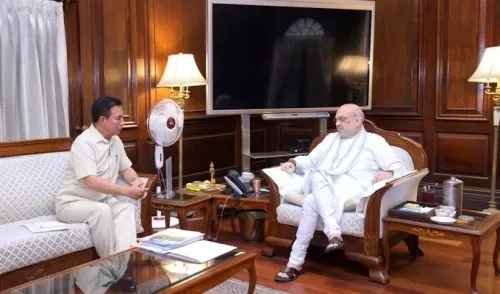
State Home Minister K. Sapdanga described Mizoram as a 'gateway of drugs' and called the event a 'firm commitment and renewed pledge' to protect the state's people. He stressed the need for collective action involving enforcement agencies, non-governmental organisations, and churches. The Minister said investigations must go beyond targeting drug peddlers and carriers to encompass all those associated with the trade. Special focus, he indicated, would be placed on intensifying border operations to stem the inflow of narcotics.
What Comes Next
With the Three-Year State Action Plan now formally launched, attention will shift to implementation — particularly border surveillance, community mobilisation, and rehabilitation infrastructure. The Governor expressed hope that Mizoram's law-abiding social fabric and network of cooperative NGOs would prove decisive assets in the fight. Whether the 2029 national deadline proves achievable will depend heavily on enforcement consistency across the Northeast's porous border districts.
Point of View
But the real test lies in Mizoram and Manipur — states where geography, poverty, and porous borders have made drug trafficking structurally entrenched. Declaring a village drug-free is a useful community tool, but it does not address upstream supply from the Golden Triangle. The state action plan's success will hinge on whether border surveillance is genuinely upgraded and whether rehabilitation infrastructure keeps pace with enforcement — an area where past national campaigns have consistently underinvested.
NationPress
30 Sept 2026
Frequently Asked Questions
What is India's goal for the drug trade by 2029?
India has set a national target of eliminating the drug trade by 31 December 2029, as reiterated at the launch of Mizoram's State Action Plan on 29 September 2026. The goal is anchored to PM Modi's 100-week Nasha Mukt Bharat Sankalp Abhiyan, launched on 2 August.
What is the Mizoram State Action Plan to Combat Drug Menace?
It is a three-year (2026–2029) plan launched by Mizoram Governor V.K. Singh focused on community participation, awareness activities, border enforcement, and protecting youth from substance abuse. The plan aligns with the national Nasha Mukt Bharat campaign and the Young Mizo Association's 'Ruihhlo Do' (Fight Against Drugs) annual theme.
Why is Mizoram particularly vulnerable to drug trafficking?
Mizoram shares 510 km of border with Myanmar and 318 km with Bangladesh, and lies in close proximity to the Golden Triangle — one of the world's largest illicit narcotics-producing regions. Six of its districts share roughly 910 km of unfenced international border with Myanmar, making the state a primary entry corridor for drugs into India.
What is Operation Jericho?
Operation Jericho is a cross-border anti-drug operation that has been active in Mizoram and was lauded by Governor V.K. Singh at the state action plan launch. It focuses on curbing the inflow of narcotics across Mizoram's international borders.
What is the significance of Tlangmawi being declared drug-free?
Tlangmawi became Mizoram's first Drug-Free Village, cited by the Governor as evidence of what community cooperation and determination can achieve. It is being held up as a model to inspire other villages and towns across the state to join the anti-drug movement.