12th BRICS Parliamentary Forum ends with Joint Declaration, India hailed as global leader
Synopsis
All-party consensus is rare in Indian politics — but the 12th BRICS Parliamentary Forum managed it. From BJP to Congress to Samajwadi Party, leaders lined up to call it a success, with India handing the chair to China amicably even as the two countries navigate a complex bilateral relationship. The Joint Declaration's reaffirmation of UN Charter principles signals BRICS' growing weight as a counterpoint to Western-led multilateral frameworks.
Key Takeaways
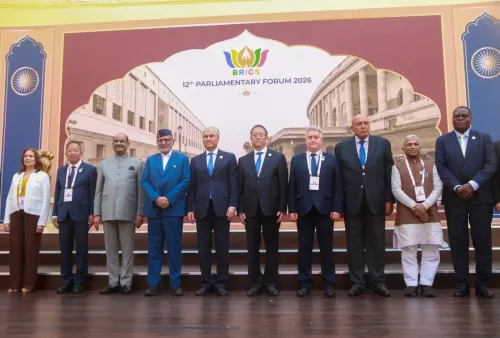
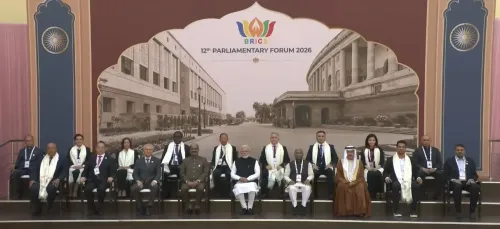
The 12th BRICS Parliamentary Forum concluded on 27 October 2026 in New Delhi with the adoption of a Joint Declaration .
The declaration reaffirmed member states' commitment to UN Charter principles , including sovereign equality and non-interference.
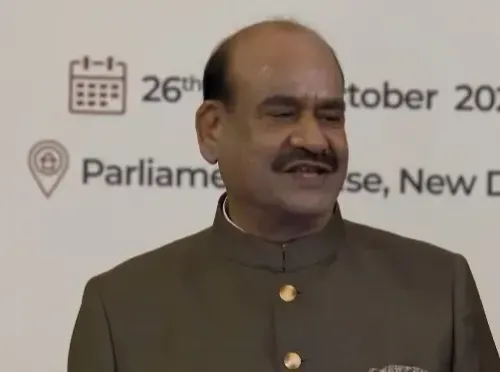
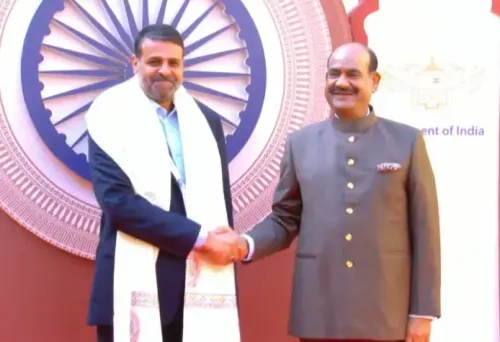
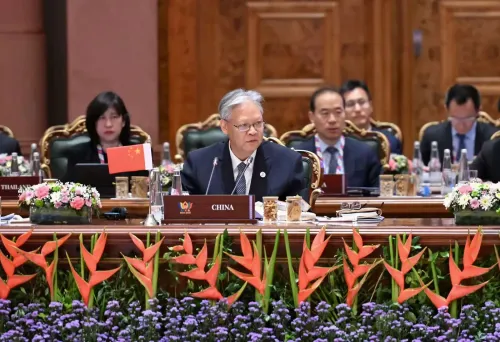
The forum was inaugurated by Lok Sabha Speaker Om Birla ; India has now handed the chair to China .
BJP MP Anurag Thakur , Union Minister Arjun Ram Meghwal , and Union Minister K Ram Mohan Naidu hailed it as a demonstration of India's global leadership.
Congress MP Shashi Tharoor and SP MP Rajeev Kumar Rai also praised the forum, with Rai warning the global order 'loses its relevance' if BRICS voices go unheard.
The BRICS forum reportedly covers nations spanning nearly one-third of the world's geographical area .
Leaders cutting across party lines on Tuesday, 27 October 2026 hailed the conclusion of the 12th BRICS Parliamentary Forum in New Delhi, calling it a significant platform for India to assert its voice as a global leader and exchange governance best practices with member nations. The forum closed with the adoption of a Joint Declaration, a day after its inauguration by Lok Sabha Speaker Om Birla.
What the Joint Declaration Affirmed
The declaration formally reaffirmed the member countries' commitment to the principles of the United Nations Charter, encompassing sovereign equality, mutual respect, non-interference in internal affairs, and the peaceful resolution of international disputes. According to participants, the language of the declaration was agreed upon amicably after discussions among delegations.
What Government Leaders Said
BJP MP Anurag Thakur described the forum as 'yet another success on the international stage,' adding that it demonstrated India's evolution from being 'a follower' to 'a leader' in global affairs. He pointed to the G20 Summit in 2023, the BRICS Summit in September, and the 12th BRICS Parliamentary Forum as evidence that India has proven its capacity to organise and lead major international events.
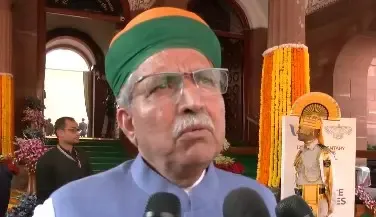
Union Law Minister Arjun Ram Meghwal called the forum an 'excellent opportunity' for all participating nations to learn from each other's parliamentary processes and exchange best practices. He noted that India's own legislative strides in recent years have given other nations a chance to understand its 'positive aspects, best practices, as well as its rules and procedures.'
Union Minister K Ram Mohan Naidu invoked the concept of 'Vishwa Bandhu' — a philosophy of collective growth — and said India is playing a 'solid role' in fostering development not just within its borders but across partner nations. He attributed India's growing international stature to Prime Minister Narendra Modi's leadership.
Opposition Voices Support
Congress MP Shashi Tharoor also called the forum a 'very successful event,' noting that just as an agreement on language was reached during the BRICS Summit earlier in the year, the joint declaration here too was finalised after deliberation. 'In the end everything was handled amicably, and India peacefully handed over the chair to China,' Tharoor told reporters. He expressed hope for India's 'continued role in international cooperation and parliamentary diplomacy through BRICS as well as through other forums.'
Samajwadi Party MP Rajeev Kumar Rai added a note of caution, warning that the global order risks losing relevance if the voice of BRICS nations goes unheard. 'The BRICS forum covers nearly one-third of the world's geographical area. If its voice goes unheard, the global order loses its relevance,' he said.
Why This Forum Matters
The BRICS Parliamentary Forum is distinct from the heads-of-state BRICS Summit in that it brings together parliamentarians from member nations, enabling legislative-level diplomacy. Notably, this edition was held amid a broader expansion of the BRICS grouping, with new member nations joining its orbit — making the forum's reach, and its declarations, more consequential than in earlier years. India's role as host and its smooth handover of the chair to China signals a pragmatic diplomatic posture, particularly given the complex bilateral relationship between the two countries.
With the chair now passing to China, attention will turn to how Beijing shapes the agenda for the next edition, and whether the cooperative tone struck in New Delhi holds through a geopolitically uncertain period.
Point of View
Suggesting New Delhi is deliberately compartmentalising geopolitical friction from multilateral engagement. Whether that pragmatism produces tangible outcomes — or whether the Joint Declaration remains an aspirational document, as many such declarations do — is the real question. With BRICS expanding and its parliamentary arm gaining visibility, India's legislative diplomacy is being watched more closely than at any point in the grouping's history.
NationPress
27 Oct 2026
Frequently Asked Questions
What is the 12th BRICS Parliamentary Forum?
The 12th BRICS Parliamentary Forum is an annual gathering of parliamentarians from BRICS member nations, held in New Delhi and concluded on 27 October 2026. It is distinct from the heads-of-state BRICS Summit and focuses on legislative-level diplomacy and the exchange of parliamentary best practices.
What did the Joint Declaration adopted at the forum say?
The Joint Declaration formally reaffirmed member countries' commitment to the principles of the United Nations Charter, including sovereign equality, mutual respect, non-interference in internal affairs, and the peaceful resolution of international disputes. It was adopted on the concluding day of the forum.
Who inaugurated the 12th BRICS Parliamentary Forum?
Lok Sabha Speaker Om Birla inaugurated the forum, with the event concluding a day later on 27 October 2026. India has since handed over the chair to China for the next edition.
What did opposition leaders say about the forum?
Congress MP Shashi Tharoor called it a 'very successful event' and praised the amicable adoption of the joint declaration. Samajwadi Party MP Rajeev Kumar Rai expressed hope that the discussions would translate into action, warning that the global order loses relevance if BRICS voices go unheard.
Why is India's role in BRICS significant?
India has positioned itself as a bridge between the Global South and major powers, using forums like BRICS to advocate for developing nations while maintaining its strategic autonomy. Leaders cited the G20 Summit in 2023 and the BRICS Summit in September as part of a broader pattern of India successfully hosting and shaping global multilateral events.